
Teoría y práctica para entender cómo sentirte mejor y efectivamente empezar a hacerlo.
Incluye:
- Lo que el cuerpo sabe
- Lo que el cuerpo sabe | Cuaderno de ejercicios para sentirte mejor
This content was translated using artificial intelligence and may therefore contain errors.
About 600 million years ago, Earth’s oceans were populated by creatures with gelatinous bodies and an alien appearance. Some resembled a flattened jellyfish, as if they were a pascualina slowly moving along the seafloor, grazing on algae and microbes. Others were shaped like tubes and anchored themselves to the ground like grass, filtering water for food. These organisms were animals, just like us, but they lacked eyes, ears, noses, and taste buds, so they couldn’t see, hear, smell, or taste what they ate. Their interaction with their surroundings was very simple: they detected changes in brightness to synchronize with the rhythms of day and night, and swallowed any tiny particle or creature that happened to cross their primitive mouths. They did this thanks to a very basic nervous system, made up of a few neurons connecting the cells that sensed external stimuli with those that generated movement or directed digestion. In those days, life under the sea was peaceful and went by without a hitch, so this simplicity wasn’t a disadvantage but a sufficient solution for survival. That is why this peaceful period—the Ediacaran, which took place 635–542 million years ago—is known as the Ediacaran garden.
But over a very short span of time in geological terms—just a few tens of millions of years—that underwater suburb stopped being the peaceful place it had been. During what we now know as the Cambrian explosion,Approximately 540 million years ago. the emergence of arthropods and the first vertebrates brought a radical new development in the history of life. Somewhere, somehow, an animal didn’t just happen upon another by chance and absorb it as part of the edible landscape; it pursued it with the intention of devouring it. Although predator-prey relationships had existed in the microscopic world for eons, intentional predation—through detecting and stalking prey—turned the ocean into a scene of constant threats and fierce competition. The predators of that era became veritable killing machines and pushed survival strategies to a whole new level. Anomalocaris was one of them: a sea creature measuring 60–80 centimeters long—a giant for the time—with two large claws it used to catch its prey, a circular mouth shaped like a toothed ring that looked like a shredder, and eyes like those of modern insects, which allowed it to detect even the slightest movement with great precision. To survive, reacting was no longer enough.
In this suddenly hostile world, escaping became a matter of life or death for those preyed upon by these sea monsters. Take Haikouichthys, for example. This tiny fish, just a few centimeters long, swam near the seafloor and had a slightly more developed nervous system that allowed it to integrate more visual, tactile, vibrational, and chemical information from its surroundings. Even so, it didn’t have much chance of “living to tell the tale” if it came across one of the Cambrian predators. Perhaps Haikouichthys didn’t live to tell the tale, but it did manage to leave descendants, which is even more important in evolutionary terms. The reason these little fish survived—and eventually became the common ancestor of all vertebrates—wasn’t that they were the fastest or strongest, but that they could “guess” the future. Fortunately for them, they didn’t need to get it exactly right. Their predictions only had to be good enough to avoid an attack in time, even if that meant making plenty of mistakes. For example, a shadow moving among the algae could mean a predator lying in wait—or simply a current stirring up the seafloor—but waiting until they were certain before reacting could turn them into someone else’s lunch. So, just in case, they fled. This strategy of reacting to ambiguous signals, even at the cost of being wrong many times, is known as the smoke detector principle. Smoke detectors are devices programmed to detect the presence of smoke and sound an alarm indicating a possible fire. But a detector doesn’t distinguish between smoke from a burning piece of furniture, a candle, or a cigarette. As a result, smoke detectors sound the alarm more often than fires actually occur. Annoying as it may be, a false alarm is better than no alarm at all: at least it’s a sign that the system is working properly. And life knows this: from Haikouichthys we’ve learned that overreacting tends to be less costly than reacting too late.
This ability was so important to our ancestors’ survival that the smoke detector principle is still present in all vertebrates, including us.Vertebrates are a large group of animals that share the same evolutionary heritage. They include fish, amphibians, reptiles, birds, and mammals—including humans—and are characterized by the presence of a backbone and a relatively complex central nervous system. This shared architecture underlies many of the mechanisms of regulation, perception, and response to danger that we still share today. Many animals today show alarm behaviors in response to ambiguous signals. For example, a group of deer might bolt into a stampede just because one of them heard a rustle in the bushes, though it may have been the wind. Similarly, a mouse that detects a sudden change in light may freeze for several seconds, as if a bird of prey were stalking it, even when no predator is in sight. The same thing happens to us. If you’re walking at night and hear footsteps behind you, you’re likely to tense up, cross to the other side of the street, or look back warily, even without any proof of real danger. Most of the time, nothing happens, but when something does, that quick reaction can make all the difference. Because the body is an integrated whole, predictions about the environment happen at the same time as estimates of our internal state. In other words, when the brain interprets that something might happen outside, it also calculates what will happen inside. This ability is vital, because detecting a possible threat isn’t enough to survive: the body needs to know whether it’s able to flee, fight, or stay still. Is there enough energy available? Is there enough oxygen to swim or run? Are the muscles already fatigued? To answer these questions in milliseconds, the body has a vast network of sensors that measure variables such as temperature, oxygen levels, blood pressure, and fuel reserves, and turn them into signals the brain can interpret to make decisions quickly. For example, every time Haikouichthys decided to flee, it had to adjust its physiology in real time: mobilize its fuel reserves, divert blood to its muscles, and speed up its heart. If it made the wrong decision, it could waste valuable resources and end up exhausted. Or worse, put itself in mortal danger. The key wasn’t just predicting the environment, but anticipating its own limits. This ability to register the body’s internal state is called interoception, and thanks to it we can also consciously perceive whether something hurts, whether our stomach is empty, whether our heart is pounding, or whether we’re short of breath. Put simply, it’s how the body feels itself.
The ability to predict and anticipate isn’t limited to life-threatening situations; it applies to all the biological processes of living organisms. And this is the cornerstone of physiology itself: we get thirsty long before we’re dehydrated, our mouths fill with saliva when we smell freshly cooked food, we sweat on a hot day before our internal temperature rises, blood flows to our legs when we need to climb stairs, and we feel exhausted long before our energy reserves are completely depleted. In other words, the nervous system doesn’t act like a thermostat, but like a manager that plans, calculates, and adjusts the use of resources in real time, as if keeping an account of everything the body does, spends, and anticipates needing. This intricate process of anticipatory regulation is called allostasisFor a long time, physiology explained the body’s regulation through the concept of homeostasis, formulated in the nineteenth century by the French physiologist Claude Bernard. According to this idea, life depends on keeping certain internal variables—such as temperature, blood glucose, or pH—constant despite changes in the environment. In this model, the body responds when something moves outside an acceptable range, much like a thermostat. The concept of allostasis doesn’t replace homeostasis; it expands on it. and, in the words of neuroscientist Peter Sterling, it is the predictive management of the body budget.
Although Haikouichthys disappeared hundreds of millions of years ago, some of its distant relatives are still alive, offering us a window into the past and a way to study how the bodies of the first vertebrates worked. Lampreys, for example, are among them. They have elongated bodies and circular mouths lined with teeth that let them cling to the skin of other fish and suck their blood. Laboratory studies have shown that if they receive a small electric shock paired with a light or a vibration, after a few repetitions they respond to the signal by avoiding the area even before they feel the painful stimulus. The response stops depending on the harm itself and starts being organized around anticipating it. This kind of learning, in which a neutral signal acquires anticipatory value, is found in all vertebrate animals and forms the basis of animal training. In psychology, it is known as classical conditioning or Pavlovian conditioning, in honor of the Soviet scientist Ivan Pavlov.
However, Pavlov wasn’t a psychologist, and he wasn’t interested in understanding or changing animal behavior. His main interest was the digestive system. During the 1890s, he spent his days studying it by inserting tubes into dogs’ intestines to measure how much juice their pancreas secreted and making openings in their bellies to observe firsthand what happened in the stomach during digestion. That’s how he discovered that the digestive tract gets ready to process food while it’s still in the mouth, and he suspected the nervous system was the one giving the order. But what opened the door to understanding how the body works through anticipation was something anyone might have found obvious and uninteresting. Pavlov noticed that the dogs not only got excited when his assistant brought them food, but also salivated as soon as they saw him or heard his footsteps. Salivation was supposed to be an automatic response that occurred when food entered the mouth, but sometimes there was no food and the animals salivated anyway. After this observation, he decided to run a more controlled experiment: he rang a bell just before feeding them and, after a couple of repetitions, rang the bell without giving them food. He was able to replicate what he’d observed with his assistant: the dogs began to salivate as soon as they heard the sound, even when there was no food in sight. Ivan Pavlov was awarded the Nobel Prize in Physiology or Medicine in 1904 for his research on digestion, but it took us a long time to realize that he had actually discovered allostasis.
This ancient mechanism, which emerged in a hostile past, is still at work inside us all the time, and it’s what we usually call stress.Strictly speaking, stress is not the same as the stress response. Stress refers to the event or demand—external or internal—that challenges the body, while the stress response is the set of physiological, emotional, and behavioral changes activated to cope with it. However, in everyday usage, and throughout this book, we’ll use the two terms interchangeably for ease of reading, since in lived experience they tend to be inseparable: when we talk about stress, we’re almost always referring to what happens to the body in response to a demand. It’s easy to recognize when we’re facing intense situations, such as a traffic accident, an argument with an angry person, or a difficult exam. The heart beats faster, breathing becomes uneven, our hands sweat, and our stomach fills with butterflies that seem to devour us from the inside. For many people, though, stress doesn’t show up as an isolated episode with a beginning and an end, but as a constant atmosphere. Even when nothing out of the ordinary is happening, it shows up in the rushed way we start the day, the tension in our shoulders as we reply to a message, the difficulty of slowing down even when nothing is urgent, the held breath, the unexplained insomnia, the irritability that comes out of nowhere, the guilt about not getting everything done, and the perpetual feeling that it’s never enough. But it’s also present in good moments: at a family gathering, in a board game that draws us in, at a soccer match where we push ourselves to reach the ball, in a play that moves us, or in a deep conversation with someone we love. Because stress isn’t a mistake the body makes or something that needs to be eliminated; it’s a central biological function essential to life. It’s how the body prepares to respond to the demands of its surroundings, whether they’re dangers, challenges, or emotionally significant experiences. In the right doses, when it appears and then fades, stress makes us more alert, helps us learn, and allows us to adapt. The problem arises when the system stops switching off: when activation continues longer than necessary and stress stops being a tool and becomes a burden.
Most of the adjustments the nervous system makes to keep us alive happen without our noticing. Regulating blood pressure, balancing temperature, mobilizing nutrients, adjusting heart rate, coordinating hormone secretion, and activating the immune response when a bacterium enters are just a few examples of tasks carried out automatically, second by second, without our having to think about them. And for good reason. If the to-do list for work, household chores, the kids’ activity schedule, and unread messages on our phones are already overwhelming, imagine how overloaded we’d feel if we consciously perceived information coming from every part of our body. That’s why many interoceptive signals only become noticeable when something goes awry or a need isn’t being met. The pressure in your bladder after several hours without going to the bathroom, a stomach cramp after a heavy meal, or a heartbeat that’s stronger than usual after too many cups of coffee are clear examples. But the body doesn’t have to shout for us to hear it. If we pay attention, we can also perceive subtle signals when everything is working within normal limits. As I write these lines, for example, I can notice the fullness in my stomach after breakfast, the tiredness in my muscles after working out yesterday, and the air entering through my nose with each breath.
Because attention is a limited resource and we can’t perceive each of these processes separately, the brain condenses all that activity into a diffuse, generalized feeling: affect, our inner climate. As a summary of the body’s physiological state, this climate changes constantly with shifts in hormones, nutrition, immunity, or rest. At times it feels light and expansive, like a clear sky; at others, heavy and dim, like a cloudy day. When everything is relatively in order, affect tends to stay in the background, like a neutral or mildly pleasant backdrop. But it only takes something getting out of balance enough for that climate to change and spur us into action. After eating, for example, we feel full and calm. By contrast, when we go many hours without eating and the body’s fuel reserves run low, that pleasant background begins to grow cloudy. First as a vague discomfort, then as irritability, until it finally turns into an urgent need to look for food. Hunger, then, doesn’t burst in all at once; it rises from the affective background until it becomes a clear instruction: get up and eat something. The same thing happens with cold, thirst, fatigue, shortness of breath, pain, nausea, or sexual desire.
And here’s something curious: because affective states are the product of allostasis, they are also predictions. Think about the last time you were thirsty: you drank a glass of water and felt relief almost immediately. But that relief came long before the water was absorbed. How is that possible? Your brain knows what happens after you drink water—you’ve done it countless times—so it doesn’t waste time checking and redirects your attention elsewhere. Then, over the following minutes, it adjusts that estimate using the internal signals coming in from the body. If everything goes as predicted, the “thirst resolved” model stays in place. If not, the model is corrected and prompts us to drink more water. In other words, we don’t feel what’s happening; we feel what our brain thinks is happening. And that’s why we can be wrong. Just like weather forecasts, affective predictions aren’t error-free. In fact, errors are common: when we think we see someone we know in a crowd and discover as we get closer that it wasn’t them, when we feel our phone vibrate in our pocket but no one has called, or when a magician surprises us with a trick. Once again: predictions don’t have to be perfect; they have to be useful.
Although we can’t verify it, we have good reason to believe that our Cambrian ancestors already experienced rudimentary affective states. After all, affect is a form of self-perception: what it feels like to be a body. Therefore, any organism with a nervous system capable of perceiving itself should be able to have some kind of affective state. As bodies grew larger and more complex over time, their affects probably did too. More varied internal signals emerged, along with neural networks capable of detecting them more precisely, comparing them with past experiences, and anticipating their consequences. As a result, not only did the range of what could be felt grow richer, but so did the ability to use that information to choose what to do. One outcome of this process was the emergence of emotions. Like hunger or thirst, emotions arise from affect, but they do so in a more organized way: they coordinate the body to guide an action quickly and automatically. Fear, for example, is an emotion that organizes the body to flee, fight, or freeze because it senses that something bad is about to happen or is already happening. It’s hard to know for sure, but it wouldn’t be surprising if those little fish experienced a primitive version of fear when they encountered an Anomalocaris. Fear may be the oldest emotion, the first one written into the bodies of vertebrates.
For hundreds of millions of years, most animals depended on their environment to regulate their body temperature. This made them highly sensitive to fluctuations in the climate and determined when and how much they could move, as is still the case today with fish, amphibians, and reptiles. However, some animals began to develop the ability to keep their internal temperature relatively constant. This ability, known as homeothermy, emerged gradually in a group of animals that served as an evolutionary bridge between reptiles and mammals: mammal-like reptiles. Homeothermy allowed them to sustain high levels of activity even in unfavorable conditions, explore more varied environments, and inhabit the world with an unprecedented degree of independence. While a “cold-blooded” animal (like an iguana) can spend hours motionless, waiting for the sun to raise its body temperature before it can move, a “warm-blooded” animal (like a mouse) has to produce heat constantly by modulating muscle tone and blood flow, even while it sleeps. Homeothermy was a true physiological revolution, though it came at an enormous cost: maintaining a stable temperature requires a constant expenditure of energy.The gradual development of homeothermy coincided with one of the most unstable periods in the planet's history. During the Late Permian and Early Triassic (around 290 to 250 million years ago), Earth underwent extreme climate changes and the largest known mass extinction. In these particularly turbulent times, the ability to maintain body temperature and activity independently of the environment may have provided a decisive survival advantage. That cost can only be sustained if the nervous system is better able to anticipate future demands and manage available resources more precisely. For this reason, this increase in energy expenditure went hand in hand with the development of increasingly sophisticated nervous systems, capable of integrating multiple internal and external signals, comparing possible scenarios, and making more complex decisions.
This new kind of allostasis not only allowed for more refined regulation of the body, but also for a richer interaction with the environment and with others. Mammalian life, from its origins around 200 million years ago, was characterized by a more prolonged dependence of offspring, a demanding task that requires large amounts of energy, sustained attention, sensitivity to subtle cues, and the ability to put one's own needs aside. In this context, increasingly complex behaviors related to caregiving and social life began to emerge, such as attachment—first directed toward caring for offspring and later extended to other members of the group—grief at the loss of a loved one, empathy for the pain of others, and play as a form of shared exploration. Of course, these emotions did not suddenly appear with “the first mammal”—which, strictly speaking, never existed—but unfolded gradually as brains became more complex and social life took on an increasingly central role in evolutionary history.
One fascinating thing about emotions is that, because they are the product of a prediction, they can also reflect errors in estimation. When I was a child, there was a period when I would wake up in the middle of the night convinced that burglars were lurking in the yard, trying to break into my house. I would wake up terrified and desperate, and lie still in bed as I watched the shadows cast on the window or listened to noises in the hallway. Some nights I would stay motionless under the covers, waiting for them to leave (freeze); other nights I would run to my parents' room for comfort (flight); and more than once I got out of bed to go get a knife from the kitchen (fight). Luckily, there was never anyone there. Those misinterpretations didn't come out of nowhere; they were calculations based on my past experiences: before that period, my neighbors had been robbed twice, and the burglars had used my yard as a passageway to their house, leaving sneaker marks on the outside wall of my bedroom. As a child, without the tools to assess the real level of risk, my body learned that danger could be close by while I slept. And it responded accordingly.
Unlike other mammals, humans have a technological add-on to the art of anticipating: the symbolic mind.This does not mean that animals lack a mind, consciousness, or a mental world. Numerous studies in ethology, neuroscience, and comparative cognition show that many animals experience perceptions, feelings, emotions, and ways of representing their surroundings that are consistent with their evolutionary history. The difference is not whether a mind is present or absent, but what kind of mind it is. In humans, the symbolic mind adds a particular layer of representation and anticipation based on shared symbols, language, and narrative, which expands—but does not replace—the mental capacities that already exist in other animals. It is not an external chip or a cloud floating above our heads, but an emergent function of the nervous system, the product of millions of years of evolution. The symbolic mind is a new layer of allostasis that can represent internal and external reality through words, images, gestures, concepts, narratives, and numbers. It is what allows us to think about things that are not present, that do not yet exist, or that may never exist. Thanks to it, we can plan a trip, solve a math problem, build tools, or remember a childhood experience. But since the mind is also biologically integrated with the body—because it is an expression of the body—we can react to these representations. While a wolf reacts to the smell of prey, the howl of its companions, or a pup in danger, humans can experience feelings and emotions in response to thoughts, ideas, and memories. We can feel ashamed about something that happened twenty years ago, anguish over an event that has not yet taken place, or excitement about a project that does not yet exist. To give a more concrete example related to immediate survival, humans can anticipate that they will be hungry and store food, as other animals do, but we can also imagine a future without food, devise a plan, and act before it happens. When hunting was necessary, our ancestors gathered, shared information, designed traps, assigned roles, and imagined what the animal would do. The success of cooperative human hunting was not the result of better fangs, greater strength, or greater speed, but of better predictions, shared through paintings on cave walls and conversations around the fire.
However, every great power has a flip side. As a product of allostasis, the symbolic mind is also shaped by the logic of survival. I remember one time when I was coming back from playing at the park with my niece. As we waited, holding hands, for a break in traffic, a disturbing image suddenly flashed through my mind: my niece being hit by a car. The scene made me very anxious, but it also snapped me out of the relaxed state I had been in and sharpened my attention to the street. Negative intrusive thoughts are relatively common and, even if they bother us, that pessimistic bias has saved us many times over the course of evolution. So it's not unusual for this kind of mental scene to arise spontaneously in the least fortunate situations, like at a family gathering, during a board game, or while we're watching a show. The problem, again, comes when this mechanism never switches off. Sometimes the mind traps us in thought loops that seem endless. We can spend days ruminating over a past argument, imagining catastrophes that will probably never happen, or going over past mistakes again and again. The mind doesn't do this because it's malfunctioning, but because it's trying to protect us. And even when the stimulus isn't present, the physiological response is: through imagination, the mind can evoke affective and emotional states as intense and vivid as if they were real. Repeated over time, these states can drain our body's battery and harm our physical and mental health.
When I talk about the body's “budget” or “energy,” I don't mean something ethereal or mystical, like an invisible force floating around the body, but biological energy that is concrete and quantifiable. Humans—like all other animals—get energy from food, which ultimately comes from the solar energy captured by plants. By eating those plants—or the animals that fed on them—we take in that energy and use it to move, think, and breathe. Since the energy contained in food isn't available for direct use, the body has to extract it and transform it into a form that all cells can use. This process takes place mainly in tiny structures called mitochondria, true power plants housed inside our cells. Their functioning depends on multiple factors, including the quality of the mitochondria we inherit from our mothers and the cells' ability to handle the waste they generate. But it is also deeply influenced by lifestyle. Habits such as a poor diet, a sedentary lifestyle, lack of rest, or constant exposure to stress can damage the cellular energy system and reduce the available battery. Healthy habits, by contrast, are essential for maintaining mitochondrial health and, in some cases, even expanding our daily energy budget.
Whatever the size of the battery, the body doesn't spend it chaotically or at random. All that energy is distributed according to a precise logic, and the brain is in charge of managing that budget. To do so, it allocates resources to several major areas of expenditure that compete with one another when energy is scarce. The first covers basic vital functions, those nonnegotiable operations that keep us alive even while we sleep: breathing, making the heart beat, filtering the blood, regulating body temperature, producing hormones, and sustaining the brain's electrical activity. The second covers the activities we engage in while awake: moving, digesting food, socializing, looking for a partner, drinking water, or planning the day. The third area includes the growth, repair, and maintenance of the body: the production of new cells, tissue regeneration, DNA repair, and other quiet but essential processes for health. The fourth is the stress response, that is, the physiological adjustments aimed at meeting the challenges of the environment, coordinated mainly by the autonomic nervous system and the hypothalamic-pituitary-adrenal axis. Finally, the body maintains an energy reserve, a kind of contingency fund that is not used every day but is available when circumstances demand it. This framework helps explain why the human brain, despite accounting for just 2% of body weight, consumes around 20% of the body's total energy. Like a computer running multiple processes in the background, the brain requires a great deal of energy to sustain the operating system responsible for allostatic regulation.Allostatic regulation does not depend on a single brain region, but on several distributed neural networks. In particular, the systems involved are primarily the default mode network and the salience network, which integrate bodily signals, assess their relevance, and generate predictions about the body's internal state. Research by Lisa Feldman Barrett's team showed that these networks form a large-scale brain system dedicated to interoception and the predictive management of the body's budget, helping explain the brain's high energy costs even at rest.
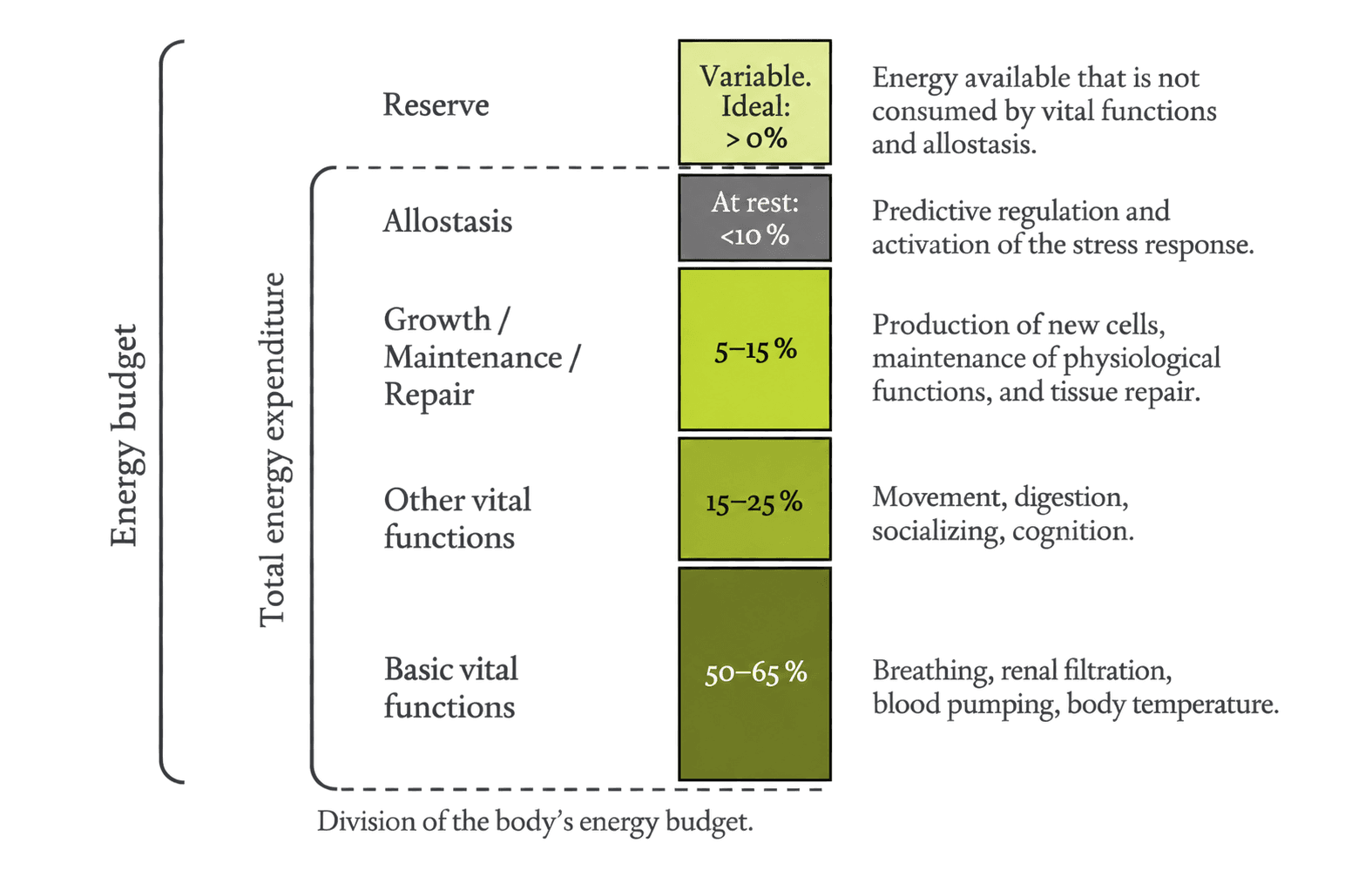
This resource-allocation system doesn't operate in a vacuum, but in real, concrete, and often unexpected situations. When the environment presents a challenge, the body has to decide in a fraction of a second what to do with the available energy. Let's look at an example of how that budget is mobilized in response to a threat. On a winter night, as I was biking home after a shift at the hospital, a large dog appeared out of nowhere and rushed toward me, barking furiously and trying to bite me. In less than a second, my nervous system assessed that it was a real threat and sounded the alarm. The first stress response is extremely fast and is driven by the autonomic nervous system, which releases a surge of adrenaline throughout the body: that's why my heart started pounding, my muscles tensed up, my pupils dilated, my breathing quickened, and all my attention focused on the animal's movements.Throughout the book, I use the expressions alert system and calm system as a descriptive way of referring to the two main branches of the autonomic nervous system. In physiological terms, the alert system corresponds to the predominant activation of the sympathetic branch, which is responsible for mobilizing energy, increasing heart rate, tensing muscles, and preparing the body for action in the face of a threat. The calm system refers to the parasympathetic branch, which helps facilitate recovery, tissue repair, digestion, and a gradual return to equilibrium once the danger has passed. This distinction is for teaching purposes, since both branches operate in parallel and are not mutually exclusive. It wasn't the first time a dog had tried to bite me while I was riding my bike, but since I was exhausted after a full day of work and my energy reserves were pretty depleted, instead of pedaling faster or fending it off with kicks in the air (as I had done other times), my body chose a different strategy: I got off my bike and put it between the dog and me. It was an immediate, automatic decision, made without thinking. Allostasis modeled several scenarios and chose the action that offered the greatest protection at the lowest cost. Meanwhile, in parallel with this rapid response, a slower pathway involving the hormone cortisol began to activate. Because it is present during these events, cortisol is often called the “stress hormone,” but in fact it is the “energy hormone,” since it sends a powerful signal to the whole body to increase energy production. Among its many effects, cortisol releases fuel (glucose and fatty acids) into the bloodstream and increases mitochondrial activity so the body can use it. At the same time, it temporarily cuts back the budget for other functions that are not vital during a threat, such as reproduction and the immune system, to avoid unnecessary energy expenditure in that context.
When the dog finally got tired of me and walked away, the danger had passed. But the alert state did not disappear right away. As I continued on my way home, my heart was still pounding, and I was still cursing the dog in my head. As the minutes passed and I got closer to home, my body began to gradually switch off the alarm and enter the recovery phase. Once the threat ends, another part of the autonomic nervous system kicks in, the one responsible for bringing the body back to a state of calm. Heart rate slows, muscles relax, breathing eases, and attention is no longer hijacked by urgency. Little by little, I began to notice the cold air, the feel of the handlebars, and my fatigue. At the same time, cortisol levels began to drop, and the functions that had been put on hold during the threat resumed. My body cleared away the byproducts of exertion and began cellular repair; hunger and thirst returned to replenish what had been used up. But the repair didn't end there. The same hormones that mobilized energy during the threat also left a mark on my brain, helping the experience consolidate in memory. So while I slept, my body was also learning, adjusting its predictions, refining its responses, and recalibrating its budget to better handle similar situations in the future. I'll return to this point in the next chapter. Of course, this improvement doesn't come free, and the extra expenditure aimed at reaching a new equilibrium is known as allostatic load.
In the days that followed, the scene played out again. The second time, the dog surprised me again, and my body activated in much the same way, though less intensely and with more cursing. After going through that sequence once more, I was already expecting it. The third time, I spotted it behind the plants even before it started barking. This time, I got off my bike and confronted it, shouting. The dog tucked its tail between its legs and headed home. It never showed up again.
What happened to me with the dog is no exception. The same principle of adaptation applies in many other areas, and it's especially clear in the world of physical training. When someone starts running from scratch, it's common for them to tire quickly, for everything to hurt, and even to become short of breath. And if they try to run ten kilometers three times a week without any experience, they're likely to end up injured and frustrated. But if the stimulus is gradual and well dosed, the body responds. And whether it's a training plan or an antelope hunt, for the body, the signal to invest resources in adaptation is repetition of the stimulus. In the case of running, that investment means that muscles store more fuel and learn to use it more efficiently, ligaments thicken and become more resistant to impact, and the cardiopulmonary system increases its capacity to deliver oxygen wherever it's needed. As a result, it's possible to run farther, sustain the effort for longer, and find that exercise no longer feels so exhausting.
Something similar happens when we face psychological stress, like when I first entered an operating room as a medical student. I was 19, and the situation was completely new to me: the smoke from tissue burned by the electrocautery, the scene of blood and organs in front of me, and the thought that beneath the drapes was a living person… it was too much to take in all at once. My brain didn't know how to handle it, and I fainted after fifteen minutes. Still, with time, I worked up the courage to go back in. But I fainted again. Fortunately, I was given another chance, and it didn't happen again. It wasn't that the operating room became less overwhelming, but that with each exposure my body learned to regulate itself in that environment. What had initially been interpreted as an overwhelming threat came to be recognized as a demanding but manageable situation. Allostatic load allowed me to adjust my predictions, reduce the alarm response, and free up resources for more complex functions, such as observing, learning, and participating. My attention, which had previously been hijacked by shock, could now focus on the surgeon's movements, the steps of the procedure, and the fascinating inner workings of the human body. Even the smell, which at first I found unbearable, stopped making me recoil.
The amount of energy and resources the body uses to cope with stressful situations depends on the intensity and duration of the challenge. Sometimes the available budget is enough, but at other times, the body has to pull out its wallet and draw on its reserves. Under controlled laboratory conditions, different stressful situations can increase the body’s energy expenditure by between 10% and 60% for as long as the activation lasts.To estimate how much energy the body uses in these kinds of situations, researchers use a technique called indirect calorimetry. Like a car engine, our cells need oxygen to produce energy from nutrients, in a process comparable to controlled combustion. So, by measuring how much oxygen a person consumes—and, in some cases, how much carbon dioxide they produce—it is possible to calculate with considerable precision how their energy expenditure varies in real time. In more serious real-life situations, however, such as an extensive burn, a traumatic brain injury, or a systemic infection, the body’s energy expenditure can double. One of the most ingenious studies on the subject was conducted in 2010 by George Balanos’s team. In it, a group of volunteers underwent a cognitive stress test known as the PASAT (which stands for Paced Auditory Serial Addition Test), a widely used neuropsychological test for evaluating working memory, sustained attention, and processing speed, especially when brain damage is suspected. The task involves listening to a sequence of single-digit numbers presented one after another and quietly adding each number to the next. For example, if you hear 3 and then 5, you have to answer 8; then comes a 2, and you have to say 10, and so on. It sounds simple, but when it goes on for several minutes—and especially if the pace speeds up—it becomes surprisingly demanding. In Balanos’s study, the PASAT was accompanied by a setup designed to increase stress. Participants were watched by an experimenter seated one meter away, who recorded their mistakes; they started with a thousand points, but lost five for each mistake; and, to make matters worse, they received a brief unpleasant sound as “punishment” for their errors. There was also a leaderboard, visible in real time, showing how everyone was doing. As a result of this hostile environment, the body’s energy expenditure increased by 42% during the challenge. In other words, it was as if a car that uses 1 liter of fuel every 10 kilometers began using 1.4 liters to cover the same distance.
Modifying the body to respond better to the demands of its environment is essential for growth and development in all living things, from a fish swimming against the current to a bird migrating thousands of kilometers. That’s why physical, intellectual, and emotional challenges are not only inevitable, but also necessary for maintaining health. In settings like those still inhabited by some hunter-gatherer tribes, these challenges are woven into everyday life. Walking long distances to find water, climbing trees to gather fruit or honey, tracking animal footprints during a hunt, making tools from materials available in the environment, and resolving conflicts within the group are all part of daily life. These challenges, however, are not experienced as a constant threat, nor do they keep the body in a permanent state of alert. Although it is common to imagine our ancestors’ lives as an unending struggle for survival, the truth is that between one challenge and the next there were long stretches of time to rest, talk, play, and laugh. In the 1960s, anthropologist Marshall Sahlins described hunter-gatherer societies as “the original affluent society,” not because they accumulated material goods, but because they had abundant, flexible time. With no clocks to tell them the time and no schedules to keep, recovery was not a planned activity, but a natural consequence of living in a world where the cycles of the body and the environment were aligned. That balance between challenge and rest, which was the norm for almost all of our evolutionary history, has become exceptional in contemporary life.
Cities concentrate stimuli that persistently activate the body’s biological alert systems, while offering few real opportunities for recovery. The alarm going off early, phone notifications before you get out of bed, unpredictable traffic, the pressure of mounting tasks, rigid schedules, constant noise, air laden with pollutants, and artificial lights that prolong the day are all examples of signals that keep the body in a state of continuous activation. In that sense, modern life is an extended, nonstop version of Balanos’s experiment. As I mentioned earlier, adaptation only happens if the body has time and resources to recover. Without that, there is only wear and tear. When this constant state of alert continues over time and reserves run out, the body is forced to redirect part of its budget to meet immediate demands, with a progressive decline in repair and maintenance functions. This is when signs familiar to most of us who live in cities appear: persistent fatigue, light sleep, erratic digestion with bloating, diffuse muscle pain, decreased libido, hypersensitivity to noise or light, irritability, difficulty concentrating, and a persistent feeling of being “stuck in overdrive,” even at rest. All these symptoms are clear signs of allostatic overload.
A useful analogy for understanding this phenomenon is a smartphone. A cell phone has a certain battery charge, which can run down faster or slower depending on how many internal processes are active. In “airplane mode,” the phone uses a minimal amount of energy to keep the system running, which is equivalent to the cost of the body’s vital functions. In normal mode, by contrast, the phone activates its antenna, searches for a signal, keeps apps open, and is ready to receive messages: processes that demand more energy and resemble how the body functions when we’re awake. If we add more demanding tasks, such as sending voice messages, taking photos, making a video call, or playing video games, energy use increases even further. These actions are the equivalent of allostatic load: activations needed to adapt to a demand, but ones that require a sustained additional expenditure. Now, if we leave all the apps open and running at the same time without a break, the phone heats up, slows down, uses battery inefficiently, and eventually fails. That is what happens to our bodies: not only does the battery run out, but the functioning of the entire system is compromised. Unlike a smartphone, the human body has mechanisms for repair and regeneration, but even these systems have an energy cost and limits that cannot be ignored indefinitely.
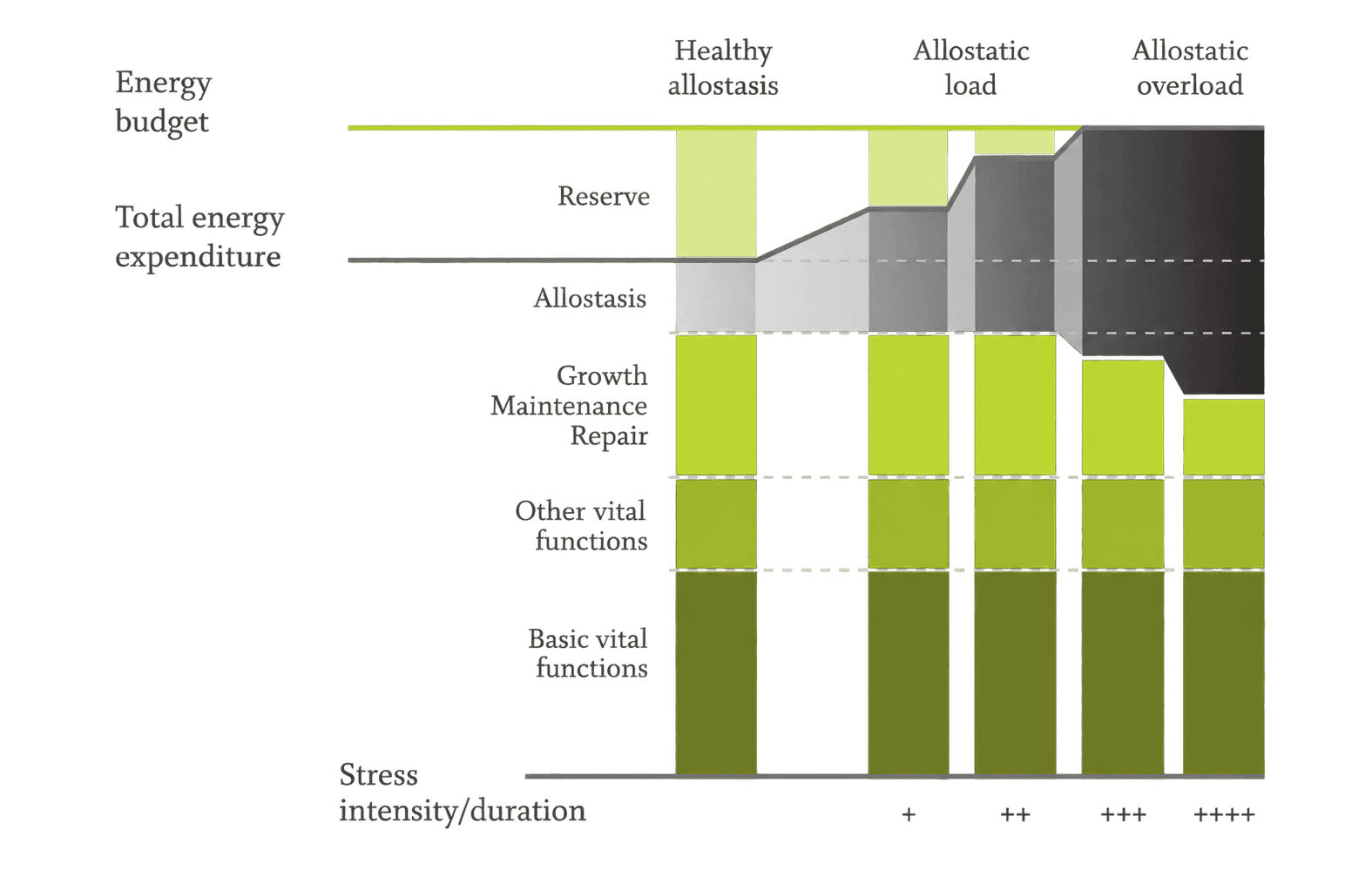
In May 2016, I went through a period when my body seemed to be running a marathon with no finish line. For one thing, I had started my doctoral thesis with a CONICET fellowship. As a doctor, I had no training in scientific research, so I was driven to study intensely to catch up with colleagues who had studied biology and chemistry. I was enthusiastic, but there was also a persistent inner demand: it’s not enough, you have to do more, you have to measure up. At the same time, I was coordinating the editing of Un libro sobre drogas, a complex project with more than twenty authors from different disciplines, which involved long hours at the computer exchanging, correcting, and reviewing texts. My workday stretched to about twelve hours a day, with little physical activity and makeshift meals made from whatever I could find in the fridge. As if all that weren’t enough, a pipe in the bathroom of the apartment where I lived broke, causing persistent dampness on the ceiling of the neighbor downstairs. For more than a month, construction workers were working inside my small apartment, tearing up walls and floors while I tried to concentrate and write. All those demands took their toll quickly: I lost weight without trying, I had trouble sleeping and often woke up earlier than usual. Persistent pain appeared in my lower back, I was more irritable, and I felt exhausted even on days when I didn’t leave the house. After a year of keeping up that insane pace, I reached my limit: a panic attack. I can see clearly now that those symptoms were a typical case of allostatic overload.
When overload continues over time and basic cellular maintenance tasks keep being postponed, damage stops being a remote possibility and becomes increasingly likely. What’s interesting—and sometimes bewildering—is that this process doesn’t manifest in the same way in everyone. Overload doesn’t affect the whole body uniformly; instead, it tends to show up first in tissues, organs, or systems that are already vulnerable. In that sense, overload does produce adaptations, but not the kind that strengthen the body. Rather, they are temporary patches that allow it to keep functioning today at the cost of paying the price tomorrow. And because the body is an integrated whole, no compensation is truly local. Sooner or later, these adjustments end up affecting other systems. A clear example is flat feet. A local change in the arch’s support alters the mechanics of walking and redistributes the load to the ankle and knee. Over time, these compensations can spread to the hip and spine, leading to symptoms elsewhere, such as neck muscle tension or headaches. Something similar happens in other areas of physiology. Intense, ongoing stress can persistently raise blood pressure, promote inflammation of the stomach lining and trigger gastritis, or act as a trigger for an autoimmune flare in people with conditions such as scleroderma. In any case, the chain breaks at its weakest link. And that link doesn’t appear by chance; it takes shape from the moment of conception, influenced by genetics, the intrauterine environment, and early experiences.
Not all bodies react to stress in the same way. Some people tolerate prolonged challenges with few visible symptoms, while others are overwhelmed quickly. Some people smoke for many years and don’t develop lung cancer, while others get it after less exposure. Some reach old age without ever knowing what high blood pressure feels like, while others develop it at an early age, even with healthy habits. Some people go through very difficult situations in life and remain emotionally stable, while others develop a psychiatric disorder in response to events that might seem minor from the outside. These differences are not about weakness or a lack of willpower, but about bodily history. As we saw earlier, animals learn to respond to their environment through experience, which the brain uses to build models of reality and anticipate what will come. The body’s education doesn’t begin at birth: it starts much earlier. For example, if a pregnant woman experiences intense stress—such as poverty, malnutrition, violence, or depression—those experiences reach the baby through hormonal changes, inflammatory signals, and variations in the supply of nutrients.Although we tend to focus on the pregnant parent’s body, the other parent’s contribution is also relevant. Recent studies show that habits such as smoking, alcohol consumption, a poor diet, or chronic stress can cause epigenetic changes that influence the development of the embryo and placenta, and may even be associated with long-term effects on the child’s health. These signals have a particular influence on the development of the brain systems responsible for detecting threats and regulating the stress response. In a favorable environment, this early calibration allows the alert system to activate quickly in response to a challenge and switch off once the danger has passed. In adverse environments, by contrast, it can leave the body predisposed to responses that are exaggerated, inadequate, or difficult to regulate.
The way the body adjusts its responses from the very moment of conception is through a fascinating process that we only began to understand a few years ago. The roughly 37 trillion cells that make us up contain exactly the same genetic information. Yet some specialize in transmitting electrical impulses, others in contracting and generating movement, and still others in defending us against infections. In other words, they share the same genes, but look and function in radically different ways. And what’s most astonishing is that, for life to be possible, the hundreds of types of cells that make us up manage to coordinate and cooperate, each playing its own role. All this happens thanks to tiny switches that can turn genes on or off as needed. They also adjust how cells respond to hormonal, immune, and metabolic signals. This collection of processes is known as epigenetic regulation. From the moment of conception, these switches respond to chemical signals circulating within the developing organism itself and to those coming from the mother through the placenta. So, for a cell to become a neuron and do what neurons do, the switches for that function are turned on, and those for other cellular identities are turned off. The fidelity of this process is so crucial that small changes in the early stages can alter development or prevent it from continuing. And what’s most unsettling is that many of these epigenetic marks can persist throughout life and, in some cases, also influence the next generation.
A historical case that shows how the uterine environment can shape future health is the Dutch famine of the winter of 1944–1945, toward the end of World War II. In retaliation for the Dutch resistance’s support for the Allies, the Nazi army blocked food supplies across much of the country. For months, the population survived on fewer than a thousand calories a day, and in some regions the average was just five hundred. Tens of thousands of people died of hunger, and among the survivors were women who went through the famine while pregnant. Decades later, research found that babies born from those pregnancies grew into adults at greater risk of obesity, type 2 diabetes, high blood pressure, coronary heart disease, and even psychiatric disorders. One of the most striking findings was that these effects seemed to depend on when during pregnancy the exposure occurred. Those who experienced the famine during the first trimester—a particularly delicate stage of embryonic development—had a significantly higher risk of developing multiple health problems than those exposed during the final trimester. The explanation is complex, but it starts with a simple idea I explained earlier: the body makes decisions through predictions. If the uterine environment signals that there is scarcity and hostility outside, the developing body will make the adjustments needed to respond as well as possible, even if the circumstances later turn out to be different.
Childhood also leaves its mark on how the body responds. During the 1990s, American doctors Vincent Felitti and Robert Anda conducted a large-scale study based on a recurring observation among their patients with health problems: many of them shared not only diagnoses, but also difficult childhoods. The researchers recruited more than 17,000 adults, assessed their health, and gave them a questionnaire. It asked about the presence of different adverse experiences during childhood and early adolescence, such as physical abuse, persistent humiliation, lack of affection and expressions of love, sexual abuse, and family dysfunction, among others. These experiences were grouped into ten categories, and each person was assigned one point for each category they had experienced.In these studies, adverse childhood experiences are usually organized into ten categories, grouped into four broad areas. The first is abuse, which includes physical abuse (being hit, pushed, shaken, or assaulted), emotional abuse (insults, humiliation, threats, or persistent comments that undermine a person’s sense of self-worth), and sexual abuse (inappropriate sexual contact, exposure, or penetration by an adult or older adolescent). The second area is neglect, which includes emotional neglect (a lack of affection, support, or attention to psychological needs) and physical neglect (a lack of sufficient food, clothing, medical supervision, or basic hygiene and safety). The third area is household dysfunction, which includes witnessing domestic violence; living with an adult with serious mental health disorders or problematic alcohol, drug, or medication use; the separation from or loss of a parental figure; and having a family member who is incarcerated. In later research, this framework was expanded to include a fourth area related to social and community adversity. This area includes experiences such as exposure to violence in the neighborhood or community, school bullying (bullying), persistent poverty, food or housing insecurity, and structural discrimination. The addition of this fourth area broadened the focus from family dynamics to the social context in which childhood unfolds. In other words, neither the intensity nor the number of episodes was counted; what mattered was the number of categories of adversity a person had experienced. For example, someone who had been physically abused by both their father and an uncle would get just one point, since both incidents belong to the same category of physical abuse. But if they had also lived with a mother with depression and their brother was in prison, they would get two more points—one for each additional category—for a total of three. The strength of this approach lies not in ranking traumas or measuring which was “more severe,” but in estimating how much adversity a body accumulated while it was growing up.
The study of Adverse Childhood Experiences (ACEs, for short) made it possible to show for the first time that childhood adversity was not an isolated or marginal phenomenon, but a common experience with major public health implications. The results showed a clear and consistent relationship: the more difficult a person’s childhood had been, the greater their risk of developing health problems in adulthood. Beyond a certain threshold, the impact stops expressing itself as emotional distress and becomes a profound biological disruption that persistently affects the way the body regulates itself. In other words, the more stress experienced in the early stages of life, the greater the allostatic load. Over the next twenty years, this research was replicated in several countries around the world, and the results were consistent across all contexts. Among people who experienced four or more categories of adversity, the risk of heart or lung disease triples; the risk of depression or anxiety increases more than fourfold; the risk of developing alcoholism increases sixfold; the risk of engaging in risky sexual behavior or contracting sexually transmitted infections increases up to sixfold; the risk of problematic use of other drugs increases tenfold; and the risk of attempting suicide increases more than thirtyfold. In addition, the likelihood of using psychotropic medication or painkillers increases progressively with the number of adverse experiences, and people with high scores tend to respond less well to medical treatments than those who did not experience adversity in childhood. The magnitude of the effect is so striking that the accumulation of intense stress in early life can predict, with remarkable accuracy, the emergence of multiple forms of suffering in adulthood.
But adverse experiences are not limited to what happens behind closed doors at home. The neighborhood, the community, and the social context also shape psychophysical health throughout life. Persistent poverty, everyday violence, discrimination, segregation, and economic uncertainty generate sustained, diffuse stress that is difficult to escape and, like family adversity, becomes inscribed in our biology. It is no coincidence that symptoms of anxiety and depression, psychotropic medication use, and suicide rates rise during economic crises, especially in regions with higher unemployment and less social support. The purpose of this chapter is not to explore in depth the consequences of living under cultural dynamics centered on competition and individualism, but it is hard to ignore that we are not biologically adapted to living in isolation or in a state of constant comparison. We evolved in tribal, cooperative settings, where security depended on connection, not performance. This contrast between cooperation and competition is not merely a theoretical hypothesis; it can be observed in contemporary hunter-gatherer societies. In a 2023 study of Hadza men, researchers found that a lower reputation as a hunter was not associated with higher levels of chronic cortisol. In other words, lacking a valued skill in that community—such as being a successful hunter—does not seem to lead to humiliation, punishment, or social exclusion. Everyday cooperation, the sharing of food, and cultural mechanisms that discourage extreme competition likely buffer the biological impact of status.
Although the allostatic load generated by adverse childhood experiences can affect the entire body, it tends to manifest predominantly in the nervous system. For those of us who work in mental health from a perspective that is sensitive to psychological trauma, this is not surprising. Most people who seek help have had difficult lives, and much of the therapeutic work involves helping them understand that their distress and many of their behaviors do not reflect a personal flaw, but rather survival strategies developed in contexts where care was insufficient, inconsistent, or unavailable when it was needed most. Over time, this dysregulation often expresses itself in the form of psychiatric disorders. However, which disorder each person will develop does not follow a linear or predictable pattern. There is no direct relationship between an adverse history and a specific diagnosis. In that sense, the outcome is more like a lottery than a simple equation. In one of the largest scientific efforts to date, an international network of researchers analyzed the genetic information of more than a million people with fourteen different psychiatric diagnoses. Far from finding “genes for depression,” “genes for schizophrenia,” or “genes for anxiety,” the results showed that the same genetic variants simultaneously increase vulnerability to multiple disorders. From this perspective, psychiatric disorders should not be understood as separate, static brain diseases, but as diverse manifestations of functional dysregulation in shared neural networks, whose expression varies according to a person’s history, context, and stage of life.
This perspective also helps explain a phenomenon that is very common in clinical practice: having two or more psychiatric conditions at the same time (or comorbidity). Far from being an exception, receiving more than one psychiatric diagnosis over the course of a lifetime is common. In a study published in 2019, a team of Danish scientists analyzed the clinical records of almost six million people followed over several decades and showed that receiving a first psychiatric diagnosis significantly increases the risk of receiving other, different diagnoses over time. What is interesting is that this was not a progression toward a specific condition, but a general increase in the risk of developing any other psychiatric disorder. This suggests that the first diagnosis rarely serves as a definitive label. Rather, it marks the beginning of a trajectory of vulnerability in which different conditions can emerge, overlap, or replace one another over time. Someone initially diagnosed with generalized anxiety disorder might, years later, receive diagnoses such as major depression, an eating disorder, or a personality disorder, or develop problematic substance use. Perhaps that is why psychiatry can sometimes be such a confusing field.
However, you do not need a psychiatric diagnosis to suffer the consequences of having lived through difficult experiences in childhood. If, from an early age, we are subjected to relentless criticism, constant humiliation, and put-downs for everything we do, we learn that it is not safe to express ourselves. And if, when we seek help from the people who are supposed to care for us, our pain is minimized or invalidated, we learn that expecting care is pointless. The impact is even greater when no one notices whether you have eaten, slept, have a fever, or need help with school. Similarly, in emotionally unpredictable environments, with adults who are available one day and absent, silent, or exploding in anger over the smallest things the next, we learn and come to accept that the world is unstable. If affection also depends on how well you behave, comparisons are frequent, and demands are constant, personal worth begins to get confused with the ability to control yourself and not make mistakes.
These early experiences leave us with a deep-rooted sense of being inadequate, defective, or vulnerable, and contribute to the development of many behaviors that later cause suffering. There is no longer any need for someone else to criticize, control, or invalidate us from the outside, because we learn to do it ourselves. Our alarm system is triggered by the slightest sign, mistakes feel like threats, and calm feels fragile, as though it could shatter at any moment. Many everyday decisions—what to say, what to eat, how much to rest, how hard to push ourselves—begin to revolve around avoiding rejection, conflict, or the feeling that we are not good enough. In trying to do this, some people develop a markedly accommodating attitude: saying yes when they want to say no, adapting excessively, prioritizing other people’s needs, and putting their own off, as though pleasing others or not being a bother were necessary to stay safe. Others channel that same inner pressure into constant activity: working nonstop, always keeping busy, producing, performing, and meeting expectations, not so much for enjoyment as to avoid touching whatever feels too uncomfortable inside. In romantic and friendly relationships, closeness can be confused with intensity, leading to relationships marked by jealousy, control, constant breakups and reconciliations, prolonged silences, or outbursts of emotional (and sometimes physical) violence. Or, at the other extreme, we learn to keep our distance, not to need too much, to withdraw from intimacy, and to build superficial connections as a way to protect ourselves from the possibility of being hurt.
Seeing this whole web of connections can be uncomfortable, because it forces us to revisit stories we would rather not touch. But it is the only way to understand why we responded the way we did in the past and why we continue to do so in the present. Often, the body does not “go wrong” for no reason; it learned to survive under difficult conditions. But just as the body learned to defend itself, it can also learn to relax, regulate itself, and find new ways of being in the world. The same mechanisms that shape our stress response—neural plasticity, hormonal modulation, and body memory—are also the tools that allow us to learn again, repair ourselves, and live differently. The challenge is to offer the body different experiences, repeated and sustained, that teach it that it is no longer living on a battlefield. That there is now shelter, support, and the possibility of new learning. That it no longer needs to defend itself all the time.
The first step in helping the body come out of defense mode is not to do more, but to learn to feel better. Feeling is not about waiting for an emotion to overwhelm us or for a thought loop to trap us, but something more basic: noticing what is happening inside, sensing subtle changes in the body, naming them, and making room for them. Fortunately, this ability can be trained, and it begins with recognizing our affective states, the most primitive way the body has of sensing itself. Before a clear emotion or a defined thought appears, the body is already registering whether something is going well or badly, whether there is too much or too little, whether it is better to move closer or farther away. This is easy to see in the animal world. A fish swimming toward more oxygenated water when it starts to tire is responding to a subtle discomfort that urges it to move. An iguana moving out of the shade onto a warm rock at dawn is responding to an internal feeling of lethargy or stiffness that improves with warmth. When we are in tune with our feelings, everyday life becomes clearer. We know when to rest, when to ask for help, and when to stop. But when we ignore them, cover them up, or never learn to recognize them, we are at the mercy of vague impulses that seem to come out of nowhere and sweep us along without warning.
Affective disconnection is not a personal failing, but a learned strategy that is reinforced, to a large extent, by culture. We grow up in environments that teach us to prioritize doing over feeling, where phrases like “don’t cry,” “don’t get angry,” “don’t be so dramatic,” or “it’s not that bad” are repeated until not feeling seems safer than noticing what is happening inside. On top of this, contemporary life offers many ways to numb ourselves, making it even easier to distance ourselves from distress. For some people, however, disconnection is not just a defensive choice, but is linked to a more profound disruption in the ability to perceive and interpret the body’s internal signals. Allostatic load from an early age can distort the brain’s prediction systems and affect interoception, the sense that allows us to feel ourselves from within. This is why interoceptive disturbances are common in different mental health disorders. In panic attacks, for example, normal bodily changes—a slight increase in heart rate, a feeling of warmth, or a passing dizzy spell—stop being neutral signals and are interpreted as the beginning of a catastrophe. In eating disorders—such as anorexia and bulimia—the bodily sensations that should guide food intake become confusing, imprecise, or entirely inaccessible. Eating is no longer guided by the body and instead becomes organized around external rules, numbers, rigid schedules, or moral judgments, further deepening interoceptive disconnection. In depressive disorders, internal signals become flat, muted, or difficult to identify, giving rise to a persistent feeling of emptiness, bodily heaviness, or lack of energy without a clear cause; distress is experienced as diffuse, constant, and difficult to name. In all these cases, the problem is not that the body “isn’t working properly,” but that the internal dialogue between sensations, emotions, and predictions has become disorganized.
Feeling bad is unpleasant and uncomfortable, and moving away from discomfort is a natural instinct, as automatic as pulling your hand away from a fire when it burns. But when the discomfort comes from within, escaping is not so simple. There is no visible flame to put out or specific wound to heal. The only apparent way out is to shut down what we feel or distract ourselves with something else. In that sense, contemporary life offers us a wide range of ways to bury and cover up the feeling: smoking a cigarette, scrolling endlessly through Instagram or TikTok, eating nonstop, playing video games for hours, gambling as soon as payday comes, going shopping even when we do not need anything, watching pornography every day, overworking, or letting ourselves be carried away by any stimulus that promises lights, sounds, or instant rewards. Our ancestors did not have these escape routes. They could not change their mood with a click or numb an emotion so easily. Feeling—even when it hurt—was part of being alive, and living with discomfort for long enough allowed them to understand what their bodies were asking of them at each moment. In other words, they were more seasoned. Today, by contrast, we are surrounded by shortcuts that pull us away from that kind of listening and obscure the way forward.
But constant avoidance comes at a cost, because it deprives us of one of our most important senses for finding our way in the world. A person who cannot see or hear can learn to rely more on their other senses. But someone who cannot feel or perceive what is happening inside them is left adrift. An extreme example of what it means not to feel is that of people born with a rare genetic mutation called congenital insensitivity to pain, which affects fewer than a hundred people worldwide. One of them is Ashlyn Blocker. When she was born, everyone said she was a very good, quiet baby because she never cried. What might seem positive at first glance was, in fact, a serious problem. Ashlyn could not send the signals her caregivers needed in order to know how to respond; she did not even cry when she was hungry. At eight months old, she was taken to an ophthalmologist because of persistent tearing, and a deep abrasion on her cornea was discovered. In anyone else, that injury would have caused intense pain, but Ashlyn showed no reaction. People living with this condition are constantly at risk: they break bones without noticing, burn themselves by touching hot surfaces, and develop serious infections because they cannot feel the damage as it progresses. Without pain as a compass, they are left unprotected, and many die before reaching adulthood. The same is true of feelings and emotions. Although they are not always pleasant and can sometimes be uncomfortable, they are valuable signals that guide our behavior. Ignoring or covering them up may distance us from pain, but it can also distance us from ourselves. That is why identifying our affective state is the first step toward caring for our health.
Affect is shaped by a combination of two fundamental variables: the quality of the experience and the level of energy available at that moment. Quality lies on a continuum from unpleasant to pleasant, while energy ranges from states of high activation to states of calm or stillness. The combination of the two gives rise to an enormous variety of possible affective states. A simple, useful practice for beginning to notice these states is to create an affective map that helps us locate them more clearly, whether they are dominated by bodily sensations, emotions, or thoughts. To do this, all you need to do is answer two questions: What is the quality of your experience right now? And What is your level of activation or energy right now? To make answering easier, it can help to imagine both axes as continuous lines. On the quality axis, one end represents the most unpleasant experience you have ever had and the other, the most pleasant. You can assign numerical values to them, for example, from −10 to +10. The same can be done for the level of activation:
−10 for the calmest state you can remember and +10 for the moment of greatest activation.
Let’s look at an example. Right now I’m sitting at my computer, drinking mate while writing this book, on a Sunday morning, after meeting up with friends last night and getting a good night’s sleep. The quality of my experience leans toward pleasant, though not intensely so: I’m still a little tired from the week that just passed, and I feel a slight discomfort in my stomach (perhaps the result of the brownie with cream and strawberries I ate last night). I could place it around +3. As for activation, I feel relatively calm, but the caffeine in the mate and my enthusiasm for writing are keeping me awake and alert, so I could give that a +3 as well. One more step is to try to notice where this affect is expressed in the body. In my case, this combination of calm and pleasure manifests as a feeling of lightness in my shoulders and a slight tingling in my legs. Repeating this exercise over time helps fine-tune interoceptive awareness and rebuild the connection between what we feel, what we think, and what happens in the body.
Once we learn to notice affective states, the next challenge is to translate that experience into words. At this point, you may find yourself realizing that naming what you feel is not easy. And that is okay. Even those of us who spend a lot of time observing affects have days when it is hard to pin down what is happening inside. That is because naming an affective state requires more than just feeling it: you need a vocabulary, and sometimes the word you need is not in your dictionary. For example, sadness can arise after a major loss, such as the death of a loved one, a romantic breakup, a layoff notice, or the cancellation of a weekend trip to the mountains with friends. All these experiences might fall on the unpleasant, low-energy side of the map, but they are not the same, and the label “sadness” might not quite fit them either. Some feel like nostalgia, others like frustration, anguish, disappointment, or despair. When an experience gives rise to less intense affective states, it is even harder to name them. For example, the feeling of calm you have when you wake up after a good night’s sleep is not the same as the feeling I have when I lie down on the sand by the sea, or while I read a book sitting in an armchair with a cat on my lap. All three experiences share a pleasant quality and a low energy level, but each has a different texture.
Some languages around the world have unique words for naming affective states that we could describe in Spanish only with several sentences. In Filipino, gigil names the almost irresistible urge to squeeze or scrunch up something unbearably adorable, like when we see a baby make a funny face or a clumsy puppy scampering across the grass. In Dutch, voorpret refers to the pleasure of anticipating an event that has not yet happened, that mix of excitement and nerves you might feel, for example, the night before a trip. In Japanese, the old term ageotori is often cited to describe the quiet disappointment of looking worse after a haircut, and arigatameiwaku to name the ambiguous discomfort of receiving an unwanted favor, which may even cause us problems, but which we still feel obliged to thank someone for. In Czech, litost combines the pain of one’s own suffering with the desire for revenge because of it, as though shame or humiliation sparked a simultaneous need to restore wounded dignity. In Brazilian Portuguese, cafuné names the tender gesture of stroking a loved one’s head, like when you stroke your daughter’s hair to help her fall asleep. In Nahuatl, tlazohkamati expresses deep, affectionate gratitude, especially toward someone who stands by you without asking for anything in return. And in Guarani, aguyje can express profound gratitude, sometimes more closely tied to respect for life and nature than to a simple formal thank-you.
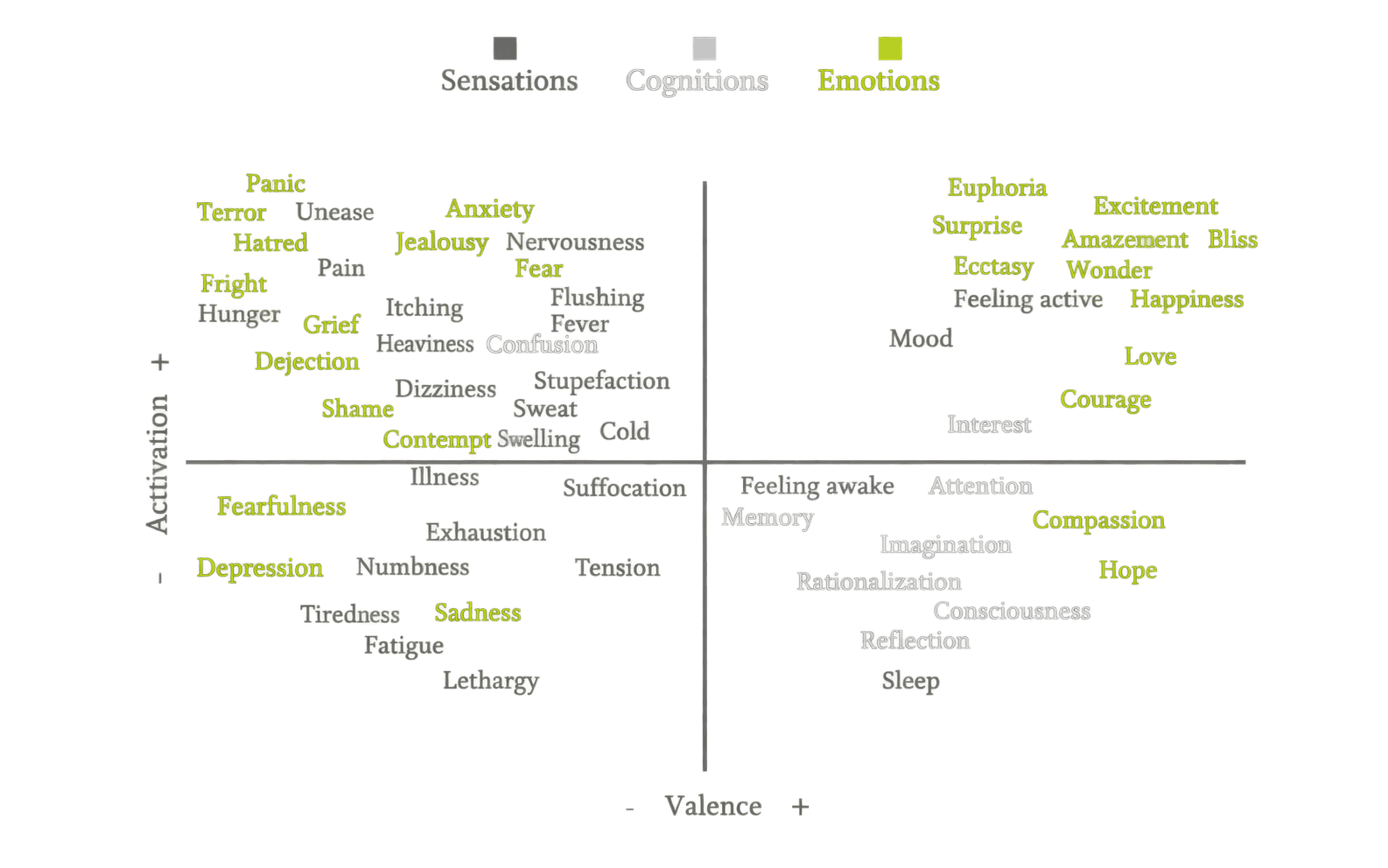
Naming affective states is not just an exercise in language or poetry: it is a concrete act of self-regulation and a tool widely used in psychotherapy. Although it may seem simple, paying attention to what we feel and putting it into words has concrete, measurable effects on our nervous system. By labeling an unpleasant affective state with relative precision, we reduce uncertainty and emotional reactivity, transforming a confusing inner experience into something recognizable and processable. That is why the more specific the label for our inner state, the better suited our response can be to what is happening to us. This effect has been confirmed by research that analyzes brain activity in real time, which has found that the simple act of naming what we feel activates neural networks involved in functions such as impulse inhibition, decision-making and, above all, emotional regulation. When these networks are activated, they modulate the systems responsible for detecting threats and triggering the alarm response. This also helps explain why keeping a personal journal or talking to someone we trust can make us feel better: not because these things solve the problem right away, but because they reorganize how the nervous system processes it. Naming what we feel does not eliminate distress, but it is often the first step toward no longer being trapped in it.
However, identifying what we feel can be challenging for people who are not used to doing it. Not because they cannot—in the end, it is a capacity we all have—but because a lack of practice can make it uncomfortable. For some people, though, this kind of awareness can feel overwhelming, especially for those who are more sensitive or whose interoceptive system has been disrupted by multiple adverse experiences in childhood. That is why it is essential to go slowly and patiently, like someone recovering a forgotten sense or retraining a muscle that has been immobilized for years. At first, the point is not to seek intense sensations or extreme experiences, but to practice in simple, safe settings, paying attention to what is happening in the body. You could start with something as ordinary as gardening and noticing the texture of the soil between your fingers or the damp scent rising from the ground. Or go for a walk and notice the warmth of the sun on your skin, the weight of your body shifting from one foot to the other, and the sound of the wind moving the leaves. Even a shower can become an exercise in inner awareness if, instead of going on autopilot, you pay attention to the temperature of the water, how it runs through your hair, or the pressure with which it falls on your shoulders. Once this first step feels more familiar and less uncomfortable, some people can move on to slightly more challenging experiences, always gradually and in a controlled way. For example, hold an ice cube in your hand and notice not only the cold, but also the muscle tension and changes in your breathing. Or chew a piece of lemon and observe the sourness in your mouth along with your face's reaction. Or try a spicy sauce and notice the sequence of responses it triggers: heat on your tongue, a faster pulse, perhaps a little sweating.
Of all the strategies for training tolerance of discomfort, brief exposure to cold is my favorite. Intense cold—such as immersing yourself in icy water—usually triggers an intense, automatic bodily reaction: sharp pain, rapid breathing, and an almost desperate urge to get out, as if there were real danger. The first time I did it, I felt an almost unbearable sensation, as if knives were being driven into different parts of my body, and I was certain I had to escape immediately. Fortunately, my friends were outside, encouraging me to stay. As the seconds passed, I realized that it was actually a psychological experience and that my body was not being harmed. It was two very intense minutes, but also profoundly clarifying. Over time, I learned to get through that first wave of alarm without running away, to regulate my breathing, and to stay. Today I enjoy getting into any body of water—a swimming pool, river, lake, or sea—even in winter. Beyond the potential health benefits—which are many—the central lesson is something else: to discover in your own body that intense discomfort is not always dangerous, and that you can move through it unharmed when you face it with presence and calm. If you don't like the cold, the wisest thing is to start slowly and in safe conditions. The body learns through gradual exposure, not shock. It's not about forcing yourself or “toughing it out,” but about giving the nervous system the opportunity to adapt without becoming overwhelmed. Wearing fewer layers for a few minutes in winter, walking barefoot in the morning when the ground is still cold, or ending a warm shower with a few seconds of cold water can be enough to get started. As with any process of learning through the body, the key is not intensity, but progression, repetition, and the ability to listen to when to continue and when to stop.
In addition to easing the state of alert, paying attention to what we feel activates the system responsible for calm. This state is not experienced merely as a subjective feeling of relaxation and safety; it also opens a genuine window for restoration: the body uses less energy, repairs tissue, consolidates learning, improves digestion, strengthens the immune system, and restores metabolic balance. Although noticing our affective state is a central way of accessing this restorative physiology, it is not the only one. There are everyday practices, simple but powerful, that can induce calm even in the midst of daily life. Simple actions such as taking a hot shower or walking barefoot on grass, sand, or soil can trigger profound relaxation responses. However, few things are as effective and accessible for quieting the nervous system as consciously controlling our breathing.
Because breathing is finely regulated by allostasis, it is something we normally do automatically, without having to think about it. When the brain predicts that it will need more energy—as it does in a stressful situation—it increases the activity of the respiratory muscles, especially the diaphragm. Inhalation becomes deeper and breathing rate increases to bring more oxygen into the lungs. The problem arises when tension continues over time and the body gets no break. In that context, breathing can turn into a sequence of short, broken sighs, perpetuating a vicious cycle in which the body prepares for everything except rest. What's fascinating is that, unlike most of the body's automatic systems, breathing offers us a direct way to intervene voluntarily and, within minutes, change the state our nervous system is primed for. The principle is simple: make the exhalation last twice as long—or even three times as long—as the inhalation. The easiest way to do this is to let the air out through your mouth, gently and slowly, as if you were blowing through a little tube with your lips barely parted. So, for example, if you inhale for two seconds, you can try to extend the exhalation to four, five, or six seconds, always gently, without forcing it.Under normal conditions and in the absence of obstructive lung diseases, a large proportion of the air is released during the first second of exhalation. The rest comes out more slowly, passively, and steadily. Voluntarily prolonging this final phase of exhalation helps slow the heart rate by decreasing sympathetic activation and increasing parasympathetic tone. Spending a few minutes on this practice, even just a couple of times a day in a quiet setting, is usually enough to let the body know it can release the alarm and let its guard down. Over time, it becomes a tool you can use in almost any situation: in line at the supermarket, during a meeting, or while walking. It is no coincidence that disciplines such as yoga and tai chi chuan, which focus on conscious breathing and slow movement, show sustained positive effects on stress management and mood, even in people with mental health problems.
Of all the ways to invite calm into the body, few are as effective for me as losing myself in nature. Since I live in Córdoba, I have the privilege of being just over an hour's drive from a forest, a river, or the mountains. Numerous studies show that spending time outdoors in natural settings reduces alertness and promotes calm, with concrete effects such as improving mood, lowering blood pressure and heart rate, modulating the immune system, and increasing the overall sense of well-being. When we go out into an open natural space—whether a park or town square, the beach, a forest, a riverbank, or the mountains—the whole body receives signals inviting it to let its guard down. Our eyes rest as we look into the distance, and our attention relaxes among the shapes and colors of the landscape; our ears grow still with the sound of birds singing, water flowing, or wind in the branches; our skin senses the air temperature and the warmth of the sun; and even our sense of smell comes alive with the scents of the earth and vegetation. It's not just about seeking fresh air or a change of scenery, but about reconnecting with an environment that the body recognizes as familiar, even though we may have spent most of our lives surrounded by walls and asphalt. If we add slow, attentive breathing as we walk in silence and pay attention to our surroundings, the effect is amplified. Because of the breadth and consistency of its benefits, this practice—known in Japan as shinrinyoku or “forest bathing”—is part of Japanese medicine's therapeutic toolkit and is supported by public health policies.
But activating calm a couple of times a day is not enough for the body to regain its balance. Sometimes it simply can't, because it keeps receiving signals of danger. Our nervous system was fine-tuned over hundreds of millions of years in natural environments, with gradual changes in light, soft sounds, and scattered stimuli. Urban life, by contrast, exposes us to an everyday storm of loud noises, bright lights, urgent conversations, glowing screens, endless to-do lists, interrupting notifications, social media that invites comparison, and distressing news. Another quiet but powerful factor adds to this: constant multitasking and fragmented attention. Jumping from one message to another, replying to emails while we eat, listening to an audio message while scrolling and thinking about what comes next while doing something else keep the brain in a constant state of alert. Every interruption, however minor, forces the nervous system to reorient, readjust, and start over, as if it could never fully complete one task or rest between one and the next. Even what we usually call “entertainment” often acts as a nervous system stimulant that, far from relaxing us, wears us out. Research clearly shows that spending a lot of time in front of screens—especially when we consume content that offers no breathing room—leaves the body keyed up, with a more active heart and lighter sleep, even after we've gone to bed and left our phone far away. That's why one simple way to ease this overload is to create small spaces free of stimuli and interruptions: go to the bathroom without your phone, eat without screens, do one thing at a time, take a day off social media each week, or avoid the news after a certain time. It's not about moving to the forest and shutting yourself off from the world—though if you want to, that's fine—but about learning to recognize which stimuli are draining your battery without you noticing and creating real breaks to recharge. In an age of hyperconnectivity, disconnecting can literally be an act of health.
Another important point to consider is loud noise. City living can be truly deafening, especially for people with high auditory sensitivity, as I am. It took me a long time to realize that the constant hum of traffic, the pounding of jackhammers, and the engines of buses left me exhausted—a clear sign of overload. For a while, I tried to block out the noise by listening to music through headphones while walking or commuting, but I had to turn the volume up so high that the cure ended up being worse than the disease. Besides, I couldn't use them when I was riding a bike, because they blocked my hearing and made me less aware of my surroundings. The solution turned out to be much simpler than I had imagined: I started wearing earplugs when I went outside—the same ones I already used for sleeping—and the change was immediate. Today, earplugs come in different colors, shapes, and materials, with different levels of noise reduction. Sometimes, though, the problem is not just too much noise, but an almost total absence of silence. In an environment where there are always background sounds—engines, voices, music, notifications—the nervous system never gets a real moment of rest. Reclaiming small pockets of silence, even brief ones, can be just as restorative as turning down the volume.
Having said all this, individual practices are not always enough. There are times when the body cannot get out of a state of alert, no matter how many breathing exercises, hot showers, or walks we try. Not because we are doing something wrong, but because the overload was too intense or lasted too long. If not properly addressed, early adverse experiences remain trapped in the body's memory and affect physical and mental health throughout life. In such cases, seeking professional help is not a sign of weakness, but a clear-headed way to expand the resources available to us. There are evidence-based therapeutic approaches that can reorganize the nervous system when it has become trapped in an automatic, reactive, and rigid mode; especially those that teach emotional regulation skills and help us relate more flexibly to our thoughts and bodily sensations. These include cognitive behavioral therapy, contextual therapies (such as acceptance and commitment therapy or dialectical behavior therapy), and somatic therapies. Within this group, EMDR therapyEMDR therapy (short for Eye Movement Desensitization and Reprocessing) is recognized by international organizations such as the International Society for Traumatic Stress Studies, the World Health Organization, and the American Psychological Association as a first-line treatment for post-traumatic stress disorder. Although it was originally developed to address psychological trauma, accumulated evidence shows that EMDR may also be helpful for other conditions in which unprocessed adverse experiences continue to cause activation and rigidity in the nervous system, such as anxiety disorders, depression, eating disorders, prolonged grief, addictions, chronic pain, some psychosomatic conditions, and various forms of emotional dysregulation. holds a special place in my practice. It is an approach designed to help the nervous system process overwhelming experiences that have become “stuck” and continue to cause overload in the present. Using scientifically validated protocols and techniques, EMDR helps memories, bodily sensations, and emotions associated with those experiences to be “digested,” thereby reducing their physiological and emotional impact. Psychedelic-assisted therapy also deserves mention. It involves the use of psychoactive substances in carefully prepared clinical settings, with the support of trained professionals, to facilitate deep therapeutic processes. Rather than “inducing experiences,” these approaches seek to create temporary states of greater openness, flexibility, and connection that can help loosen rigid patterns of thought, emotion, and bodily response associated with states of allostatic overload. Although the scientific evidence is growing and promising—especially for conditions such as treatment-resistant depression, post-traumatic stress disorder, and addictions—these interventions still require clear regulatory frameworks, precise indications, and responsible clinical support. They are not shortcuts or magic solutions, but powerful tools that, when used judiciously, can expand the range of therapeutic possibilities.It is worth noting that the therapeutic effects observed do not depend solely on the substance, but are strongly shaped by the psychotherapeutic model accompanying it, prior preparation, the clinical framework, and the subsequent integration process. Without these elements, therapeutic potential is considerably reduced and risks increase.
In some cases, in addition to psychotherapeutic support, it may be helpful to use psychiatric medication temporarily. Not as a substitute for therapeutic work, but as support that can help the brain move out of states of extreme activation and regain some capacity for regulation. When the nervous system is overwhelmed, exhausted, or trapped in automatic alarm responses, certain medications can help bring about that initial adjustment, reducing the intensity of the inner noise and creating the conditions needed for therapeutic work to be possible. When properly prescribed and monitored, they are not intended to numb the experience or silence distress, but to make it tolerable, providing a more stable foundation from which to feel, think, and choose again.
However, none of the strategies we've mentioned works in a vacuum, and none can be sustained if the body lacks its most basic biological foundations. Drinking enough water, eating well, getting enough sleep, and moving regularly are not accessory “healthy habits,” but essential conditions for the nervous system to have what it needs to regulate itself. A dehydrated, poorly nourished body deprived of rest or subjected to a sedentary lifestyle has less capacity to tolerate stress, process emotions, and move out of alert mode, no matter how many breathing exercises or therapies we try. Water, often underestimated, is the medium in which all biological processes take place: without adequate hydration, circulation, nerve signaling, and temperature regulation become less efficient. Eating well is not just a matter of calories or nutrients, but of giving the body the energy and materials it needs to repair and adapt. Sleep is not wasted time, but the time when the brain reorganizes experience and reduces the accumulated load. And movement is not just exercise, but a direct way to regulate our physiology. These pillars deserve a chapter of their own, and that is why we will explore them in depth in the coming chapters, but it is important to keep them in mind from now on: without them, any attempt to regulate the nervous system is limited.
This is the first chapter of What the Body Knows. Along with theoretical concepts, this project offers exercises to practice practical tools that can help you understand your body, take care of your health, and feel better.

Teoría y práctica para entender cómo sentirte mejor y efectivamente empezar a hacerlo.
Incluye:
- Lo que el cuerpo sabe
- Lo que el cuerpo sabe | Cuaderno de ejercicios para sentirte mejor

¿Qué nos pide nuestro cuerpo para estar saludable? ¿Podemos darle lo que necesita? Un libro con herramientas de la medicina del estilo de vida y la medicina evolutiva para entendernos y sentirnos mejor.
296 páginas. Impresión a dos tintas (negro + Pantone). 15 x 21 cm. Interior en papel bookcel de 80 gramos, cubierta en papel ilustración mate de 300 gramos, acabado con sello en bajorrelieve.
Biografía del autor:
Ezequiel Arrieta es Médico y Doctor en Ciencias Biológicas por la Universidad Nacional de Córdoba. Desarrolla su práctica clínica desde una perspectiva integral, combinando alimentación, movimiento, psicoterapia y herramientas farmacológicas de distinto tipo. Es editor de Un libro sobre drogas (EGLC, 2017) y Las olas (EGLC, 2022), coautor de Clima (EGLC, 2022) y autor de La invención de la comida (EGLC, 2023).

Un cuaderno con herramientas prácticas de la medicina del estilo de vida. Ejercicios sobre tu relación con la alimentación, el descanso, el estrés y el movimiento. Creado por el Doctor Ezequiel Arrieta, para cuidar el cuerpo y sentirte mejor.
192 páginas. Bajorrelieve y bordes redondeados. Encuadernación cosida. 14x19cm.
Biografía del autor:
Médico y Doctor en Ciencias Biológicas por la Universidad Nacional de Córdoba. Desarrolla su práctica clínica desde una perspectiva integral, combinando alimentación, movimiento, psicoterapia y herramientas farmacológicas de distinto tipo. Es editor de Un libro sobre drogas (EGLC, 2017) y Las olas (EGLC, 2022), coautor de Clima (EGLC, 2022) y autor de La invención de la comida (EGLC, 2023).

¿Qué nos pide nuestro cuerpo para estar saludable? ¿Podemos darle lo que necesita? Un libro con herramientas de la medicina del estilo de vida y la medicina evolutiva para entendernos y sentirnos mejor.
Formatos .epub y .mobi.
Biografía del autor:
Médico y Doctor en Ciencias Biológicas por la Universidad Nacional de Córdoba. Desarrolla su práctica clínica desde una perspectiva integral, combinando alimentación, movimiento, psicoterapia y herramientas farmacológicas de distinto tipo. Es editor de Un libro sobre drogas (EGLC, 2017) y Las olas (EGLC, 2022), coautor de Clima (EGLC, 2022) y autor de La invención de la comida (EGLC, 2023).