
Teoría y práctica para entender cómo sentirte mejor y efectivamente empezar a hacerlo.
Incluye:
- Lo que el cuerpo sabe
- Lo que el cuerpo sabe | Cuaderno de ejercicios para sentirte mejor
This content was translated using artificial intelligence and may therefore contain errors.
During the pandemic, some people learned to bake sourdough bread, some finally dared to adopt a cat, and others discovered the pleasure of gardening on their balconies. Others learned to play guitar, do yoga over Zoom, or cook from recipes. Amid lockdown, fear, and boredom, unexpected skills blossomed. I didn’t learn anything in particular, but isolation gave me the time to finish my doctoral thesis. Everyone got through that time as best they could. Some made the most of it, while others barely survived it. But beyond our individual experiences, the pandemic left us with a series of lessons we shared. It confronted us with the fragility of life, the need for human contact, and the evidence that health is not just a personal matter, but part of a much larger collective web. The pandemic also left us with a series of unexpected lessons about the body. In the race to understand what was happening and how we could get through the crisis, science made unprecedented progress. Within a few weeks, the virus’s genome had been decoded, and within a few months, vaccines were already in the experimental stage. At the same time, discoveries were piling up about how the pathogen spread, how it manifested itself, and how the human body responded to this new threat.
From the beginning, it was clear that it wasn’t the virus that killed people. In severe cases of COVID-19, instead of mounting a measured defense, the immune system panicked and launched an uncontrolled response that ended up damaging the body’s own tissues instead of stopping the virus. What should have been a gentle rain to moisten the earth turned into a hurricane that swept everything away.The technical name for this systemic hyperinflammatory syndrome is cytokine storm. Cytokines are molecules that immune system cells use to communicate with one another and coordinate the response to infections, injuries, or internal threats. Under normal conditions, their release is sufficient to carry out repair and maintenance tasks, but when this signaling becomes excessive and disordered, the immune response ceases to protect and begins to cause harm. Although this phenomenon is usually associated with severe infections, it can also be triggered by some immunotherapies, autoimmune diseases, and certain blood cancers when the immune system loses its ability to self-regulate. In the lungs, tissue became inflamed and fluid built up, making the exchange of oxygen increasingly difficult. Air got in, but it wasn’t enough. An immune storm broke out in the blood, generating small clots that blocked circulation in the capillaries. The fever rose and the skin turned red. The body trembled, became dehydrated, and hurt. Irritated by all this turmoil, the walls of the blood vessels lost their ability to regulate pressure, and the heart, forced to pump in a hostile environment, became exhausted. The kidneys, with fewer nutrients available to do their work and overloaded with waste, struggled to filter the blood. The liver, too, lost its ability to cleanse. Toxins flooded the nervous system, which consequently became erratic, causing confusion, delusions, agitation, and a mental fog that blurred consciousness. The distress was deep, persistent, and inexplicable. And when the body could no longer sustain its basic functions, multiple organ failure followed. But COVID-19 did not affect everyone equally. As with other infections, older adults and people who had received transplants or had weakened immune systems were more likely to die or end up in the hospital. Curiously, so were people living with obesity, high blood pressure, type 2 diabetes, or cancer—different conditions, but all linked by the same physiological thread: immune dysregulation.
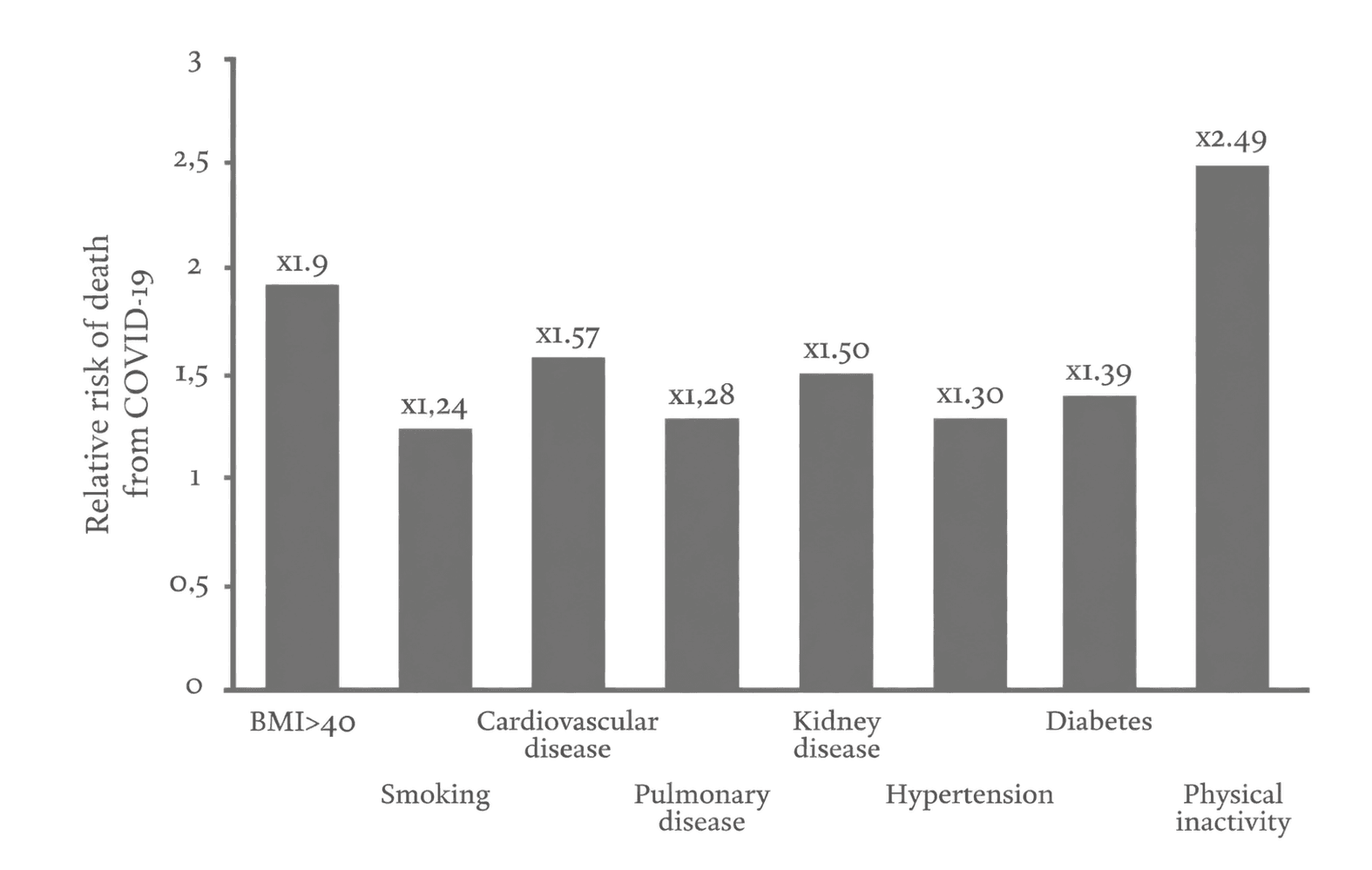
In the midst of that search to understand what made the difference between a mild case and a fatal one, a factor emerged that nobody had on their radar. It wasn’t a disease or a genetic mutation, and it wasn’t even smoking. It was something much simpler, but profoundly overlooked. In 2021, a team of researchers analyzed the records of more than 48,000 adult patients diagnosed with COVID-19 and assessed the effect of physical inactivity on the risk of developing a severe form of the disease. To everyone’s surprise, they found that not exercising was one of the most important risk factors of all. More important than high blood pressure, cancer, obesity, and diabetes. Only advanced age and organ transplants showed a stronger association with the worst outcomes. Even people who did “some” exercise—even if it was just a little walk now and then—were better protected than those who barely moved at all. We’ve known for a long time that physical activity is good for our health. We learned this by seeing how it lowers blood pressure, improves mood, reduces cholesterol, regulates blood sugar, and helps us sleep better. But for decades, it was always a long list of benefits without a clear explanation. We knew what it did, but we didn’t know how.
The first clue came in 2000. Danish physician Bente Pedersen was obsessed with understanding how physical exercise changed the immune system. Until then, it was thought that cytokines were produced almost exclusively by immune system cells. One of the most studied was interleukin-6, known for its role in high fevers and severe infections, but it had also been observed circulating in the blood after exercise, and nobody knew why. To find out, her team designed a simple, brilliant experiment. They invited six healthy men to their lab to perform a one-legged quadriceps extension exercise for five hours straight. While one leg worked, the other rested. They inserted catheters into the blood vessels in both thighs to measure interleukin-6 concentrations before, during, and after exercise, and thus calculate how much was released from the muscle into the blood. As the hours passed, the concentration of interleukin-6 in the blood rose exponentially, but only in the leg that was moving. The other, at rest, released nothing. In fact, the small group of quadriceps muscle fibers that was active—just two and a half kilos of muscle—ended up producing an amount of interleukin-6 comparable to what is seen in severe infections, but without the fever. But what was most puzzling wasn’t the quantity; it was the function. During an infection, interleukin-6 is released by some immune system cells as an alarm signal that raises body temperature, suppresses appetite, activates other immune cells, and forces the body to rest with a feeling of general fatigue. But Pedersen found that during exercise, interleukin-6 was released by active muscles to stimulate the release of fuel (glucose and fatty acids) and prepare the immune system for the subsequent repair process. It was as if the muscle were speaking a language it shared with the immune system, but telling a different story.
It was a paradigm shift: muscle wasn’t a passive actor that only received orders from the nervous system during exertion; it was also a captain that sent signals, coordinated responses, and regulated the rest of the body. And it did this by producing molecules that had previously been thought to be exclusive to the immune system. What seemed like a side effect of exercise—the increase in interleukin-6 in the blood—was actually a central function of muscle. But that experiment was only the beginning. In the years that followed, Pedersen’s research team and many others discovered that interleukin-6 wasn’t alone. We now know that muscle produces and releases hundreds of other molecules with specific functions, called myokines: some regulate metabolism, others modulate inflammation, and still others act directly on organs such as the liver, pancreas, adipose tissue, bones, blood vessels, and even the brain. Among them, researchers identified interleukin-15, which promotes the growth of new muscle fibers and stimulates the use of fat for energy; brain-derived neurotrophic factor, which improves neuronal plasticity and promotes nervous system health; the myokine SPARC, which seems to have antitumor effects; and FGF21, which regulates insulin sensitivity and energy metabolism. Each of these substances has a different function, but they all have something in common: they are produced in muscle only when it contracts. As a result of this open dialogue triggered by muscle activation, exercise can alter the concentration of more than 9,000 molecules in the blood and tissues. In other words, movement isn’t simply good because it “gets the circulation going” or “reduces stress.” Every muscle contraction generates a real, specific, measurable chemical signal that affects the rest of the body as if it were a hormone. In that sense, muscles aren’t just nice-looking glutes or voluptuous pecs; they’re an endocrine organ. With 600 muscles accounting for 30–45% of body weight, muscle tissue is the largest hormone-secreting organ of all.
If exercise is a hormonal symphony, physical inactivity is biochemical silence. When the body stops moving, it’s not just the muscles that shut down; the whole organism falls into disarray. With just twenty days of complete bed rest, the body loses as much function as if it had aged thirty years. But you don’t have to be bedridden to feel the negative effects of inactivity. You only need to move less than your body needs. In that scenario, insulin sensitivity declines, glucose builds up in the blood, and fat gets stored where it shouldn’t. Blood vessels become stiffer, the heart loses strength, and the lungs become less able to exchange oxygen. The immune system becomes imprecise, as if it had lost focus, and inflammation settles in like a glowing ember. Bones weaken and become more porous. Testosterone and estrogen production decreases in the testes and ovaries, disrupting the menstrual cycle and fertility in both men and women. The digestive tract becomes slow and erratic, causing constipation and diverticula. Over time, the whole organism loses its ability to restore itself, becomes less flexible, less adaptable, and more vulnerable, making way for diseases that affect every organ system and are so characteristic of contemporary old age to appear—or worsen. Metabolic diseases such as type 2 diabetes, dyslipidemia, and obesity. Cardiovascular diseases such as high blood pressure, atherosclerosis, and heart failure. Autoimmune diseases such as asthma, rheumatoid arthritis, and psoriasis. Musculoskeletal diseases such as osteoporosis and osteoarthritis. Neurodegenerative diseases such as Alzheimer’s and Parkinson’s. Even cancers of the colon, breast, pancreas, or prostate. As Uruguayan singer-songwriter Jorge Drexler puts it, “If you want something to die, leave it still.”
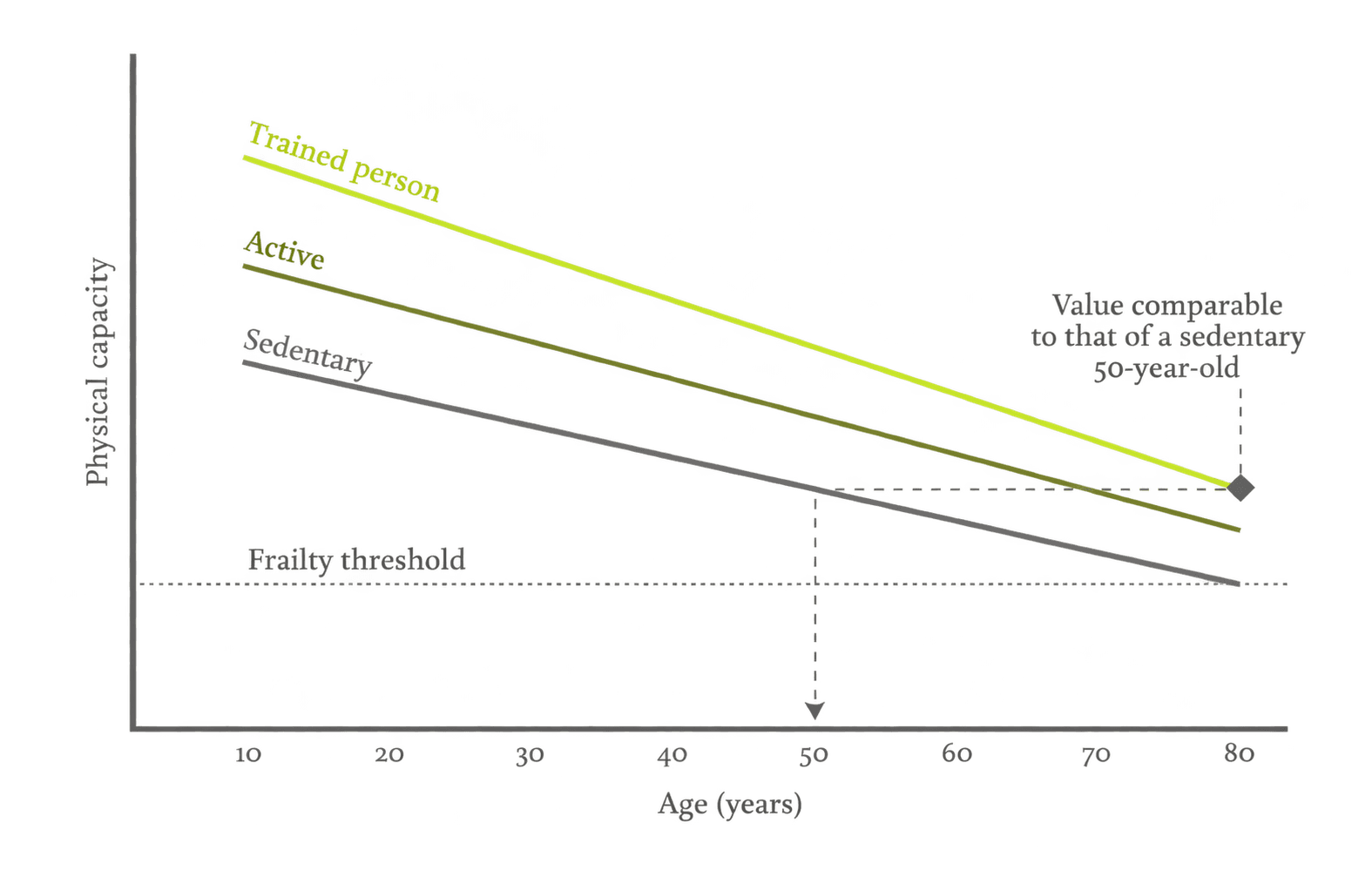
It shouldn’t surprise us that muscle affects the whole body. We are animals, and if there’s one characteristic that defines us—from the simplest to the most complex—it’s our ability to move. In fact, all animal life is organized around movement: getting food, escaping danger, finding shelter, finding a mate, and caring for offspring. For animals, to live is to move, and an animal that can move a lot and at different intensities is a healthy animal full of vitality. Studies of the Hadza in Tanzania and the Pokot in Kenya show that older people maintain levels of physical activity similar to those of young people and retain remarkable endurance and muscular strength. While in our cities, life after 65 often becomes a stage marked by pain, dependence, and loss of autonomy, in these communities older people remain active: they walk, hunt, gather, cook, care for their grandchildren, and sustain the social fabric. Fortunately, old age doesn’t have to mean infirmity and disability, since people who stay physically active or start training in old age manage to retain greater functional capacity over time, even into their eighties or nineties.
Although movement benefits everyone, it’s especially beneficial for people who are already ill.At the ancient medical school of Kos, Hippocrates was already prescribing exercise as part of the treatment for various diseases, convinced that the body needed to move in order to regain its balance. For example, people who have had a heart attack or stroke and manage to stay active can live longer than many of their healthy peers who never get up from the couch. People living with type 2 diabetes can improve their insulin sensitivity, reduce their need for medication, and prevent long-term complications such as blindness or kidney damage. Exercise can also promote gut health in cases of dysbiosis or small intestinal bacterial overgrowth (SIBO), by improving transit, reducing inflammation, and modulating immune system activity. People with autoimmune diseases such as systemic lupus erythematosus and multiple sclerosis can reduce the frequency and intensity of flare-ups and considerably improve their quality of life. For people with hormonal conditions such as polycystic ovary syndrome or endometriosis, exercise helps regulate the cycle, reduce inflammation, and ease menstrual pain. For people undergoing cancer treatment, moving helps them tolerate the effects of medication, preserve muscle mass, recover better, and increase their chances of survival. Even people with limited mobility, whether due to a temporary injury or a motor disability, can improve their health with a daily dose of movement. It’s a lesson pharmacology can’t match. No medication or medical treatment can improve health as consistently and without adverse effects as movement can. That’s why physical activity should never be contraindicated; it should be adapted to each person’s abilities.
Before we continue, let me clarify something. When I say physical activity, I mean any movement a person makes: from walking, hanging up the laundry, or dancing in the kitchen, to running a marathon or lifting weights. When that movement has some structure, a plan, and the goal of improving health—for example, following a gym routine, swimming laps in a pool, or taking a yoga class—physical activity becomes physical exercise. And when it also involves rules, opponents, or competition, we call it sport. But beyond these differences, all of it falls under the broad umbrella of physical activity.
Even more surprising is the relationship between movement and the brain. Every time the body becomes active, muscles release substances that cross the blood-brain barrier, strengthen neuronal connections, reduce inflammation, and modulate the release of neurotransmitters such as dopamine, serotonin, and norepinephrine. What’s more, moving also trains our attention, teaches us to tolerate discomfort and regulate our emotions, and connects us with other people and our surroundings. It shouldn’t surprise us, then, that physical inactivity is associated with psychiatric disorders such as anxiety and depression—in both children and adults—and that exercise has positive effects for people experiencing these conditions. In fact, walking, jogging, doing yoga, and other forms of physical activity can be as effective as psychiatric medication and psychotherapy for treating some forms of depression and anxiety.Most research on exercise and mental health has focused on depression and anxiety, since they are the most common disorders. However, the benefits aren’t limited to them. Positive effects have also been observed in people with schizophrenia, bipolar disorder, ADHD, and even on the autism spectrum. Although the strength of the evidence varies by diagnosis, the findings suggest that moving can improve symptoms, quality of life, and cognitive function across multiple psychiatric conditions. Even people with Alzheimer’s seem to reverse cognitive decline simply by increasing the distance they walk each day. And it makes sense that they would, because the alliance between muscles and the brain is as old as the emergence of complex animals themselves. The first muscle cells capable of contracting, similar to the ones we have today, appeared in primitive cnidarians (such as jellyfish). But for those contractions to be useful, they needed coordination, a role taken on by the first neurons. These cells, which transmitted electrical signals from one place to another, connected with other areas of the body dedicated to sensing the environment, regulating internal physiology, or integrating past experience, while also signaling when and how the muscle should contract. Over time, neuronal connections grew more complex and gave rise to the central nervous system. Ever since, movement has never been just a matter of muscle.
One example of this integration was an experiment conducted in 1996 by Danish physiologist Michael Kjaer. The procedure began with an epidural anesthetic, a technique that completely blocks electrical communication between the brain and the legs. Without that connection, participants couldn’t move or feel their lower limbs. Once their legs were numb, they were seated on an adapted stationary bicycle and electrodes were placed on their muscles to stimulate them artificially. At the same time, Kjaer measured oxygen consumption, heart rate, glucose levels, and hormones such as adrenaline, cortisol, and growth hormone, and took muscle biopsies before and after exercise. On another day, he repeated the same effort, but this time he let the same participants pedal voluntarily, without anesthesia, allowing him to compare what happened when exercise was controlled by the brain. Although both forms of exercise caused sweating, raised the pulse, and used up energy, the internal responses were very different. The contractions caused by the electrodes failed to fully activate the metabolic, hormonal, and immunological pathways that were activated when the brain was aware of what was happening. According to Rodolfo Llinás, one of the pioneers of contemporary neuroscience, the brain didn’t arise in order to think, but so that bodies could move more efficiently. Everything else—attention, memory, emotion, language, and even consciousness—serves movement.
I’ve always liked being on the move. As a kid, I was a restless little animal who never stopped. I spent my time running from one place to another, climbing trees, scrambling up onto the neighborhood rooftops as if they were an extension of the backyard, or playing in the park until dark. I could spend hours riding my bike without a destination, chasing a ball or throwing rocks at a bottle. In an attempt to channel all that energy, my parents sent me to do two sports at once. Since I was a fan of Teenage Mutant Ninja Turtles and Power Rangers, I got into kung fu and artistic gymnastics. Later on, I moved on to soccer and basketball, both at clubs and with friends in the park and on the neighborhood courts. Then came swimming, taekwondo, volleyball, padel, running, capoeira, weight training, and even board sports like surfing, skateboarding and kitesurfing. Although I don’t have the same boundless energy I had as a kid, I enjoy every chance I get to move my body. Still, there are times when it’s hard for me to get going. Days when the chair has me trapped, my head feels foggy and full of things to do, or I simply don’t feel like it. I know that if I move a little, I’ll feel better and something inside me will fall into place, but I still have to push myself to do it. The during and after are always worth it, but getting started feels harder than anything else. And that makes sense.
During childhood, play is a fundamental part of the development of all mammals. Just watch a group of puppies chasing, jumping and rolling around to understand that play isn’t just fun: it’s a school where reflexes are sharpened, strength is tested, social skills are learned and the limits of the body are explored. But as they grow up, most mammals stop playing. Humans, on the other hand, find other ways to keep playing into adulthood. One of them is sport. Unlike childhood play, which is free and spontaneous, adult play tends to come with plenty of structure. It has rules, goals, defined roles and, often, a scoreboard. But its purpose goes far beyond entertainment: sports competition challenges us to improve, lets us measure ourselves against others, channel tensions within the group, strengthen cooperation and also—though we don’t always admit it—serve as a showcase. We compete to attract a mate, gain prestige or prove that we’re worthy of trust and leadership. These functions aren’t modern inventions: for thousands of years, movement has been a way of saying who we are. Among the Timbira of Brazil, for example, young men raced while carrying a log on their backs as part of rituals and celebrations, showing off their vigor to attract potential mates. In times of war, physical prowess could also make a difference. The Lengua and Abipón—Indigenous peoples of what is now Paraguay and northern Argentina—used swimming as a means of escape and strategic movement, crossing rivers to flee or reposition themselves. In North America, the Chiricahua Apache went on long marches and grueling runs as part of their combat training. And in more peaceful, but equally demanding, settings, island communities such as the Callinago of the Caribbean valued skills like swimming and diving with agility as signs of maturity. Another form of play in adulthood is dance. But unlike sport, dancing doesn’t always have rules, opponents or a scoreboard. Its logic isn’t competition, but connection. Associated with music—and perhaps born alongside it—dance has been used as a courtship ritual, a way to build group cohesion, a means of emotional release and a vehicle for spiritual connection. It’s no coincidence that when a song we like comes on, our bodies start moving on their own.
But outside these playful and social forms, the motivation to move tends to be scarce. Exercising simply “to get in shape” isn’t as motivating as kicking a ball around together or dancing to cumbia. Unlike eating, sleeping or having sex, moving isn’t generally something the body asks for on its own. Almost no one needs a reminder to open the fridge or go to bed, but going out to work out after a long day takes some internal negotiation. And we’re not alone in this: no animal expends energy for no reason. Cougars don’t go jogging to clear their heads, mockingbirds don’t do squats to strengthen their legs, and frogs don’t jump in zigzags to improve their balance and coordination. They move when something important is at stake, like when food, danger or a potential mate appears, or when they need to defend their territory. And we’re not so different, even if we wear clothes and use cell phones. Our ancestors walked for hours following the trail of prey, climbed trees to find honey, carried logs to feed the fire and dug in the earth for tubers. But they didn’t do it because their spear counted their steps or because the shaman had put together a glute workout for them. Physical activity wasn’t a healthy habit that had to be planned; it was written into the script of everyday life. That’s why our ancestors never experienced the kind of low levels of daily movement we live with today, and—consequently—a warning system to prevent inactivity never evolved, unlike the systems we have for sleep and hunger.
In a world of food insecurity, bodies learned to conserve energy in different ways. One is storing fat when there’s plenty (as I explained in the previous chapter), and the other is a tendency to expend as little energy as possible. Just as the reward for following the instinct to build up reserves is the pleasure of eating calorie-rich foods, the body also applauds every chance it gets not to expend energy. And it does so with a sensory reward we know well: the relief of sitting down after shopping at the market, the satisfaction of using a remote control instead of getting up from the couch, and the almost childlike delight of watching a machine do the laundry while you sip mate in flip-flops. We call it “comfort,” but really it’s a standing ovation for doing as little as possible. Because movement involves activating so many of the body’s systems, our bodies are wired to avoid it whenever possible. In fact, we’re so strongly wired that laziness is as powerful an instinct as wanting to eat a chocolate cake when there’s one right in front of you. And resisting it requires activating the same areas of the brain that inhibit impulsive behavior (like resisting the cake when you’re on a diet). So when it’s hard to get yourself to work out after a long day, when you leave the car parked right outside the supermarket, or when you put off starting at the gym for another week without really knowing why, it’s not a lack of character. It’s your energy-saving biology shouting at you not to spend any.
That’s why I think it’s unfair—and pretty shortsighted—to use laziness as the only explanation for people who don’t exercise. It’s tempting to point a finger and say, “They don’t move because they’re lazy.” Besides, condemning that attitude is hypocritical, because we’re all lazy to a greater or lesser extent. Nobody walks up eight flights of stairs for fun, or gets off the bus a stop early to add more steps to their day, and almost everyone prefers the escalator when they can take it. In fact, our entire culture is designed so that we don’t have to move. We no longer have to walk to a stream to get water, because it flows on its own from the tap’s spring. We don’t need to hunt animals or spend hours gathering roots, either; we just have to go to the neighborhood grocery store, open the fridge or swipe a finger across an app. And to get around, all we have to do is sit in a car, on a motorcycle, on a bus or on the subway to cover more distance in a day than any ancestor on foot could cover in a whole week. We’ve designed urban environments where almost everything is within reach of a button, a ramp or a screen. Even work, which for thousands of years was synonymous with physical exertion, has become sedentary. Many people who live in cities no longer run, carry heavy things, dig or build with their hands. They spend eight hours a day sitting in front of a screen, barely moving their fingers and eyes, with their bodies completely still for hours on end. And that’s just the beginning, because more and more tasks are being replaced by machines, robots or intelligent systems. With humans motionless and limp, reclining in floating armchairs, screens stuck to their faces and not a muscle moving, the movie WALL-E seemed like an absurd dystopia. But when we look at it through an evolutionary lens, it doesn’t seem so exaggerated.
We don’t have to look far to see just how much we’ve shaped our surroundings to keep from moving. All we have to do is take a moment to consider the invention that best represents this structural comfort all around us: the chair. Not just the one in the dining room, but also the desk chair, the car seat, the dentist’s chair, the movie theater seat, the bus seat, the wheelchair, the airplane seat, the deck chair, the gamer chair, the garden chair, the living-room chair, the mate chair, the classroom chair and the waiting-room chair at a hospital. They’re everywhere. Even the toilet is shaped like a chair. But it wasn’t always this way. For centuries, sitting in a chair was a luxury. Archaeological finds, such as paintings and statues from ancient Egypt, China and Greece, show that chairs with backs were reserved for gods, kings and high-ranking religious officials. They were elaborate objects, with ornamental carvings, ivory inlays, precious stones and legs shaped like claws or hooves. The rest of us made do as best we could. It was only with the Industrial Revolution, during the nineteenth century, that chairs became truly ubiquitous. The most prominent example of this process was the No. 14 chair, designed in 1859 by the German Michael Thonet. Made of bentwood, lightweight, inexpensive and unadorned, its modular design was ideal for mass production, packing into crates and distributing by the thousand. Before long, it had spread through the cafés, restaurants, train stations and dining rooms of Europe. And from then on, we never got up again. I, for example, spend about eight hours a day sitting in one chair or another. I get up and eat breakfast in a chair. I spend most of my workday sitting in front of the computer: I see patients sitting down, write sitting down, study sitting down and answer messages sitting down. At lunchtime, I sit down again, and I do the same when I have an afternoon snack. If I meet up with someone to talk and spend some time together, sitting is our preferred position. And if I want to step out into the yard for some fresh air, sometimes I sit in a deck chair too. At night, dinner in a chair, then the couch or bed.
But while the chair is a relatively recent invention, sitting isn’t. When we sit, the body enters a state of partial stillness and low energy expenditure. It’s a way to rest while staying ready to move again if needed. That’s why all animals sit or do something similar at some point during the day. Birds perch on branches, dogs lie down on the ground, horses stand still and monkeys recline on branches. Even insects take breaks. Each species has its own strategies for saving energy without losing alertness. And humans are no exception. For millions of years, our ancestors also sat down to rest, and they probably did so for much of the day, just as present-day hunter-gatherer groups do. In a study conducted by Katherine Sayre in 2023, researchers observed that the Hadza spend about ten hours a day in some kind of resting position, whether talking with one another, preparing a meal, repairing tools or just passing the time. While that’s similar to the amount of time many of us who live in cities spend resting, the way they do it is different: about every fifteen minutes, they change position or get up to do something. You only have to spend a little while at the park to see how hard it is to stay still for a long time without a chair or backrest. What’s more, their resting positions aren’t passive. The most common position among the Hadza—and in many other societies that don’t use chairs—is the squat: knees bent all the way, heels on the ground, butt close to the floor and torso resting on the thighs. Squatting comfortably and holding the position long enough for it to count as rest takes flexibility, strength and endurance in the legs, feet, lower back and abdomen. Although squatting is common in those societies, it’s rare for someone in an urban environment to be able to hold the position for a few minutes, which explains our addiction to chairs. I, for example, think I’m pretty good at squatting, but after five minutes I start to feel my calves tightening, my ankles burning or my hamstrings pulling. That’s understandable if you consider that a Hadza person can spend up to two hours a day in that position, adding up all their resting periods.
To overcome gravity and maintain an upright posture, the body uses more than forty different muscles working together to stabilize the torso. The transverse abdominis, multifidus, diaphragm, pelvic floor, obliques, spinal erectors, psoas and glutes (to name a few) form a dynamic muscular network that keeps the spine aligned, distributes loads and allows us to move with balance and control. It’s the famous core. When we sit without back support—on the floor or on a log—a good part of those muscles stay active, though they don’t have to work as hard as when we’re standing. But when we lean back against a backrest and let our weight drop, the core switches off almost completely, creating a feeling of relaxation and relief in the lower back. If you sit with back support for eight hours a day, every day, for years, this large group of muscles loses tone and weakens. As it fatigues more quickly, the body tries to compensate by activating other muscles that aren’t designed to support the weight of the head or keep the torso aligned for so long. The result is a chain of poorly distributed muscle tension, micro-inflammation, stiffness and pain. In my case, the weak link is the quadratus lumborum, a hunk of flesh that connects the pelvis to the lumbar vertebrae and the last rib. When I spend too much time sitting in the same position, that muscle tightens up and lets me know by getting stiff: when I get up from the chair, it takes me a few seconds to straighten all the way up, until something relaxes. Sometimes the tension is so strong that it feels as hard as a rock. At that point, it hurts and I need to do something about it.While writing this book, it happened to me several times. I found it really helpful to massage the area with a tennis ball (leaning against a wall), stretch my lower body every day—especially my hamstrings and psoas—and practice deep diaphragmatic breathing exercises. It didn’t solve the problem completely, but it kept it at bay. Even so, I understand that the muscle isn’t “bad” or “sick”; it’s simply trying to do a job that isn’t its own, supporting a structure that has lost its natural balance because of a lack of movement and because the muscles that should be doing the heavy lifting have switched off.
In the empire of chairs, it shouldn’t surprise us that back and neck pain are two of the most common reasons people seek medical care. Although in many cases they’re temporary conditions, when they persist they can have a devastating impact. Anyone who has suffered from lower back pain or neck pain can attest to how disabling pain in those parts of the body can be: it keeps you from working, moving freely and resting well. The economic impact is enormous, with billions of dollars in direct healthcare costs, and even more in lost productivity, medical leave, ineffective treatments and early retirement. In response to this widespread discomfort—especially among people who work sitting down—we invented an entire discipline: ergonomics. We adjust chairs, desks and screens in search of the “correct” position. The computer should be at eye level, the elbows should form a 90-degree angle, the chair should have lumbar support, armrests and wheels. The feet should rest firmly on the floor. The seat should be at just the right height. Everything calibrated as if the body were a fragile machine that needs to be precisely aligned to keep it from breaking. And while some of these adjustments can offer temporary relief, no chair in the world—no matter how expensive—can replace what’s really missing: movement.
That said, this isn’t about demonizing the chair—it’s a fabulous invention—or claiming that sitting in one causes back or neck pain. Pain is an incredibly complex phenomenon and can be caused by a wide variety of factors, such as herniated discs, degeneration of the intervertebral discs or a nervous system sensitized by stress. What’s more, lower back and neck pain aren’t exclusive to the modern world: they’re also found among hunter-gatherer groups and have probably been with us since our ancestors began walking upright more often several million years ago. But prolonged immobility and postural monotony—made easier by comfortable chairs—can contribute to their onset and persistence. In that sense, the real problem isn’t the chair, but what we do (or don’t do) while we’re sitting. For a long time, the classic medical recommendation for this kind of pain was rest, but today we know that the best thing for rehabilitation is to stay active or get moving again as soon as possible. This principle isn’t limited to lower back or neck pain; it also applies to sprains, fractures, tears and tendinopathies, and even after surgery, a prolonged hospital stay, chemotherapy or childbirth. Early movement, introduced gradually and adapted to each case, not only speeds up physical recovery, but also improves the overall prognosis, reduces complications and promotes well-being as a whole. As I mentioned earlier, muscular stillness is a biochemical silence, and every contraction—even a tiny one—is a signal that sets the physiological orchestra in motion.
You don’t have to be in pain or have spent two weeks in intensive care to benefit from movement. Most people don’t need a rehabilitation program; they just need to break the inertia with bursts of movement spread throughout the day. Instead of trying to engage your core while sitting—something that can be counterproductive—a better option is to get up from your chair every so often to do a few squats, rotate your neck, lift something heavy, hang from a bar, move your shoulders, bend down, do a few push-ups on the floor or against a wall, go up and down the stairs, play with the kids, sweep, or do any other kind of movement you can think of. Even doing heel raises while sitting counts. I, for example, alternate between sitting and standing (I have a desk that goes up and down), do a few lunges now and then, walk on all fours to the bathroom, kick at the air, tense my arms with resistance bands and even have a nunchaku hanging on the office wall that I swing around every so often. These don’t replace continuous exercise, but they nourish the body all the same. An experiment conducted by Daniel Moore in 2022 tested the effects of these exercise snacks in people who spend more than seven hours a day sitting. The study participants were divided into three groups: one was told to do ten squats every thirty minutes, another to walk at a moderate pace for two minutes at the same intervals, and a third—as a control group—to sit all day. When muscle protein synthesis was assessed in each group, the researchers found that those who walked and did squats built more muscle than those who sat. Other similar studies have shown that these short bursts of movement improve insulin sensitivity, lower blood glucose and triglyceride levels after meals, reduce blood pressure and improve vascular health. The interesting thing is that the bursts don’t have to be intense or exhausting, just frequent.
Although these gestures help keep the system running, they aren’t enough to counteract the silent deterioration caused by a life that’s too still. Humans evolved by exploring the world through movement. It’s no accident that we have the most versatile body in the animal kingdom. We can’t outrun a cheetah, climb like a chimpanzee or swim upstream like a salmon. We don’t jump like a kangaroo, dive like a whale or dig like a bear, either. But unlike them, we can do all those things. We’re not champions at anything, but we can play on almost every field. Long before there were Olympic Games, podiums and stadiums, humans walked, ran, swam, dived, climbed trees, scaled rocks, carried heavy things, hung from branches, jumped over streams and plunged into the water. And this isn’t something only men do. Although urban women get less physical activity than men, in hunter-gatherer societies both sexes move just as naturally. In the Bajau community of Southeast Asia, women dive for hours, just like men. Among the Mbuti of Central Africa, both sexes climb towering trees to gather honey. In Tierra del Fuego, Yámana women were the main swimmers and divers, and sometimes had to rescue their male partners when the water got rough. Even in the Arctic, Inuit women join hunting expeditions, running across the snow. Those bodies are the same as ours. So to do them justice, we need to get up from our chairs.
In mid-2025, Kilian Jornet climbed, descended, and linked up all 72 mountains over 4,600 meters in the western United States. From Colorado’s endless mountain ranges to Washington’s snow-capped volcanoes, taking in the rugged beauty of California’s Sierra Nevada, he covered more than 1,000 kilometers on foot and 5,000 by bike in just 31 days. Along the way, he accumulated some 123,000 meters of elevation gain: the equivalent of ascending and descending Everest fourteen times. This isn’t the first time Jornet has dazzled the world with his ability to sustain monumental efforts in nature, but this feat set a new benchmark for what his body can do.Other similar feats include Nims Purja’s in 2019 (he climbed each of the Earth’s fourteen mountains over 8,000 meters in just 189 days), Ross Edgley’s in 2018 (he swam around the island of Great Britain without setting foot on land for 157 days, covering 2,800 kilometers in open water), and Mike Horn’s in 2016–2017 (he crossed Antarctica without motorized assistance in 57 days, skiing and using kite-ski for more than 5,000 kilometers, in one of the longest and most demanding polar expeditions ever undertaken). Achieving something like this takes a lot of training, strategy, logistical support, sponsors to finance the journey, prior experience, and a motivation that burns for weeks. But even with all that, moving an average of fifteen hours a day for an entire month takes something more basic: energy.
In living bodies, every chemical reaction that keeps us from the stillness of death, from a muscle contracting to a nerve signal being transmitted, depends on the energy supplied by a small molecule called ATP. Because it plays a leading role in every known organism—from a bacterium floating in a puddle to an elite athlete—it is known as the “universal currency.” In reality, though, it’s more like a rechargeable battery: each ATP molecule is used once and then has to be restored, over and over, without pause. On average, each cell recycles its ATP reserves between 1,000 and 1,500 times a day, and each cell uses 1 billion ATP molecules per second. In humans—and in all complex life forms—most of this recharging takes place inside the mitochondria, small structures found within almost every cell. Like the engine of a car or motorcycle, mitochondria burn fuel to produce energy (in the form of ATP), but instead of gasoline they use glucose and fatty acids, releasing heat in the process.Technically, a more accurate analogy would be to compare glucose to gasoline and fatty acids to CNG. Glucose allows energy to be produced quickly, making it ideal for high-intensity efforts. Fatty acids, on the other hand, take longer to produce energy, but are more efficient in the long run. The body usually uses both fuels at the same time, but depending on the physiological context, it can rely more on one than the other. When we’re sitting around doing nothing, mitochondria can supply energy without a problem. But when we move, energy production can become limited. Fuel is certainly a determining factor, but an even more decisive one often goes unnoticed: oxygen. Without enough oxygen, mitochondria suffocate and ATP production drops dramatically.
For oxygen to reach its final destination, it has to travel a surprisingly long way. It all begins in the lungs, where inhaled air passes through the thin membranes of the alveoli and enters the blood. Once there, it binds to hemoglobin inside red blood cells, which function like molecular taxis. It travels through arteries, arterioles, and finally capillaries, where it is released to make its way to the cells and, from there, enter the mitochondrion. Only then does it take part in the chain of chemical reactions responsible for recharging ATP. This complex and fascinating machinery that enables the body to take in, transport, and use oxygen is known as cardiorespiratory fitness. Disruption at any stage can drastically affect cardiorespiratory fitness and the resulting production of energy. For example, because oxygen concentration decreases with altitude, athletes competing at higher elevations tend to perform worse than they do where they usually train. Lung diseases, such as asthma or chronic bronchitis, make it harder for oxygen to reach the blood because they narrow the airways. With iron-deficiency anemia, where the availability of hemoglobin is reduced due to a lack of iron, people often experience fatigue throughout the day and tire quickly during any activity. In atherosclerosis, the buildup of plaque in the coronary arteries reduces the flow of oxygenated blood to the heart muscle, preventing the heart from sustaining an increased rate.
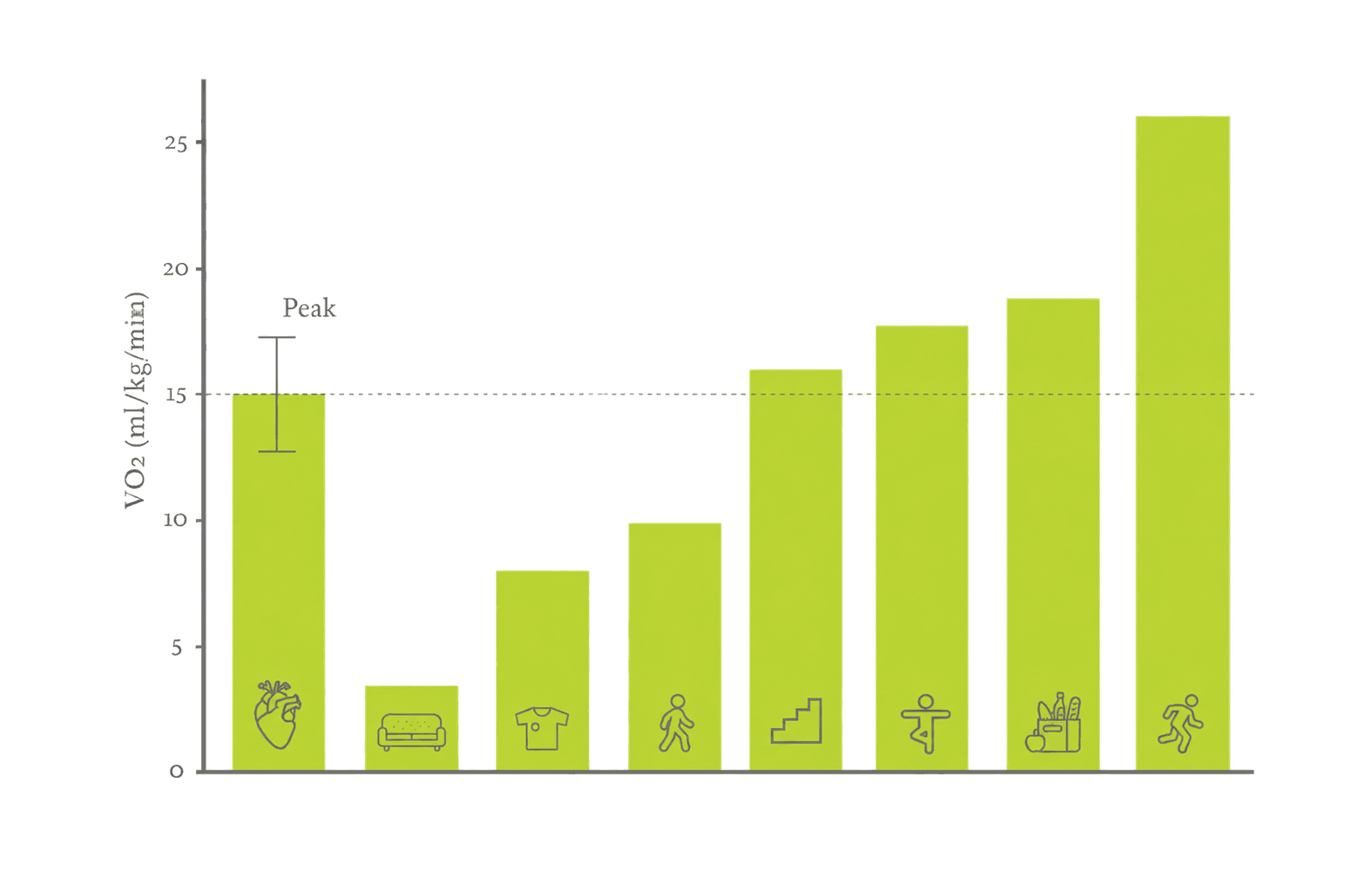
Given the number of factors that can disrupt this delicate machinery, in certain situations it can be useful to know exactly how far our body’s ability to take in and use oxygen goes. For athletes, for example, objectively measuring their energy “ceiling” makes it possible to personalize training, plan progression, and anticipate potential risks before they turn into symptoms. This is also done in some clinical situations. With heart failure, for example, the heart loses its ability to pump blood effectively, and although symptoms may go unnoticed at rest, the true extent of the problem becomes apparent when the body is put under strain. Knowing the limits of cardiorespiratory fitness in these cases makes it possible to assess the severity of the condition and determine treatment strategies. The most accurate way to quantify this limit is with a cardiopulmonary exercise test, in which a person pedals or runs wearing a mask over their nose and mouth while a machine analyzes how much oxygen their body can extract and use.When a cardiopulmonary exercise test is not available, simpler methods can be used to indirectly estimate cardiorespiratory fitness. The six-minute walk test measures the distance covered in that time and is often used in clinical settings. The Cooper test, which involves running as far as possible in twelve minutes, offers a practical estimate of aerobic fitness in people without physical limitations. In addition, many smartwatches and sports watches combine data on pace, speed, and heart rate to calculate an estimated VO₂max, though not as accurately as a direct measurement. Values are usually expressed as milliliters of oxygen per kilogram of body weight per minute (mL/kg/min). During the test, the intensity of the challenge increases progressively until, finally, fatigue takes over and the person has to stop. That exact moment is when the limit is recorded: maximal oxygen uptake (or VO₂max), a number that sums up the power of the cardiorespiratory machinery and acts as a true measure of function, far more revealing than any blood test or X-ray. For reference, Kilian Jornet’s maximal oxygen uptake is close to 90—a phenomenal value, among the highest ever recorded—while a woman his age who exercises regularly can reach values between 32 and 39, and a man between 39 and 45. By comparison, young hunter-gatherers easily exceed 50, similar to the figures for very physically active city dwellers. Below 18, cardiorespiratory fitness is so compromised that even activities like carrying groceries or walking fast can be exhausting.
But its importance goes far beyond the cardiologist’s office or sports training. From its discovery a century ago to the latest research using cutting-edge technology, it has become clear that maximal oxygen uptake is a reliable reflection of the body’s overall condition and one of the strongest predictors of health and longevity. However, the rise of sedentary lifestyles in cities over recent decades has led to a decline in cardiorespiratory fitness among the general population. Even children and adolescents today have lower cardiorespiratory fitness than previous generations. What was once nearly universal—the ability to walk long distances, climb, run, and play without getting winded—has become exceptional. Restoring and preserving cardiorespiratory fitness isn’t just a matter of athletic performance; it’s one of the best investments we can make in our health. Research has shown time and again that good cardiorespiratory fitness is associated with a lower risk of getting sick, fewer hospitalizations, greater tolerance to stress, better mood, and more vitality, regardless of age, sex, ethnicity, or background. The relationship is so powerful that simply improving this measure can change the course—to a greater or lesser extent—of almost every known chronic disease, from type 2 diabetes and high blood pressure to several types of cancer and neuropsychiatric disorders. In fact, exercising to prepare for surgery or cancer treatment improves the prognosis, shortens hospital stays, and increases the chances of survival. Because of its broad impact on health, cardiorespiratory fitness is now considered a true vital sign, and people are encouraged to track it as carefully as blood pressure, heart rate, or body temperature. It’s no coincidence: when the heart and lungs are working well, the whole body benefits, and the body regains some of that lightness we tend to associate with youth. Curiously, unlike other health measures that need to stay within a certain range, there doesn’t seem to be a point beyond which maximal oxygen uptake stops being beneficial. The higher, the better.In men, the highest documented values are around 96 to 98 mL/kg/ min, as in Oskar Svendsen (cyclist) and Espen Harald Bjerke (cross-country skier). Among women, the highest values range from 76 to 79 mL/kg/ min, as in Joan Benoit (runner) and Bente Skari (cross-country skier). These figures, achieved by elite athletes with exceptional physiology and training, show that human potential has a ceiling beyond which it is impossible to advance, no matter how much one trains or perfects one’s technique.
Although cardiorespiratory fitness naturally declines with age and the onset of disease, it is possible to slow that decline. In fact, that’s what happens in non-urban settings. In a 2013 study in the Tsimane community of the Bolivian Amazon, a team of scientists measured maximal oxygen uptake in more than 700 adult women and men aged 20 to 70. When their values were compared with those of people living in cities, they were found to be not only higher throughout life, but also to decline 30% more slowly. In other words, their bodies age, but more slowly. Not because they have special genes, but because their days are full of movement. And it’s not only possible to slow the decline; it can also be improved with a little dedication. There are numerous examples showing that the body can benefit from exercise even at very advanced ages. One is Fauja Singh, a farmer from India who started running at 84 and took part in his first 42-kilometer marathon at 89. He continued running and improving his times over the years, until in 2011 he became the first centenarian to complete a marathon, finishing the Toronto Waterfront Marathon in just over 8 hours. His physical condition was so remarkable that his maximal oxygen uptake was comparable to the average for sedentary men 40 years younger. Another remarkable story is that of the Frenchman Robert Marchand, who at 100 set the world record in track cycling for his age group. But Marchand wasn’t satisfied with that achievement, and two years later he returned to the velodrome to break his own record. He not only improved his time on the track, but also his maximal oxygen uptake, which rose from 31 to 35.
It’s common to think that improving cardiorespiratory fitness just means doing more “cardio,” like running, cycling, or swimming for an hour three times a week. And while it’s true that these activities can increase maximal oxygen uptake, there’s a much wider range of options. To better understand how we can do this, let’s divide physical activity into three groups based on the effort they involve: light, moderate-to-vigorous, and very vigorous.Another way to train cardiorespiratory fitness—especially useful for those who already exercise regularly—is to follow training zones. These zones are determined by heart rate and allow you to regulate exercise intensity according to your physiological goal. Zone 1 involves very low intensities but plays a key role in recovery; zone 2 improves the aerobic base and mitochondrial efficiency; zone 3 works on the aerobic threshold, ideal for building sustained endurance; zone 4 approaches the anaerobic threshold and stimulates more intense cardiovascular adaptations; and zone 5, the most demanding, trains maximal power and tolerance for extreme exertion. Training by zones not only helps optimize performance, but also prevents overtraining and makes it possible to monitor progress more precisely. Light physical activity includes all those everyday movements that can be sustained for long periods without difficulty. Although you might sigh now and then, at this level of effort you can carry on a conversation without a problem. For most people, this ranges from walking and moving around the house to household chores like sweeping, cleaning, or tending the garden. It can also include practices like tai chi, yoga, and water aerobics. Because it doesn’t leave us out of breath or drenched in sweat, this kind of movement often goes unnoticed. But the truth is, it forms the foundation of the human repertoire, and its impact on health is real, especially for sedentary or older people. In that respect, walking deserves special mention.
Walking on two legs is our species’ oldest act, and perhaps that’s why our physiology responds so well to it: it regulates blood pressure, improves insulin sensitivity, reduces inflammation, and boosts mood. Although walking farther was what set us apart from chimpanzees and bonobos seven million years ago, in contemporary urban societies many people walk fewer than 5,000 steps a day, the same number as our arboreal cousins (there are days when I walk fewer than 3,000). By contrast, in hunter-gatherer communities it’s common to walk between 14,000 and 17,000 steps a day (the equivalent of 10 to 13 kilometers), spread across multiple short trips woven into other everyday activities, like fetching water, gathering firewood, moving between campsites
and exploring the land. Despite the fame the “10,000 steps a day” goal has gained, the remarkable benefits of walking can be achieved with fewer steps, especially by older adults or people who walk very little. The effects of walking are so astonishing that going from just a few steps a day to a moderate amount easily achievable in an hour and a half of walking—7,000 steps for older adults and 9,000 for younger people—can cut the risk of dying from cardiovascular disease by as much as half and reduce the risk of dementia, depression, or type 2 diabetes by as much as a third. The intensity of the pace doesn’t seem to matter as much as the volume, although a faster pace reflects better cardiorespiratory fitness. The best news is that to access one of the most powerful medicines out there, you don’t have to exhaust yourself, break a sweat, wear special clothes, or pay for a gym membership. It’s enough to get out on the sidewalk more often, get off the bus a few blocks early, walk to do the grocery shopping, or suggest going for walks with someone.
Moderate-to-vigorous physical activity is when the body fires up and moving stops being a chore and becomes a real challenge. Breathing gets deeper and conversation becomes broken up. While much of the urban population goes weeks, months, or even years without reaching these levels of effort (especially women and older people), the Hadza spend one to two hours a day at this intensity carrying water, climbing trees, chasing animals, or digging in the ground for roots. For those of us who live in cities, a good goal is to accumulate between 150 and 300 minutes a week. It may sound like a lot, but that’s what a Hadza gets in just two days. And there are a thousand ways to get there: running in a park, dancing in the living room, swimming in a pool, climbing stairs at a brisk pace, practicing martial arts, playing soccer, basketball, volleyball, or any team sport. Spinning classes, functional training routines, rowing, climbing, skating, stationary cycling, tennis, padel, high-energy dance routines, pillow fights with your kids, or simply going to the produce store carrying heavy bags all count, too. Brisk walking can fit into this category, but it has to be strenuous enough to make it difficult to speak without pausing. A relaxed stroll with a mate in hand doesn’t count. It has to feel like exertion.
Very vigorous physical activity is represented by efforts in which breathing speeds up until it becomes audible and talking is impossible. This is no longer just about walking or keeping up a pace, but about pushing through bursts of maximum exertion. In urban daily life, this kind of effort is unfamiliar territory for most people. Yet in hunter-gatherer communities, very vigorous physical activity finds its way into every day for 15 to 20 minutes, spent on chases, urgent climbs, very heavy loads, or games that leave you out of breath. You don’t need to live like a hunter-gatherer to approach this intensity, but you do need to dare, now and then, to cross that boundary: short sprints , intense intervals on a bike or in the water, all-out rowing, wrestling, quick climbs up the stairs, repeated jumps until you’re exhausted, or simply dancing until you’re out of breath. One accessible and highly effective way to approach this kind of effort is high-intensity interval training, better known as HIIT (High-Intensity Interval Training). HIIT consists of alternating short periods of exercise at maximum speed or power with brief pauses to catch your breath. For example, a classic HIIT protocol is the Tabata method: 20 seconds of maximum effort (such as pedaling or fast jumps), followed by 10 seconds of rest, repeating that sequence six to eight times.The Tabata method was developed by physiologist Izumi Tabata in the 1990s, based on research with athletes from the Japanese Olympic speed skating team. In one of his experiments, he discovered that training at maximum intensity for very short intervals, interspersed with brief pauses, could improve aerobic and anaerobic capacity at the same time—something unusual at the time. His findings laid the scientific foundations for what we now know as HIIT. Another option is 30 seconds of maximum effort followed by 30 seconds of rest, repeated four times; or 20 seconds of maximum effort followed by 40 seconds of rest, repeated six to eight times. Although these workouts tend to be challenging and uncomfortable, they can achieve in just ten minutes the same physiological adaptations and health benefits as a one-hour session of moderate-to-vigorous physical activity.
Not all forms of movement can be practiced with the same frequency, nor do they ask the same of the body. Light physical activity keeps the basic gears of physiology well-oiled and can be repeated every day, even several times a day. When intensity rises to moderate-vigorous, ideally, efforts should be spaced out to allow the body to recover between sessions: every other day, or a few times a week, depending on fitness level and prior experience. Very vigorous physical activity has such a big impact that it’s recommended only once or twice a week, or even once every two weeks. Here, rest isn’t just recommended; it’s essential for tissues to repair, muscles to grow stronger, energy reserves to be replenished, and the nervous system to process the experience of exertion. Skipping this recovery time is the quickest route to fatigue, frustration, or injury, especially for those just starting out or returning after years of inactivity. For those who aren’t used to these levels of exertion (whether through light, moderate-vigorous, or very vigorous physical activity), the sensations can feel strange, even unsettling. But a sweaty forehead, warm skin, blood pounding through the arteries, and quickened breathing aren’t signs of danger, but of vitality. You only need to start with small goals—five to ten minutes a day—for the discomfort to become familiar and for the body, little by little, to recover its movement memory. If you have any concerns or a history of illness, a visit to the cardiologist to check your cardiorespiratory health is always a good idea before raising the stakes.
Although cardiorespiratory capacity is essential to life and movement, it isn’t the only factor that determines what a body can do. There’s another equally decisive player. From Atlas holding the weight of the world on his shoulders to the Hulk bending steel, strength appears time and again as a symbol of power, resilience, and the ability to overcome the impossible. And although we tend to associate it with bulky bodies and recognize its importance in a weightlifter lifting a bar loaded with plates off the ground, or a gymnast holding their body horizontally on the rings, strength is simply the ability of muscles to contract. But since living on Earth means dealing with gravity every day, and muscle contraction is the only thing that keeps us from becoming an inert lump on the ground, strength is a biological foundation as fundamental as breathing, eating, and sleeping. Strength is at work whenever someone gets up from the floor without using their hands, climbs stairs carrying a bag, pushes a child’s stroller uphill, helps someone else stand up, opens a jar of preserves, carries water jugs, or supports their own weight to avoid a fall. Without it, even the simplest tasks can become insurmountable obstacles.
When I was 23, I fractured the index finger on my left hand playing basketball. I was running full speed toward the other basket, watching for a pass from a teammate, when the opposing defender grazed the ball and slightly changed its trajectory. Instead of landing in my palm, it smashed the tip of my finger. The blow was so strong that the bone in the first phalanx split lengthwise. They put in screws to join the two pieces and immobilized my arm in a cast for a month. When they finally removed it and I began the recovery phase, my left forearm had become considerably thinner. The muscles, deprived of use, shrank in just a few weeks, and even the simple attempt to make a fist felt like an impossible feat. During rehabilitation, it became clear that what I had lost wasn’t just strength or muscle size: my left arm had become clumsy, uncoordinated, and almost numb, as if that part of my body had temporarily disappeared. Movements that had once been automatic, like buttoning my school smock or holding a glass, now required conscious, careful effort. For something as simple as picking up cutlery to eat, I had to look at my hand as if it were a riddle and figure out how to make my fingers close around it. It was clear that getting the more than forty muscles spread across my arm, forearm, and hand to obey the command to make a movement took more than just an intention. It took several months of patient work to regain my strength, muscle mass, and, above all, the confidence to use that arm as before.
Behind every everyday gesture is an extraordinary choreography that begins long before a muscle tenses. First, the movement is represented in an area of the cerebral cortex where neurons activate specifically for each part of the body. Then, in a fraction of a second, an electrical signal fires and travels at lightning speed through the nervous system, following nerves that branch like rivers until it reaches every muscle involved in the action. Only then does the arrival of the signal set in motion the molecular machinery that makes muscle contraction possible. Since each muscle is made up of millions of fibers connected to thousands of neurons in the cortex, the way it responds depends on the number and intensity of the messages it receives. For example, if just a few muscle fibers in the thigh activate, that’s barely enough to get up from a chair; but if the brain commands a massive activation, we can jump or kick a ball a long way. In the hand, by contrast, each muscle receives dozens of different instructions, allowing some fibers to contract forcefully and others only slightly, producing movements as precise as typing on a phone or braiding hair. In this way, the combination and rhythm of these electrical impulses make everything possible, from the most powerful movements to the most delicate.
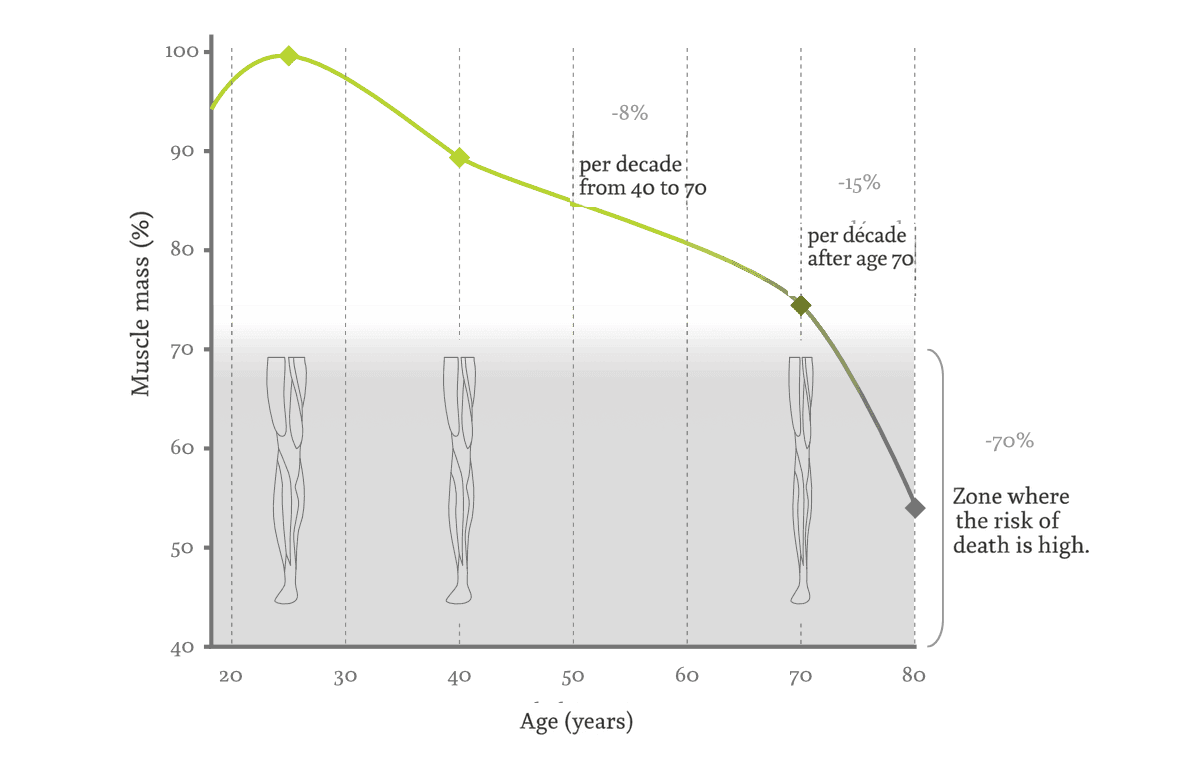
Except for people who do heavy manual labor—such as construction workers, mechanics, and factory workers—for most people living in cities, daily physical exertion is limited to modest, occasional actions. Carrying a few grocery bags, holding a baby, moving a piece of furniture, doing a little gardening. Although urban life doesn’t involve a total absence of movement like the one I experienced with my arm in a cast, the effort is usually insufficient to keep muscles vital. Starting in our thirties, if we don’t ask more of it, the body enters a budget-cutting phase that begins with a weakening of the connection between the brain and the muscle. With fewer neurons managing muscle fibers, movements become a little clumsier and less precise, and tasks that once came naturally now require attention. This is typical when you stop doing movements you used to do often, like when I pick up my guitar after several months: songs I used to play with my eyes closed and at a good tempo, I now have to play slowly, watching where I put my fingers. If disuse continues, loss of strength is inevitable, even before any change in muscle mass is noticeable—something I often experience when I don’t go to the gym for a few weeks. Over time, if the stimulus remains absent, the brain interprets this to mean that the muscle is no longer a priority and reduces the supply of chemical signals and nutrients that keep it alive. The fibers thin and lose their ability to contract, and the space they leave behind is taken up by fat and connective tissue. Where there used to be muscle, there’s now a structure that’s harder to wake up.
An extreme example of the impact of muscle disuse occurs in the absence of gravity during missions beyond Earth. Legs float, arms do too, and the heart no longer has to pump hard to send blood up to the head. In this weightless environment, there is no mechanical tension, and muscles disappear. In just a few weeks, an astronaut can lose up to 10% of their cardiorespiratory capacity, nearly 30% of their muscle strength, and up to 20% of their muscle mass, especially in postural muscles such as the gluteus or soleus. And the longer the journey, the greater the loss. The impact is so great that, upon returning to Earth, some astronauts can’t even walk on their own. That’s why astronauts have to exercise six days a week for two hours, using special equipment as an essential part of their routine: they do squats and deadlifts on a pneumatic resistance machine, pedal a stationary bike without a seat or handlebars, and run strapped into harnesses on a treadmill that simulates the impact of jogging. But even with an intensive daily training program, the body continues to suffer muscle and cardiovascular deterioration, so astronauts have to undergo physical rehabilitation when they return from space.
What happened to me in a few weeks because of a cast, and to astronauts because of the low gravity during their missions, happens slowly and silently to millions of people over the years, starting after age 30. By 65, many have lost up to 30% of their muscle mass, and with it, much of their strength, coordination, balance, and reflexes, all of which affects everyday movement. This process of severe muscle loss is known as sarcopenia. What used to take a simple step can now end in a fall to the ground. An estimated three out of every ten people over 65 fall at least once a year, and that figure rises to 50% after age 80. A stumble, a loose paving stone, or a bad turn becomes an unpredictable challenge. With each episode of motor instability, it isn’t just the body that wavers, but confidence too. A constant wariness sets in, and people start avoiding certain activities. We stop walking down certain streets, riding a bike, climbing stairs, dancing at a party, or reaching for a shelf without support. Fear becomes a constant companion, and life begins to shrink. And for good reason: in a third of falls, the consequences can be very serious, such as a hip fracture. What usually follows a fall like that is surgery, weeks of bed rest, accelerated muscle loss, and functional decline that many people never recover from. In some cases, a hip fracture marks the beginning of dependence, and in others, it can even foreshadow the end of life.
But what appears on the X-ray isn’t just a broken bone: it’s the visible sign that an entire system has weakened. The skeleton isn’t simply a framework for muscles to cling to, but living tissue as dynamic as any other organ. The inside of bones is like an anthill full of microscopic tunnels patrolled by specialized cells that detect cracks and replace old, damaged tissue with shiny new bone. This process, known as bone remodeling, goes on continuously throughout life, and is so active that we renew almost our entire skeleton every ten years.At the heart of this system are osteoclasts, which act like tiny excavators, dissolving old or damaged bone to make way for new bone. Osteoblasts are the builders that fill those spaces with fresh, mineralized bone tissue. And osteocytes, which were once active osteoblasts, become trapped inside the bone matrix and act as sentinels. They detect mechanical stress and microfractures and send signals to coordinate the work of demolition and repair. Without this trio in constant action, the skeleton would lose its capacity to adapt and renew itself. But this machinery doesn’t work on its own. For bone to remain dense, strong, and healthy, it needs a reason to do so. Just as muscles need nervous stimulation to stay active, bones depend on the tension muscles exert on them to stay strong. And when the body becomes inactive, a sedentary lifestyle sets in, or gravity disappears, bones become more porous, fragile, and prone to breaking from even minor impacts or falls, especially at the ends of long bones, in the pelvis, and in the vertebrae. This condition, called osteoporosis, is behind nine out of every ten hip fractures.
But the story doesn’t end there. In the last twenty years, it has been discovered that, during bone remodeling, the cells responsible for making bone release a protein called osteocalcin, which not only becomes part of the new tissue but also enters the bloodstream and acts as a hormone with effects throughout the body. Around the same time that muscles were found to behave like an endocrine organ, researcher Gerard Karsenty’s team observed that when this molecule is missing, the body stops producing insulin normally, sugar builds up in the blood, and fat tissue grows, creating a picture similar to diabetes or metabolic syndrome. Later, it was found that osteocalcin is also released during
exercise and stimulates muscles to make better use of sugar and release interleukin-6. To Karsenty, it was obvious that bones play a role in regulating the body’s energy. And it makes sense. 450 million years ago, the primitive oceans had very low concentrations of phosphorus, and since this element is crucial for making ATP (the molecule that provides energy), its scarcity was a limiting factor. It was in this context that hydroxyapatite arose in the ancestors of vertebrates, a phosphorus-rich tissue that makes up 70% of the dry weight of our bones. It’s likely that long before they enabled biting, supported organs, or made walking possible, primitive bones already acted as biological batteries and played a role in managing the energy budget. Over time, evolution repurposed that rigid structure for other uses: first as teeth, then as defensive armor, and later as an internal skeleton. This last transformation gave rise to vertebrates and provided muscles with a solid anchor to attach to, enabling faster, more powerful contractions. The ability to store the materials needed to produce energy and turn it into strength didn’t just change how animals moved; it opened the door to larger bodies and, eventually, to vertebrates conquering the land.
Since bone and muscle are tissues that communicate with the entire body, losing them is much more than an aesthetic or performance issue: it’s a health catastrophe. That’s why maintaining muscle vitality and bone density isn’t a luxury reserved for athletes, but a basic physiological requirement for living independently over time. Although it’s true that after age 30 we begin to lose muscle and bone mass progressively, just like astronauts in space, that process can be slowed, halted, and even reversed. And there are no shortcuts: you have to train for strength. Even at very advanced ages, in situations of frailty or with multiple chronic diseases, it’s possible to reap major benefits by following an adapted training program. One of many inspiring examples is Silvia McGregor, an elderly Australian woman who began strength training at age 85. Despite having arthritis in her hands and knees, osteoporosis, bronchiectasis, hypothyroidism, chronic kidney disease, heart disease, hearing loss, being almost blind in one eye, and having both knees replaced, Silvia consistently attended her two weekly gym sessions for a decade. During that time, she not only managed to maintain her muscle mass—and even increase it slightly during some periods—but also preserved her functional independence: she cooked, shopped, cleaned her home, and tended her garden. Silvia’s case isn’t an oddity, but an example of what the body can still do when it receives the right signals, regardless of age.
Contrary to many myths, you don’t have to go to the gym and lift heavy weights or pursue a bulky physique to get these benefits. Although you might gain muscle mass or sculpt firm legs and a defined back along the way, strength can be trained without that being the goal.Building muscle requires much more than simply applying force. For muscle to grow steadily, it needs an appropriate stimulus—usually progressive loads or effort close to muscular failure—a favorable hormonal environment, and enough protein, calories, and rest. The body also has a biological limit, and not everyone responds in the same way. Hunter-gatherer peoples such as the Hadza, Aché, and San aren’t huge or excessively muscular, but lean. Their strength levels are comparable to those of physically active urban people, but fall far short of an athlete’s standards. Given that they remain vital and active for a long time, it’s clear that what matters is moving enough to send the body a clear signal that its muscles are still needed. Pushing your own body weight, stretching an elastic band, or lifting a dumbbell are all valid stimuli if they represent a real challenge for the person doing them. There are even very accessible exercises for people just starting out or with limited mobility, such as sitting down and standing up from a chair, stretching a towel, or holding a semi-squat against the wall. There are also many sports that combine strength with cardiorespiratory capacity, such as calisthenics, climbing, martial arts, track and field, kayaking, rugby, or any form of gymnastics. It doesn’t matter where you start; there’s always a next step you can take. For someone who can’t get up from a chair without help, managing to do it once on their own is already an act of strength. For someone who can already do it easily, adding one more repetition, slowing the movement down, or adding a light weight may be enough to keep making progress. What matters isn’t how much weight you lift, but how much your body adapts to the challenge we set for it.
You don’t need to spend hours at the gym or train every day to maintain your strength. Just two sessions a week, lasting 45 to 60 minutes, well designed and sustained over time, provide the body with the stimulus it needs to preserve—and even increase—muscle mass, strengthen bones, and improve functional capacity. Nor is it about isolating muscles with complicated exercises or strange machines, but about choosing movements that engage large muscle groups and carry over to everyday life, such as pushing, pulling, standing up, carrying, and holding. Muscles and bones don’t understand sets, repetitions, or kilos: their language is mechanical tension. A good way to organize your training is to make sure each session includes at least one pushing movement and one pulling movement for both the lower and upper body. This ensures that the main muscle groups are working and that the body moves in a coordinated way. For example, the squat is a lower-body pushing movement. It can be done without weight, using a chair as a reference, or with a more challenging load, such as a backpack or a barbell across your back, always respecting the range of motion that feels comfortable for each body. As for pulling, lifting something off the floor with good technique—such as a box, a bag, or a weight—activates the muscles at the back of the legs and the lower back, and replicates a fundamental movement pattern for everyday life. For the upper body, a push-up is the classic example of a pushing movement. You can do it on the floor, against a wall, or with the help of a bench or bar, depending on your level. For an upper-body pulling movement, all you need is an elastic band tied to a post and to make a rowing motion, or to hang from a bar and try to pull yourself up.
Regardless of the type of exercise, it’s a good idea to alternate between different kinds of effort, since not all forms of strength are the same. For example, muscular endurance is the ability of a muscle group to contract repeatedly or sustain a contraction over an extended period without tiring. It’s what we use when climbing several flights of stairs, rowing for a few minutes, or carrying grocery bags without our arms giving out. Training it improves the body’s efficiency in prolonged tasks and helps us better tolerate sustained physical effort. Maximum strength, by contrast, is the ability to generate as much force as possible in a small number of attempts. It’s what comes into play when lifting something very heavy, pushing a jammed door open, or getting up from the floor without support. This type of strength is essential for maintaining muscle mass, protecting the joints, and reducing the risk of injury, especially as we age. And then there’s muscular power, the ability to apply a lot of force in a short time. Jumping high, running fast, breaking a fall, or taking a long step to avoid tripping are all actions that depend on power. Although it’s often overlooked, it’s a vital quality.
In recent decades, the ability to generate force has become established as a marker of vitality and longevity as powerful as cardiorespiratory fitness. A simple device—the dynamometer—can be used to assess a person’s strength and estimate their overall health and risk of dying in the coming years with great accuracy.When a person’s grip strength on the dynamometer is below 16 kilos of force for women and 27 for men, this is considered a sign that substantial muscle and bone loss has already occurred, along with a significantly increased risk of serious falls. Desirable values are above 22–25 kilos of force for women and 35–40 for adult men. However, the higher they are, the better. However, muscular power declines much earlier than strength and is a far more precise and early indicator of the loss of strength, muscle, and bone. A study conducted in 2025 by Brazilian researcher Claudio Araújo demonstrated this convincingly. Araujo and his team first assessed strength and power in more than 4,000 adults using different tests, such as a handgrip test for strength and maximum speed when moving a weight for power. They then followed these people for more than a decade to observe how many died and how well those muscular abilities predicted the outcome. People with less muscular power had up to seven times the risk of dying compared with those with more power, while the difference between the groups with the greatest and least strength was much smaller. This doesn’t mean that strength isn’t a powerful indicator, as we already know it is, but that power seems to be an even more sensitive sign of functional decline, and training it could lead to better long-term results than training strength alone.
You don’t have to wait until you’re old to start taking care of your muscles. The earlier you begin strength training, the better the long-term results. This is especially important for women, who tend to lose more muscle and bone than men after menopause because of declining estrogen levels. Starting strength training in your youth or early adulthood not only improves your health now, but also builds up a reserve that will protect your body during more vulnerable stages of life. And as an added incentive in times when the pursuit of rejuvenation is so prominent, strength training has also been shown to be excellent skincare. A 2023 study of middle-aged women found that those who strength-trained twice a week for 16 weeks not only gained muscle, but also visibly reduced fine lines, increased dermal thickness, and improved facial skin elasticity. And although it may sound counterintuitive, strength training during pregnancy is also highly beneficial. Far from increasing health risks for the mother or baby, strength training helps reduce the likelihood of gestational diabetes, improves pelvic floor tone, makes childbirth easier, and speeds up recovery. It also helps relieve many of the common discomforts of this stage, such as back pain, fatigue, headaches, nausea, and vomiting. And, to top it all off, some studies suggest that babies are born with a healthier cardiometabolic profile.During pregnancy, the goal of strength training is to maintain physical fitness, strengthen the muscles involved in childbirth, and prevent loss of function. Women who have not trained before can achieve this with safe exercises, such as using elastic bands, light loads, or exercising in the water. To maximize safety, it’s recommended to avoid exercises involving the Valsalva maneuver and those performed in a supine position (lying on your back), since they can compromise venous return by compressing the vena cava. Even so, studies assessing the impact of lifting heavy weights have found no adverse effects in women with experience in this type of training.
But strength isn’t just for adults. It’s important to promote it among children and adolescents, too. For years, people believed that weight training could stunt growth or cause injuries in boys and girls, but today we know that’s a myth. Far from being harmful, strength training improves every aspect of physical performance, especially in urban environments, where many children and adolescents don’t have everyday access to open spaces where they can climb trees, scale rocks, or run at full speed. Well-guided training is a safe and effective way to give them back the natural stimuli that the modern environment has taken away from us. That said, at these ages it’s crucial that training doesn’t become a source of pressure or body dissatisfaction. Gyms, social media, and certain sports environments can reinforce unrealistic beauty ideals. That’s why it’s essential to foster a healthy relationship with the body and movement, with the focus on enjoyment, function, and well-being. In the end, if you train for your health, everything else—your physique, performance, confidence—will follow.
This is the fourth chapter of What the Body Knows. Along with theoretical concepts, this project offers exercises to practice practical tools that can help you understand your body, take care of your health, and feel better.

Teoría y práctica para entender cómo sentirte mejor y efectivamente empezar a hacerlo.
Incluye:
- Lo que el cuerpo sabe
- Lo que el cuerpo sabe | Cuaderno de ejercicios para sentirte mejor

¿Qué nos pide nuestro cuerpo para estar saludable? ¿Podemos darle lo que necesita? Un libro con herramientas de la medicina del estilo de vida y la medicina evolutiva para entendernos y sentirnos mejor.
296 páginas. Impresión a dos tintas (negro + Pantone). 15 x 21 cm. Interior en papel bookcel de 80 gramos, cubierta en papel ilustración mate de 300 gramos, acabado con sello en bajorrelieve.
Biografía del autor:
Ezequiel Arrieta es Médico y Doctor en Ciencias Biológicas por la Universidad Nacional de Córdoba. Desarrolla su práctica clínica desde una perspectiva integral, combinando alimentación, movimiento, psicoterapia y herramientas farmacológicas de distinto tipo. Es editor de Un libro sobre drogas (EGLC, 2017) y Las olas (EGLC, 2022), coautor de Clima (EGLC, 2022) y autor de La invención de la comida (EGLC, 2023).

Un cuaderno con herramientas prácticas de la medicina del estilo de vida. Ejercicios sobre tu relación con la alimentación, el descanso, el estrés y el movimiento. Creado por el Doctor Ezequiel Arrieta, para cuidar el cuerpo y sentirte mejor.
192 páginas. Bajorrelieve y bordes redondeados. Encuadernación cosida. 14x19cm.
Biografía del autor:
Médico y Doctor en Ciencias Biológicas por la Universidad Nacional de Córdoba. Desarrolla su práctica clínica desde una perspectiva integral, combinando alimentación, movimiento, psicoterapia y herramientas farmacológicas de distinto tipo. Es editor de Un libro sobre drogas (EGLC, 2017) y Las olas (EGLC, 2022), coautor de Clima (EGLC, 2022) y autor de La invención de la comida (EGLC, 2023).

¿Qué nos pide nuestro cuerpo para estar saludable? ¿Podemos darle lo que necesita? Un libro con herramientas de la medicina del estilo de vida y la medicina evolutiva para entendernos y sentirnos mejor.
Formatos .epub y .mobi.
Biografía del autor:
Médico y Doctor en Ciencias Biológicas por la Universidad Nacional de Córdoba. Desarrolla su práctica clínica desde una perspectiva integral, combinando alimentación, movimiento, psicoterapia y herramientas farmacológicas de distinto tipo. Es editor de Un libro sobre drogas (EGLC, 2017) y Las olas (EGLC, 2022), coautor de Clima (EGLC, 2022) y autor de La invención de la comida (EGLC, 2023).