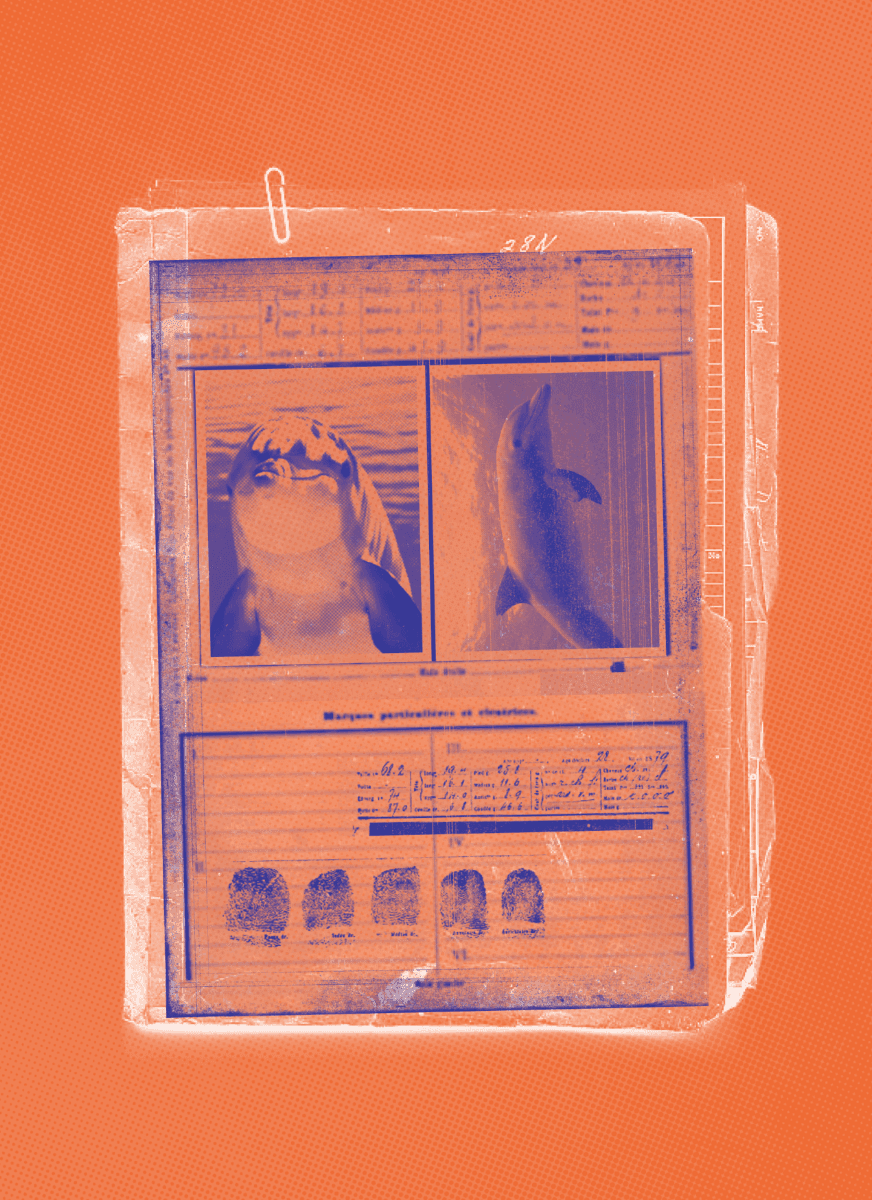
As a scientific project, talking to animals is undoubtedly exciting, but mishandled, it can prove catastrophic. In the 1960s, neuroscientist and psychonaut John C. Lilly secured funding from NASA to develop a project that would prepare us to talk to extraterrestrial life someday. To that end, he built a “dolphinarium,” a house flooded with water in the Caribbean where a young naturalist, Margaret Howe Lovatt, would live twenty-four hours a day with a teenage dolphin named Peter. The goal, ambitious and modest at the same time, was for Peter to learn to speak English—a goal that would be considered achieved if they managed to get him to repeat phrases like “Hello, Margaret”.
When put into practice, the challenge proved colossal: poor Peter couldn't pronounce the letter “m”. All his attempts inevitably ended in a series of clumsy, sputtering bubbles. A purely anatomical issue, but a decisive one. However, the real obstacle was physiological. Peter, in the throes of puberty, constantly interrupted Margaret's lessons with his sexual urges. This impediment became so frequent and insurmountable that Margaret made a decision: since it was logistically impossible to move him each time to a pond with females so he could relieve himself and get his mind back on school, she opted to relieve the dolphin's urges herself. She said there was nothing kinky about it, that it was simply a way to “scratch an itch” so the animal could concentrate and the sacred communication experiment could continue.
This may be the most bizarre beginning to any of the experiments humans have conducted with dolphins, but that wasn't the end of it. In Margaret's case, funding ran out and various problems cropped up, partly because of bad press and partly because of disagreements with Lilly, who wanted to dose the other dolphins in the dolphinarium with LSD for no very clear purpose. When the experiment was shut down, Peter was moved to a tiny, dark tank in a repurposed bank building in Miami, stripped of the sun, the ocean, and the caresses of the love of his life. This may sound like a joke, but it isn't. The new situation had tragic consequences for Peter. Unlike us, dolphins don't breathe by automatic reflex; every exhalation is a voluntary, conscious effort. In that stagnant pool, without a woman and without grammar, Peter simply decided to sink to the bottom of the tank and not take another breath—which, in dolphin language, translates as committing suicide.
After this, it's hardly surprising that the military became interested in dolphins. In the same decade—and country—in which Margaret masturbated them to teach them to speak English (the dolphins, not the military), the armed forces and intelligence services developed a multitude of studies aimed at weaponizing them.Note for Spanish-speaking animals: the Spanish coinage “weaponizar” is one of those terms that resists translation. It means “to turn something into a weapon.” While the idea that Eskimos need many words for snow because of its ubiquity in their lives has been shown to be false, this particular linguistic feature of American English invites us to doubt that once again.Taking advantage of bottlenose dolphins' geolocation abilities, their extraordinary underwater vision and their reasoning ability—which popular wisdom has always equated, at least, with that of “a 3-year-old”—they tried to train them to detect and mark underwater mines, patrol waters around ports or points of interest, sound alarms, intercept intruders by attaching self-adhesive buoys to them that inflate and rise to the surface, dragging the wrongdoer along with them, and also send them on suicide missions with bombs attached to their bodies. The U.S. government categorically denied conducting these experiments, but accused the Soviet government of having done so. And since it all took place during the Cold War, the most logical hypothesis we can arrive at today is that both have tried. In any event, if any practical military knowledge came out of all that, it remains classified.
Humans' obsession with dolphins flourished over the decades, and many other experiments were carried out, but it wasn't until 2001 that one relevant to this essay's aims was conducted. It was a happy experiment of elegant simplicity, involving no torture, aggression, or masturbation of any animal. It went like this: researchers Diana Reiss and Lori Marino made temporary ink marks on two bottlenose dolphins, on parts of their bodies they couldn't see themselves. They then placed mirrors in front of them and observed their behavior. The dolphins began to spin, stretch their necks, and position themselves so they could see the marks better, demonstrating that they understood that what was reflected in the mirrors was themselves. To rule out the possibility that they were inspecting places where they remembered having been marked, the researchers used other marks made with invisible ink as a control. It was the first time it had been shown that self-perception isn't limited to primates and can emerge evolutionarily, at least, in other large-brained mammals. Which, I venture to anticipate, puts us on the right track, since one characteristic our potential interlocutor will need to have, in addition to scale, is self-awareness.
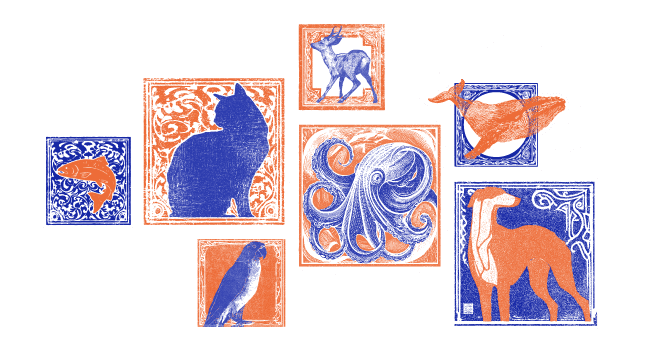
Un viaje ilustrado acerca de la posibilidad de, algún día, hablar con los animales. Desde océanos pensantes hasta polémicos experimentos con chimpancés, disputas entre murciélagos y ballenas rebeldes. Lingüística, inteligencia artificial, literatura y mundo animal en un ensayo lúdico.
212 páginas. Encuadernación Binder. Impreso a tres tintas (negro + 2 Pantones) con laca sectorizada. 14,5 x 20 cm. Ilustraciones de Belén Kakefuku Del Solar.
Biografía del autor: Juan Cruz Balian nació el 3 de junio de 1984. Es Licenciado en Artes de la Escritura (UNA) y publicó el libro de cuentos Simple e imperfecto, y las novelas Ministerio de Invierno y La pausa.
Una plancha de stickers A5 (14,8 x 21 cm) de animalitos para hermosear cualquier superficie. Hechos en impresión UV sobre vinilo transparente con laca sectorizada.
Ebook Cosas que mi gato tendría que saber$13.900
Un viaje lúdico por la lingüística, la inteligencia artificial, la literatura y el mundo animal. Desde océanos pensantes hasta polémicos experimentos con chimpancés, disputas entre murciélagos y ballenas rebeldes. ¿Podremos algún día hablar con los animales?
Formato .epub y .mobi
Biografía del autor: Juan Cruz Balian nació el 3 de junio de 1984. Es Licenciado en Artes de la Escritura (UNA) y publicó el libro de cuentos Simple e imperfecto, y las novelas Ministerio de Invierno y La pausa.