This content was translated using artificial intelligence and may therefore contain errors.
Vesti la giubba
The life of the male Kerria lacca, a red scale insect barely 1 millimeter in diameter, is quite short-lived: it does not feed and lives only a few hours. Its only goal is to fertilize females, which it searches for by flying across Southeast Asia, though for obvious reasons it doesn’t get to see many places. The female, on the other hand, can measure about 6 millimeters and, although she doesn’t travel as much because she has no wings, her passage through life is a little more interesting. For starters, she can live for several months, and she grows in colonies of thousands of individuals stuck to the trunk of a tree.
For this story to get started, what matters is that we look at how female Kerria lacca stick to tree trunks. They have glands in their abdomens that release aleuritic acid and jalaric acid, two molecules that interact to form a waterproof resin, which protects them and, at the same time, keeps them attached to the bark, where they live and lay their eggs.
Humans have been making use of this resin for several thousand years. First, we cultivate it by tying small branches infested with insects onto healthy branches, which gradually become colonized. A few months later, we harvest the branches covered in insects (and resin), and use them to make shellac.
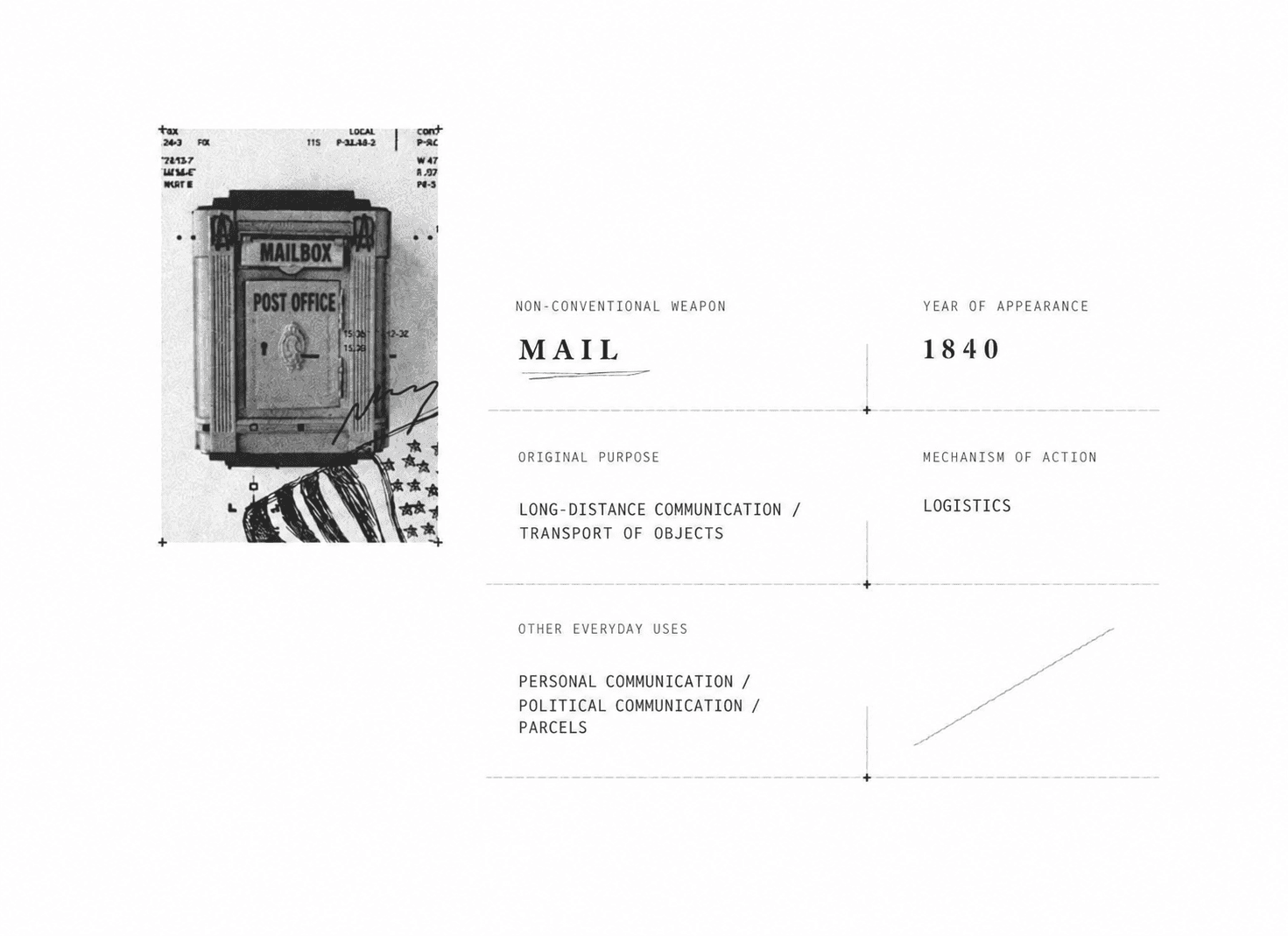
Shellac began to be used in Antiquity as a dye and waterproofing agent, but starting in the seventeenth century people discovered that it was ideal for sealing letters. The process is simple: when heated, the resin melts, and it can be dripped onto the exact spot where the flap of an envelope overlaps the envelope itself. Within seconds, the shellac cools, hardens, and seals it shut. Then, if some curious person decides to open the envelope along the way from sender to recipient, the seal breaks, leaving evidence of the crime. Thanks to this system, many recipients throughout history could punish messengers very easily. Senders, on the other hand, had a harder time of it, since shellac isn’t easy to come by. Despite the centuries, the way it was cultivated remained practically identical to the way it had been in Antiquity and, since the insects only grow in warm, humid regions of the planet—and only on certain trees—shellac production was restricted for a long time almost exclusively to India, which was a British colony from 1858 to 1947. In other words, Great Britain had a global monopoly on shellac for a long time.
It’s likely that billions of letters were sent in the second half of the nineteenth century.If this is the first book of mine you’ve read, there are three things you should know: first, I think the nineteenth century is the best century in history. Second, I’m very addicted to footnotes. Third, this is the third book I’ve written, and I really like plugging the previous ones: they’re called Brief Anecdotal Atlas of Science and Fever. A Brief Collection of Epidemics. They both have lots of footnotes and lots of information about the nineteenth century. Industrial modernity was being built to a great extent thanks to the mail. And since seals could be made in beautiful, elegant shapes, and people like pretty things, shellac became an essential commodity.
What’s more, demand for shellac had another astonishing boom just as the twentieth century was beginningGood century. Not as good as the nineteenth, but very good. thanks to Emile Berliner, an inventor who was born in Germany but lived in the United States. Berliner improved the phonograph invented by Thomas Eddison through the brilliant process of building a similar device—a needle that traveled across a surface—but one that used flat discs instead of cylinders, which were incredibly easier to transport and store, in a library, for example.
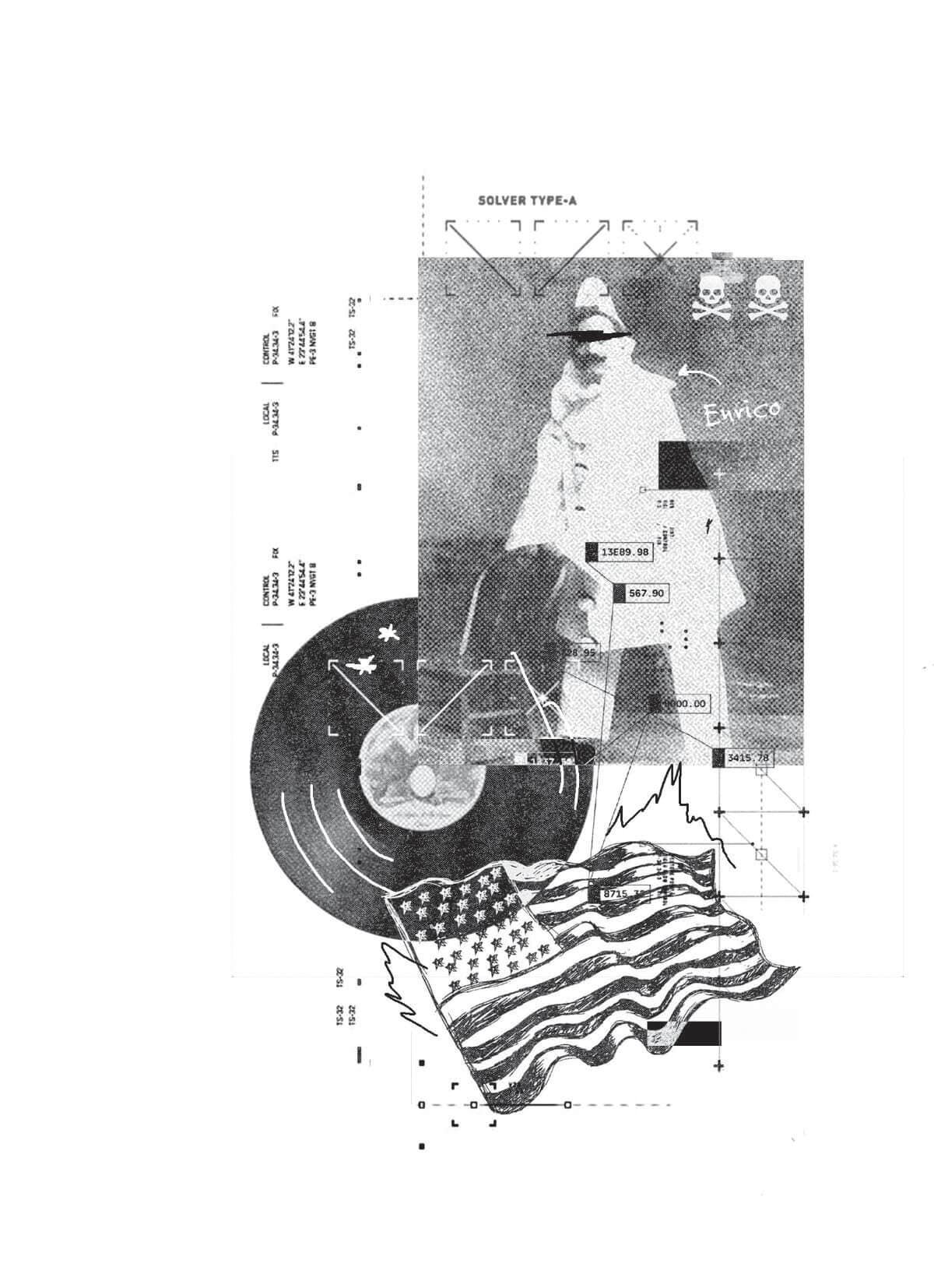
To make the records, Berliner needed a material that could be pressed and was sturdy enough to be transported and last for a while. And he hit on the idea that shellac, the stuff used for seals, might be ideal. So he created a paste that could be softened with heat, pressed, and then, once it cooled, set in place. The consequences of this idea were enormous. For example, in 1904, with this system, Enrico Caruso recorded “Vesti la giubba,” an aria from the opera Pagliacci that tells the story of Canio, a clown who learns that his girlfriend has been unfaithful just before he goes onstage. Heartbroken, Canio has to put on his costume and perform anyway. That’s why the aria’s title means “put on the costume,” something like saying the show must go on. The image of the sad clown, with a painted tear on his face, was born and became popular with this opera.
The shellac recording of “Vesti la giubba,” which lasted 3 minutes and 55 seconds, was the first record to sell more than a million copies. Little by little, homes around the world began acquiring record players and collecting records, and so, with the twentieth century barely underway, demand for shellac reached its all-time peak.
But that’s not the story I came to tell.
The Battle of Caseros
In Argentina, the person who probably holds the record for sending the most letters is Juan Manuel de Rosas. Rosas, who, besides having some very well-made shellac seals, was governor of Buenos Aires for two nonconsecutive terms (a total of twenty years in power). He also managed the foreign relations of the Argentine Confederation, so in effect, he was something like the country’s president.
As a way of putting his power to a plebiscite, every year Rosas submitted his resignation from command of foreign relations, and year after year his resignation was rejected, reaffirming him in office. The mail system was a fundamental part of Rosas’s rule. He wielded all his power through letters. Thousands of letters. In fact, his resignations, which he sent to Perú 272, in the City of Buenos Aires, where the chamber of representatives met, are still kept in the General Archive of the Nation.
Now, we need a little economic policy before we get to the bloody parts. Rosas’s government was characterized by a strong protectionist policy toward foreign products, which were subject to steep tariffs. What’s more, all products entering or leaving the country had to pass exclusively through the port of Buenos Aires. This didn’t go down well with the great European powers, which were trying to sell their products in a country that at the time had something like a million and a half inhabitants. This led to the port of Buenos Aires being blockaded several times.
During one of those blockades, in 1845, French and English ships—probably the two most important navies in the world at the time—blockaded the port of Buenos Aires and tried to sail freely along the Paraná River, as if strolling barefoot through someone else’s ranch. Why would they do such a thing? Well, for anyone who doesn’t know, the Paraná is a very important river that rises on the border between Argentina and Paraguay and flows into the Río de la Plata. Traveling along that river, it would be possible to transport goods to and from, for example, Santa Fe and Entre Ríos, anywhere in the world without going through the port of Buenos Aires. What’s more, in those provinces the main source of income was the saladeros, or meat-curing plants, so called because that was where meat was processed by salting it, so it could be preserved and exported all over the world, back when refrigeration systems that make it possible to transport fresh meat on long-distance ships hadn’t yet been invented. Naturally, the French and English had no refrigeration systems, but they did have a whole lot of interest in trading with those meat-curing plants.
The thing is, right in the middle of Rosas’s rule, the most powerful ships on the planet began sailing along the Paraná River without asking permission and without a hitch. After all, they were invincible. They ran into trouble on November 20, when they reached San Pedro, a town about 170 kilometers from the port of Buenos Aires. At that spot, Lucio Mancilla was in command of the resistance at Vuelta de Obligado, a strategic place where the river makes a bend (hence “vuelta,” or “bend”) and which was located on land belonging to the Obligado family (hence “de Obligado”).
Mansilla set up a defense of ships joined by chains to block the invading ships’ progress, while several cannons were positioned on land to fire at them. The battle was epic, and it is still remembered with honor today. It’s true that the Anglo-French ships managed to advance, but they paid a high price. As I said, they were the most powerful navy in the world and had steam-powered ironclads far more powerful than Mansilla’s wooden ships joined by chains. Their cannons were also much more destructive than the modest ones Rosas and Mansilla had set up on land. Even so, their losses were greater than expected: six of the eleven invading ships were damaged, some of them severely. From then on, the Battle of Vuelta de Obligado was a victory for Rosas’s image and the Argentine people, who at that moment were defending themselves against the third English invasion in their history (and it wouldn’t be the last).
Despite all this heroic resistance, the Paraná kept bringing enemies to Rosas. A very important owner of meat-curing plants and governor of Entre Ríos—and, at first, an ally of Rosas—Justo José de Urquiza looked favorably on free navigation of the Paraná, which would allow Entre Ríos to export meat and trade with the English without going through Buenos Aires. And so, on May 1, 1851, the unthinkable happened.
As he did every year, Rosas submitted his resignation from directing the Confederation’s foreign policy, expecting it to be rejected as it was every year. But Urquiza accepted it, writing what is known as the “Proclamation of Urquiza.” In it, he said things like “That it is the will of the people of Entre Ríos to reassume the exercise of the powers inherent in their territorial sovereignty (...)” and “That once the free will of the province of Entre Ríos has thus been expressed, it is now able to deal directly with the other governments of the world.” In other words, Urquiza had challenged Rosas, and immediately began organizing an army to face Buenos Aires in battle.
Urquiza turned to Pedro II, the emperor of Brazil, for military support. According to some historians, at first Pedro thought it was a very clever move by Rosas to catch him being disloyal, but a short time later his intelligence service confirmed that Urquiza really did intend to confront Buenos Aires militarily.
Pedro offered a loan of 100,000 patacones a month for four months (to be repaid with interest), as well as support from highly specialized troops and help with logistics and organization. In December 1851, Urquiza’s army, which had also received support from Corrientes and Uruguay, as well as Brazil, established itself in the town of Diamante, Entre Ríos, where it organized and began to advance. They named themselves the “Grand Army,” a fairly apt choice, since it was estimated to number more than 20,000 soldiers.
Rosas also had considerable forces, but he was also the one who chose the site of the battle: the fields of Caseros, in the town of Morón, a strategic location about 30 kilometers from the City of Buenos Aires. And so, army against army, with about 50,000 soldiers in all, the most important battle in Argentine history up to that point took place. It deserves a pause so we can tell it, especially because it was brief.
The battle began at 9 in the morning on February 3, 1852, when Martiniano Chilavert, who commanded the artillery of Rosas’s army, ordered it to fire. Other accounts say the opposing side fired the first shot—in fact, that it was Bartolomé Mitre himself, from the 25 de Mayo artillery unit. In any case, the reality was that an unequal battle was beginning: the Buenos Aires army, though similar in size, was much less professional than the Grand Army.
The battlefront stretched for about four kilometers, which might not seem very far today, but in the mid-nineteenth century, with the first telephone still decades away, it was a major challenge. Until Caseros, the army’s generals had been used to exhorting their troops and giving orders by shouting—and they were very good at it—which was absolutely unworkable along a four-kilometer front.
Although Chilavert’s artillery put up an effective resistance, even making the Brazilian troops positioned in the center of the Entre Ríos front retreat, the Grand Army’s superiority in weapons and experience was such that the battle was over in just three hours.
When the Buenos Aires army surrendered, Rosas immediately submitted his resignation and went into exile in England. Chilavert was shot a few hours after the battle. Buenos Aires was left in a kind of power vacuum at that point, and the Grand Army began looting all the city’s shops, which culminated in a brutal crackdown and a death toll of five hundred. That was a higher toll than the battle itself, which is estimated to have caused about three hundred casualties.In the midst of the looting and the panic, a Brazilian soldier dropped his lance in downtown Buenos Aires. Maybe it was left partly buried, but what’s certain is that no one found it until 110 years later, when they lifted the cobblestones on Bartolomé Mitre Avenue to pave it and the lance turned up. The worker who found it passed it on to José María Rosa, a historian and friend of my grandfather, Alfredo Carballeda, to whom he gave it as a gift. Today I have that lance right in front of me as I write this.
Caseros was a tragic, mud-splattered end to Rosas’s hegemony, which had lasted more than two decades. And yes, Urquiza took power, but he too would soon lose it to the Buenos Aires elite led by Bartolomé Mitre. In 1860, after losing the Battle of Pavón, Urquiza became governor of Entre Ríos again, this time with his power greatly weakened. He died ten years later, on April 11, 1870, when he was assassinated in his home, the San José Palace. The palace, now a museum, remains exactly as it was when people came in to murder its owner.
While all this was happening, Rosas, from his exile, did what he knew best: he wrote letters. He had exchanged letters with his former enemy, and a few months after the assassination he wrote to his widow, Dolores Costa, with these heartfelt words: “Madam, the object of my esteem and respect. I have not previously addressed this sorrowful letter to you, considering that the afflictions of your noble, wounded heart would not allow you, for many days, to attend at all to the multitude of funeral condolences.”
The letter had a long way to go. From England it crossed the Atlantic Ocean aboard a steamship belonging to the Royal Mail Steam Packet Company, the main company transporting mail between England and the Americas. After several days, it reached Rio de Janeiro, and a few weeks later, Buenos Aires. From there to Entre Ríos, its final destination.
Today the original letter is in the General Archive of the Nation. But all this was just to explain how important Rosas was, and this isn’t the deadly letter this story is about. To talk about that letter, we need to go a little further back.
Violet Vapors
In the ninth century, a group of Chinese monks were looking for a substance to prolong life, a powder of immortality.
Among all the ingredients they tried was saltpeter. One thing they didn’t know then, but we do know now—except for those who don’t know it—is that saltpeter is made up of sodium nitrate and ammonium nitrate, two salts that had been used for medical purposes for centuries.
I suppose that, since it was a substance for achieving eternal life, they must have taken the task very seriously and, one by one, added all the ingredients they had available at the time to see what would happen. When they added sulfur and charcoal, they unknowingly changed human history forever.
They didn’t manage to make the elixirOn April 19, 2018, in an interview on the show Líbero VS, Alfio Basile, a former coach of several soccer teams, referred to Johnnie Walker Blue Label whisky as “un elisir,” and it became a meme almost instantly. I’ve never tried that whisky, but I’m sure I couldn’t tell it apart from, say, the Green Label, which is also ridiculously expensive but not as much as the “elisir.” In fact, I think it would make a great TV segment to have Alfio (or me, I don’t mind) taste whiskies from the two labels blind and see whether we can tell them apart.of eternal life, but they did make an extremely toxic, flammable powder that apparently ended up burning down several houses after the first experiments. Once they discovered how incendiary the powder was, they began using it in warfare. In fact, the eleventh-century military treatise Wujing Zongyao, already documents three formulas for the mixture: two for bombs launched with catapults and one for a poisonous smoke bomb.
A few years later, when the Mongols entered China and discovered gunpowder, they immediately understood its potential and ended up improving its formula. They learned how to make it explode and used it, of all things, against the people who had discovered it.Among Aesop’s many fables—Aesop was a Greek who was born in the seventh century BC—is the story of the eagle and the arrow: an eagle, while searching for its prey, didn’t notice that an archer was aiming at it. The man shot one of his arrows and seriously wounded the eagle. As it fell, the eagle saw that the arrow was decorated with its own feathers and thought, “What a terrible sadness, to be struck by a weapon carrying my own feathers.” The moral of Aesop’s fable is that the pain of a wound is greater when we’re defeated with our own weapons. See? Some of my footnotes are about Coco Basile, but others are a real elisir.
Gunpowder was so decisive for the Mongols that by 1279 they had completed their invasion of China, becoming the largest empire in human history, an empire that covered something like 30 million square kilometers, 20% of the entire land surface of the Earth, an area almost equal to that of the Moon.
But despite all that power, the Mongols didn’t know exactly why gunpowder explodes. Neither did I, so I had to find out. It isn’t just flammable like alcohol. For anyone who doesn’t know, gunpowder also explodes. And the secret here is gases.
When the explosion begins, potassium nitrate decomposes and releases oxygen, which quickly ends up oxidizing the sulfur and carbon, which become sulfur dioxide (SO₂) and carbon dioxide (CO₂), respectively—two gases that are released hot and in enormous quantities after the reaction.
When gas heats up, its molecules tend to move faster and therefore expand, taking up more volume. If the volume can’t increase because the reaction is happening in a sealed container, like a bullet casing, the pressure inside the container will increase until it makes it explode, and the bullet will shoot out at tremendous speed.
You may be wondering how detonation starts. Well, actually, this isn't a detonation,Dynamite is what detonates: it's made of nitroglycerin, which causes an explosive reaction when a small explosion sets it off. Alfred Nobel discovered it in 1866 after several accidents, many of them fatal. In fact, his brother died in one of those accidents. The fairly well-known anecdote goes that in 1888 a French newspaper mixed up an obituary and, thinking Alfred had died, published “the merchant of death is dead.” When Alfred read that, he decided to create the prizes to clear his name. All this so you don't say that gunpowder detonates and make a chemist friend angry, as happened to me. but a deflagration, which is a very rapid combustion that begins when sulfur is exposed to a heat source. At 112 °C, sulfur melts and becomes much more reactive and able to react with potassium nitrate (KNO₃), one of the salts I mentioned earlier, releasing oxygen, which immediately oxidizes the sulfur and in turn releases sulfur dioxide, one of the gases in the starring role. The same thing happens with carbon, producing carbon dioxide, the other gas.
Another important point is that we're talking about an extremely exothermic reaction—that is, one that releases a lot of heat. So, as the temperature rises, the sulfur melts faster, which leads to more reaction, which generates more heat, which generates more reaction, until the pressure inside the bullet casing gets so high that it has no choice but to explode.
For all those reasons, gunpowder was an extraordinarily sought-after commodity, especially in times of war—that is, always. In fact, in the early nineteenth century, during the Napoleonic Wars, potassium nitrate was as coveted a commodity as lacquer, and people tried to obtain it by any means possible. One way was by burning seaweed, since it is rich in potassium. When burned, the potassium salts—including the precious nitrate—remain in the ashes, and after a few purification steps, it can be obtained. In 1811, Bernard Courtois, a French scientist who was fine-tuning the method, overdid it with the sulfuric acid and, when he added too much, saw a violet-colored vapor. He hadn't obtained potassium nitrate, but a violet-colored vapor, which must have been quite a spectacular sight in the early nineteenth century.
The violet vapors were produced by iodine, a substance that came to prominence a few years later when its therapeutic potential was discovered. For decades, iodine was used to treat dozens of different diseases, from insanity to hypothyroidism, as well as infections. It probably didn't work very well, but then again, it was the nineteenth century. A few years earlier, in 1788, the Kazan Gunpowder Factory was established in the Russian Empire. It was one of the most important in history, and by the beginning of the following century it had already produced more than 500 tons. The factory is still operating today and, in fact, remains a military target: some maintain that it was targeted in the war with Ukraine, which is still going on as I write this book. Of course, accidents are fairly common at a gunpowder factory. “The 1917 Kazan Factory Fire,” just before the revolution, while Russia was fighting in the First World War, has its own Wikipedia entry. It started when someone failed to put out a cigarette butt properly: the factory and several nearby buildings immediately caught fire. In other words, someone smoked in a gunpowder factory and didn't even check that the cigarette butt was properly out. I think that's totally irresponsible.
Now, all this information about gunpowder is really incidental. The only thing we need to understand for the purposes of this story is this: if gunpowder is wet, it won't ignite.
For anyone who doesn't know, if gunpowder is wet, the heat that would normally start the deflagration is ultimately dissipated by the water's heat capacity. The water will only warm up a little, preventing the sulfur from reaching the right temperature and foiling any attempt to use it to kill.
And now, the story:
The Infernal Machine
In early 1841, members of the Royal Society of Northern Antiquaries, a society that still exists and is devoted to collecting antiquities, sent a package through the Portuguese consul in Montevideo. It contained a collection of medals destined for Buenos Aires, with Juan Manuel de Rosas as the recipient.
They probably took advantage of the consul's diplomatic trip to save on postage, which was very expensive at the time. The problem was that in Montevideo the package fell into the hands of Rosas's opponents, who were exiled in that city and desperate to assassinate him. One of them was José Rivera Indarte, a poet and journalist, the chief organizer of the anti-Rosas campaign and the author of the Tablas de sangre, an alphabetical account of Rosas's supposed victims, many of whom could not possibly be attributed to him, but written in a convincing tone.
The Tables had been a key instrument in the anti-Rosas campaign, but they weren't enough, and Rivera Indarte's desire to assassinate Rosas was apparently very hard to contain. So when Indarte came across the box of medals from the northern antiquarians, he saw an opportunity.
The box had been put together with great care, and the medals were wrapped in a fine handkerchief. Carefully, he took out the medals and the handkerchief and, in their place, put sixteen little cannons arranged in a circle so they pointed in every direction. He added gunpowder and rigged a system of springs so they would fire as soon as someone opened the box.
We could almost call it “a Chinese job” and not offend anyone.
On March 27, 1841, the package arrived at Rosas's mansion in Palermo, in what is now the City of Buenos Aires. It was received by Manuelita, his 24-year-old daughter, who, seeing how sophisticated the box was, ran to give it to her father. Apparently, Juan Manuel didn't think much of it, but Manuelita insisted, and her father—probably fed up—finally told her to open it and see what they'd sent from Denmark.
And Manuelita opened it.
Inside the box, she found a second box wrapped in a handkerchief, a set of instructions, and a key. As soon as she put the key in the lock, the lid flew open violently and a metallic noise rang out.
Boing!
But the box didn't explode.
At that point she took the box to her father, who looked it over and, according to legend, burst out laughing. The whole contraption was undoubtedly sophisticated and malicious—a true infernal machine, as Rosas himself dubbed it. But it had failed because the gunpowder was wet.
Had someone wet it to protect Rosas, or had it accidentally gotten wet on its way to Buenos Aires? We'll probably never know. Today it's on display at the National Historical Museum alongside other devices used in attempts to assassinate prominent figures in Argentine politics.For a while, the infernal machine was displayed alongside a stone that had been thrown at Julio Argentino Roca, then president, on May 10, 1886, as he entered Congress for the opening of the regular legislative session. When I went back to the museum to check this detail, I couldn't find it. “Had I imagined it?” I thought. So I got in touch with Clara, a museum curator at the museum (redundant, I know), who told me it had been displayed that way in an exhibition of objects that almost changed history, along with bullets used to defend the Casa Rosada on June 16, 1955, during the bombing and attempted assassination of the president carried out by the Armed Forces, in which 308 people died. Elsewhere, among objects that did change history, there was, for example, the little table where the execution of Manuel Dorrego was signed on December 13, 1828, in Navarro, in the province of Buenos Aires. It's one of my favorite museums, so if you're ever in the City of Buenos Aires, it's in Parque Lezama.
On February 3, 1899, to commemorate the Battle of Caseros, Rosas's mansion, where he had received the infernal machine, was demolished by order of Mayor Adolfo Jorge Bullrich. This time, the demolition was carried out with dynamite, and Parque Tres de Febrero—the Third of February Park—was created in its place, named for the date of the battle.
Today, a monument to Urquiza stands at the exact spot where Rosas's house once stood. This kind of symbolic revenge is common throughout history, but poetic justice worked in Rosas's favor. When José de San Martín spoke of the heroic resistance at Vuelta de Obligado, he said, “Argentines aren't empanadas that can be eaten simply by opening your mouth,” and, as a gesture, left Rosas in his will the curved saber that had accompanied him during the liberation campaign. So nowadays the Urquiza monument seems more like a tantrum. A revenge without glory. Wet gunpowder.
Take penacilin now
As a kind of conclusion, it's worth noting that using the postal service for homicidal purposes didn't end with the infernal machine—quite the opposite. You could say it flourished in the twentieth century.The most famous case is, of course, that of Ted Kazinsky, the Unabomber. But another, less well-known person who tried to kill by mail was the Fallen Angel. That was the name used by a supposed truck driver who opposed a change to US transportation regulations. He sent two letters to the Department of Transportation, claiming to own a fleet of tanker trucks and to have easy access to castor-bean pulp. “If my demand is dismissed, I'm capable of making ricin.” In another letter, he threatened to contaminate Washington's water with ricin and turn it into a ghost town. Ricin is obtained from the seeds of the Ricinus communis plant. It is extremely toxic because it stops cells from synthesizing proteins by inhibiting ribosomes, which read DNA information and translate it into proteins. Without new protein synthesis, a cell dies within hours. In fact, between 4 and 24 hours after exposure—which can happen through inhalation or ingestion—symptoms appear that lead to death soon afterward. There are no specific antidotes, either. This is how Walter White killed Lydia Rodarte-Quayle in the series Breaking Bad, in the final episode, “Felina.” The Fallen Angel was never found, and his identity was never revealed. Fortunately, he didn't carry out his threat, even though the transportation regulation he opposed was not reversed. With the twenty-first century just beginning, as impersonal email was starting to take its place, the postal service perhaps had its last moment in the spotlight.
It was exactly one week after the September 11, 2001 attacks. Ordinary stamps, postmarked in Trenton, New Jersey, began appearing on envelopes with a rather disturbing letter: “THIS IS NEXT. TAKE PENACILIN NOW. DEATH TO AMERICA. DEATH TO ISRAEL. ALLAH IS GREAT”.The misspelling in “penacilin” was in the original letters; it wasn't our mistake.
The letters arrived at the offices of major US media outlets, and the envelopes also contained a small brown pellet, like a piece of dog-food kibble, which nobody knew what to make of. A few weeks later, the envelopes began arriving at senators' offices. This time, they contained a finer white powder. It was soon discovered that both the pellet and the powder contained high concentrations of anthrax.
Anthrax is actually the spore of the bacterium Bacillus anthracis, which survives very well in the environment and, on contact with the skin, can cause a fairly serious infection. Inhalation is much more dangerous, though, because the infection it causes in the respiratory tract is usually worse.
For decades, several countries, including the United States, had been studying the bacillus as a potential biological weapon. They were also studying possible antidotes or treatments, precisely in case the country was attacked with anthrax.
The anthrax letters triggered a massive investigation: the FBI traced inks, papers, mailboxes, and even the spores' places of origin, initially getting nowhere.
Finally, attention began to focus on Bruce Ivins, a microbiologist who worked at Fort Detrick, a laboratory under the US Department of Defense where researchers were developing treatments for anthrax. They also, obviously, had access to the bacillus's spores.
Bruce's colleagues described him as a brilliant but unstable man who would stay in the lab until all hours and sometimes send strange emails. He had, of course, direct access to the materials and knowledge needed to prepare bacillus spores to an appropriate level of refinement.
The evidence kept piling up, and by early 2008 the investigation was focused entirely on him. But he was never tried because he took his own life on July 29 of that same year.
Before that, he left his wife, Diane Betsch, a letter saying he had a terrible headache and asking her to please let him sleep. He had taken extremely high doses of Tylenol, a painkiller. The letter had no wax seal. Too bad, because otherwise this first chapter would have come out perfectly round, like a shellac record.
Ciencia + Epidemias + Guerras: la trilogía completa de un autor que logra hacer graciosa hasta a la Fiebre Amarilla.
No es un bunker antiaéreo, pero esta sobrecubierta protege tus tres carbalibros y los hace lucir mucho mejor. Cuidá las cosas que te hacen feliz. Impresa en serigrafía con tinta blanca sobre acetato, en Imprenta Cumbre.
Incluye: - Las armas tontas | Breve inventario de astucias y torpezas bélicas - Breve atlas anecdótico de la ciencia - Fiebre: Breve colección de Epidemias - Sobrecubierta de edición limitada. Impresa en serigrafía con tinta blanca sobre acetato.
Trilogía Carba$94.000$104.700
Ciencia + Epidemias + Guerras: la trilogía completa de un autor que logra hacer graciosa hasta a la Fiebre Amarilla.
No es un bunker antiaéreo, pero esta sobrecubierta protege tus tres carbalibros y los hace lucir mucho mejor. Cuidá las cosas que te hacen feliz. Impresa en serigrafía con tinta blanca sobre acetato, en Imprenta Cumbre.
Incluye: - Las armas tontas | Breve inventario de astucias y torpezas bélicas - Breve atlas anecdótico de la ciencia - Fiebre: Breve colección de Epidemias - Sobrecubierta de edición limitada. Impresa en serigrafía con tinta blanca sobre acetato.
Las armas tontas$34.900
Historias reales de seres humanos intentando convertir en armas los objetos más improbables. El punto exacto donde coinciden la guerra, la ciencia y la estupidez.
172 páginas. Encuadernación Binder. Cubierta impresa a dos tintas (negro + Pantone plateado). Ilustrado por el estudio de diseño gráfico The Negra.
Biografía del autor: Juan Manuel Carballeda. Buenos Aires, 1⁰ de marzo de 1984. Doctor en Biología, docente de la Universidad de Buenos Aires y la Universidad Nacional de Hurlingham e investigador del Conicet. Trabaja con virus. Colabora con medios gráficos y audiovisuales. Escribió Breve atlas anecdótico de la ciencia (El Gato y la Caja, 2019) y Fiebre. Breve colección de epidemias (El Gato y La Caja, 2021). Nunca mató a nadie.
Historias reales de seres humanos intentando convertir en armas los objetos más improbables. El punto exacto donde coinciden la guerra, la ciencia y la estupidez. En formato ebook, porque si un pañuelo puede ser un arma homicida, un libro puede ser digital.
Formatos .epub y .mobi.
Biografía del autor: Juan Manuel Carballeda. Buenos Aires, 1⁰ de marzo de 1984. Doctor en Biología, docente de la Universidad de Buenos Aires y la Universidad Nacional de Hurlingham e investigador del Conicet. Trabaja con virus. Colabora con medios gráficos y audiovisuales. Escribió Breve atlas anecdótico de la ciencia (El Gato y La Caja, 2019) y Fiebre: Breve colección de epidemias (El Gato y La Caja, 2021). Nunca mató a nadie.