This content was translated using artificial intelligence and may therefore contain errors.
Old Photos
André Adolphe Eugène Disdéri was a French photographer who, in 1854, patented a camera that allowed him to take four portraits at once. It used four lenses but, thanks to a partition, required only one photographic plate, which was the most expensive component. Once printed, the images were cut out and pasted onto 6x10 cm cardboard mounts, which people used as calling cards, sent by mail, or gave as gifts. It seems strange to us now, but in the 1860s it was very common to give and exchange photos of yourself as a way of keeping in touch. We can think of it as a primitive form of Facebook, except that you had to say “like” out loud or in a letter if you wanted the other person to know. The comparison doesn’t sound so far-fetched when you consider that, in fact, Disdéri’s method was what made it possible for photography to come into widespread use.
In 1867, at the studio of Ernest Edward, a former assistant to Disdéri, the naturalist Charles Darwin had the famous photos taken in which he appears with his long white beard, which he used, of course, as a calling card. By then, Darwin was already very well known. He had published On the Origin of Species in 1859 and probably needed to hand out a lot of photos. But it’s also obvious that he enjoyed them: at least 32 different photos of him exist, which is a lot for someone born at the beginning of the nineteenth century.
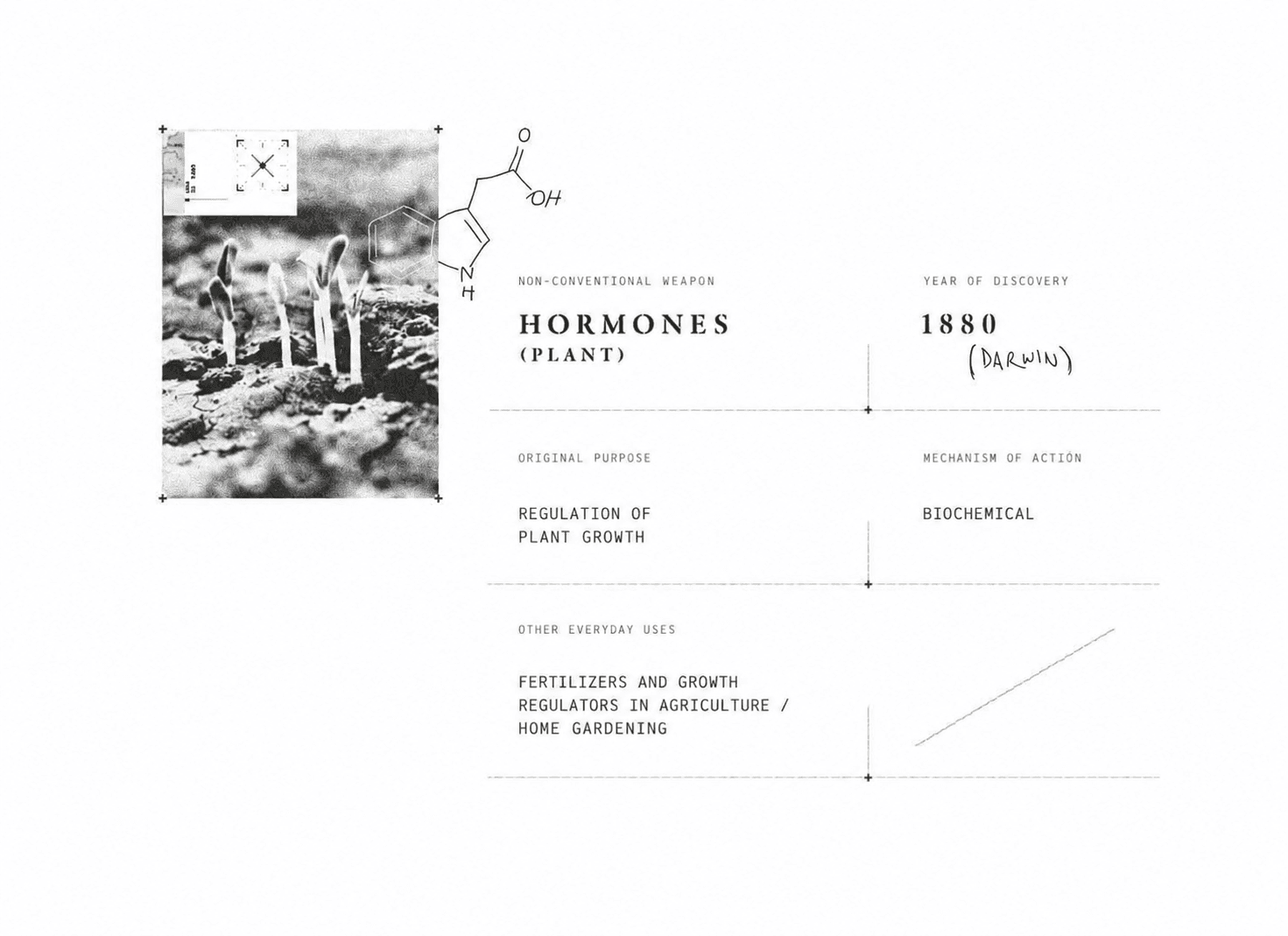
My hypothesis is that Darwin had a particular fondness for photography because he was very interested in light, and he was interested in light because he was interested in life. In his second-to-last book, titled The Power of Movement in Plants, published in 1880, he describes how plants are capable of moving in response to different stimuli, including light and gravity.
He carried out the experiments for that book with his son Francis, and what caught their attention most was discovering that when a plant was subjected to a stimulus—particularly a light stimulus—the part of the plant that responded was different from the part that was stimulated.
It may not seem like much, but it is. It’s very important. This explains, for example, how plants twist toward the sun when they grow covered by something: the tip of the coleoptile, the structure that covers the shoot of a growing seedling, is the part that receives the light, but the response occurs a little farther down, in the part of the stem that curves. Charles and Francis showed that if the tip is covered so that light can’t get through, the plant stops curving, even if the rest of the shoot is exposed. So they thought there must be some kind of influence from one part of the plant to another. Some substance the plant uses to communicate with itself. And they were right. Two years before he died, Charles Darwin had discovered plant hormones.
The term “hormones” only began to be used in the 1910s. And it wasn’t until 1935 that the substance responsible for that influence was discovered: indole-3-acetic acid. What’s more, something quite incredible was discovered: the acid can promote or inhibit a plant’s growth, depending on the dose used. In low doses, it promotes growth, but in high doses, it prevents it.
From then on, there was a frenzy to understand and synthesize substances similar to indole-3-acetic acid. Scientists called these substances “auxins.” And auxins had an enormous impact on the world because they are relatively easy to synthesize on a large scale, so they can be used as fertilizers to develop agriculture, or applied in high doses and used as herbicides.
This last use caught the attention of the United States Army Chemical Warfare Service toward the end of World War II.
Ho Chi Minh’s Long Struggle
A ship less well known than the HMS BeagleHMS stands for “her majesty’s ship” if the United Kingdom has a queen, or “his majesty’s ship” if it has a king. Amazingly, the prefix is still used today. The abbreviation still works regardless of the monarch’s gender, unlike the anthem, which changes (“God Save the King” or “God Save the Queen”) depending on the case. (the ship Charles Darwin traveled on), but more important to this story, is the Amiral Latouche-Tréville, a cargo ship that used to connect several French colonies in Southeast Asia in the early twentieth century.
In 1911, in Saigon, then part of French Indochina,Until 1954, French Indochina comprised the territories of present-day Vietnam, Laos, and Cambodia. a 21-year-old named Nguyễn Sinh Cungse boarded the Latouche-Tréville as a kitchen assistant. He probably did so not out of a love for life at sea, but because it was the only way to travel at the time: inhabitants of the French colonies were not allowed to leave the country. But Nguyễn traveled to several destinations, including London, where he worked as a dishwasher and began organizing with workers from various colonies to improve their very unfair working conditions. In 1918, he settled in Paris, where he joined the French Communist Party. In 1930, now using his pseudonym Ho Chi Minh, meaning “he who enlightens,” he founded the Vietnamese Communist Party. And in 1941, by then established in Vietnam, he founded the League for the Independence of Vietnam, or Viet Minh.
It all began in 1940, a few months after the Nazi occupation of France. Since control of the French colonies had weakened considerably under the government of Philippe Pétain, which collaborated with the Germans, the Vietnamese thought it was the perfect time to declare independence. Except for one detail: the Japanese Empire had its own expansion plans in the region and, in fact, in March 1945 it ended up occupying Vietnam just as France was managing to recover its own country. However, this occupation didn’t last long. That same year, after the nuclear bombs devastated Hiroshima and Nagasaki, Japan surrendered. With the official end of World War II, the way was finally clear and, now, the perfect time for the revolution in Vietnam had arrived.
On August 14, Ho Chi Minh led a revolution and took control of Vietnam’s major cities within a few days. The following year, France tried to regain control of its colony, and an eight-year war began. In 1954, after the French army surrendered, the Geneva Accords were signed, dividing Vietnam in two. On one side was South Vietnam, or the Republic of Vietnam, whose capital was Saigon and whose president was Ngô Đình Diệm, a deeply anticommunist dictator supported by the United States. On the other side was North Vietnam, or the Democratic Republic of Vietnam, whose capital was Hanoi and whose president was Ho Chi Minh himself.
The truce agreed in Geneva didn’t last long. The southern government never managed to consolidate its power: it was very corrupt and had established Catholicism as the official religion in a mostly Buddhist population.One of the most striking photos in human history is the one of Thích Quản, a Buddhist monk who, on June 11, 1963, on a busy street in Saigon, doused himself with fuel and set himself on fire. That was his form of protest against the southern government, which persecuted that religious majority and, the previous month, had banned the raising of the Buddhist flag on the day celebrating the existence and enlightenment of Gautama Buddha, the most important celebration in that religion. Since Buddhists were known as “bonzes,” the form of self-inflicted death Thích Quản chose is known as “bonze-style self-immolation.” The photo, showing him in flames, praying without showing pain or despair, quickly went around the world. By contrast, in North Vietnam—with the support of the Soviet Union and the People’s Republic of China—Ho Chi Minh exercised power with a development-focused outlook and led, for example, the most important literacy campaign in Vietnamese history.
In the spring of 1959, armed clashes began between the southern army and units of the National Liberation Front of Vietnam, which operated in the south but was supported by the north and was known as the Viet Cong.A contraction of “Việt Nam Cộng-sản” (Vietnamese communist) or “Việt gian cộng sản” (“communist traitor to Vietnam”). American soldiers, who entered the war shortly afterward, referred to them as “Victor Charlie” or “V-C”.The goal was to bring down the southern regime. That same year, the Communist Party in Hanoi (in case you missed it, the capital of North Vietnam, led by Ho Chi Minh) approved a resolution to use the armed forces to overthrow the regime of the president of South Vietnam (led by Ngô Đình Diệm).
The Vietnam War had begun.
Although Ngô Đình Diệm’s army was larger and better trained, the northern National Liberation Front was a multilayered organization: they coordinated regional forces, which in turn organized guerrilla units that recruited and trained fighters in the villages. With this organization spread across the territory—which was also mountainous and covered in dense vegetation—the National Liberation Front could easily reinforce its troops wherever it needed to. They also used guerrilla warfare tactics, involving small, sudden, localized clashes rather than the large battles the southern fighters expected.
In January 1961, John F. Kennedy became president of the United States, and in April a very important event took place in Cuba, where the socialist revolution had triumphed two years earlier, known as the “Bay of Pigs invasion”: in just a few hours, an army of 1,400 American soldiers tried to invade the island of Cuba and failed.
In that context, the newly inaugurated Kennedy faced the problem of Vietnam, where the south was losing despite the weapons and training provided by the United States. Kennedy and Robert McNamara, his secretary of defense, believed Vietnam presented an opportunity to test the United States’ ability to carry out a counterinsurgency against the spread of communism. Years later, McNamara said it had been a huge mistake.
At first, the United States didn’t officially enter the war; instead, it gradually increased its support for South Vietnam. But the north kept advancing, and on November 1, 1963, National Liberation Front forces took control of Saigon and deposed and executed President Ngô Đình Diệm. To make matters worse, three weeks later, in Dallas, Kennedy was assassinated.
On the day of the assassination, aboard the plane carrying Kennedy’s remains, Lyndon Johnson became president of the United States. In Hanoi, they believed victory was near, but in August 1964 the destroyer US Maddox was attacked by North Vietnamese boats, and Johnson—who had already nearly doubled the number of American troops in the Asian country—used this as an argument to take the final step. Although the boats had been repelled and the Maddox was intact, on August 7 the U.S. Congress overwhelmingly approved the formal entry of the United States into the war.
What came next happened among coffee plants.
A Brief and Necessary History of Coffee
The history of coffee is spectacular. Some say that more than a thousand years ago in Kaffa, in what is now Ethiopia, a herder named Kaldi noticed that his goats could stay active longer after eating the red berries of a plant, so he decided to try them himself. Kaldi suddenly felt something very strange: a lot of energy and mental clarity. So he decided to take the red berries to a monastery. But the monks, thinking the herder wanted to poison them, threw the berries into the fire. Before long, they became the first people in human history to experience one of the most captivating smells there is: the aroma of coffee roasting.
The temptation to try them was too great, so they decided to grind a few of the roasted beans and mix them with hot water. Just like that, they also became the first human beings to drink coffee.This is probably just a legend. The story of Kaldi began appearing in Arabic writings in the seventeenth century and then spread across Europe, but not much else is known about it. What is widely accepted is that coffee comes from Ethiopia.
From the fifteenth century onward, coffee gradually spread throughout the Middle East, and around 1600, thanks to traders, it reached Venice. The story of the Ethiopian herder also began to circulate around that time. Coffee had another moment of great fame in 1773, this time in Boston, which was then an English colony. Under a resolution of the British Parliament known as the “Tea Act,” England decided it could sell tea in its colonies without paying local taxes. In response, on December 6, a group of angry, organized, subversive colonists dumped a large shipment of tea from England into the sea as a form of boycott. That act became known as the “Boston Tea Party” and was a turning point on the road to American independence. Among its many consequences, drinking coffee instead of tea became a patriotic symbol, which helped popularize the drink in North America.
A few centuries later, in 1933 in Italy, Alfonso Bialetti’s invention helped popularize espresso, and within a few years practically every Italian household had a coffee maker of that kind. Today, almost every household in the world has one way or another of making coffee. At least in the West.
But this popularity of coffee consumption contrasts with how difficult it is to produce. Coffee can only be grown under very specific conditions because, to grow, the plant needs a lot of rain and also a dry period just before harvest to help it flower. It also needs very rich soil and a certain elevation, which means it can only be planted in the area known as the “coffee belt,” located between the Tropics of Cancer and Capricorn.
France, like the rest of the world, embraced mass coffee consumption,In fact, Paris is home to Café Procope, known as the oldest café on the planet. It was opened in 1668 by the Italian Francesco Procopio dei Coltelli, and it was common to see great thinkers sitting there, debating for hours. And drinking coffee, of course.but it had one advantage. One of its colonies—French Indochina—was located right in the coffee belt, so from the mid-nineteenth century onward France was able to easily supply itself with its own coffee. Arabica in particular.Which is my favorite, relevant information in case anyone wants to give me coffee. The French coffee tap wasn't shut off completely, but the flow dwindled when they lost the colony in 1954. From then on, North Vietnam set about reorganizing coffee production into cooperative systems, which proved essential to the development of its economy. In fact, production kept growing, and as I write this, in the middle of 2026, Vietnam is the world’s second-largest coffee producer.
After the U.S. Congress approved entry into the Vietnam War, the American military wanted to tackle two problems at once. In other words, attack the enemy’s military power as well as its economic power. The National Liberation Front’s guerrilla warfare strategy was proving very effective. The guerrillas hid and attacked very effectively thanks to the dense vegetation of the mountainous jungle terrain, and coffee was the most important crop in Vietnam’s economy.
In other words, for the United States it was the perfect time to test the compound its Chemical Warfare Service had begun investigating toward the end of World War II.
Only You Can Prevent a Forest
In fact, there were three compounds. Two of them—2,4-dichlorophenoxyacetic acid (2,4-D) and 2,4,5-trichlorophenoxyacetic acid (2,4,5-T)—are synthetic auxins, the kind that function as herbicides when applied in large quantities. The third compound—2,3,7,8-tetrachlorodibenzo-p-dioxin (TCDD)—is not a herbicide, but it is a byproduct of synthesizing the other two and remains as a contaminant in the preparation. The problem is that TCDD is extremely toxic to humans.
The United States Army hired several companies, including Monsanto and Dow Chemical, to produce these and other synthetic herbicides on a large scale. They were delivered in 55-gallon drums (about 208 liters), and to identify them, the drums were painted with stripes of different colors. The drums containing 2,4-D, 2,4,5-T, and TCDD were given the color orange.
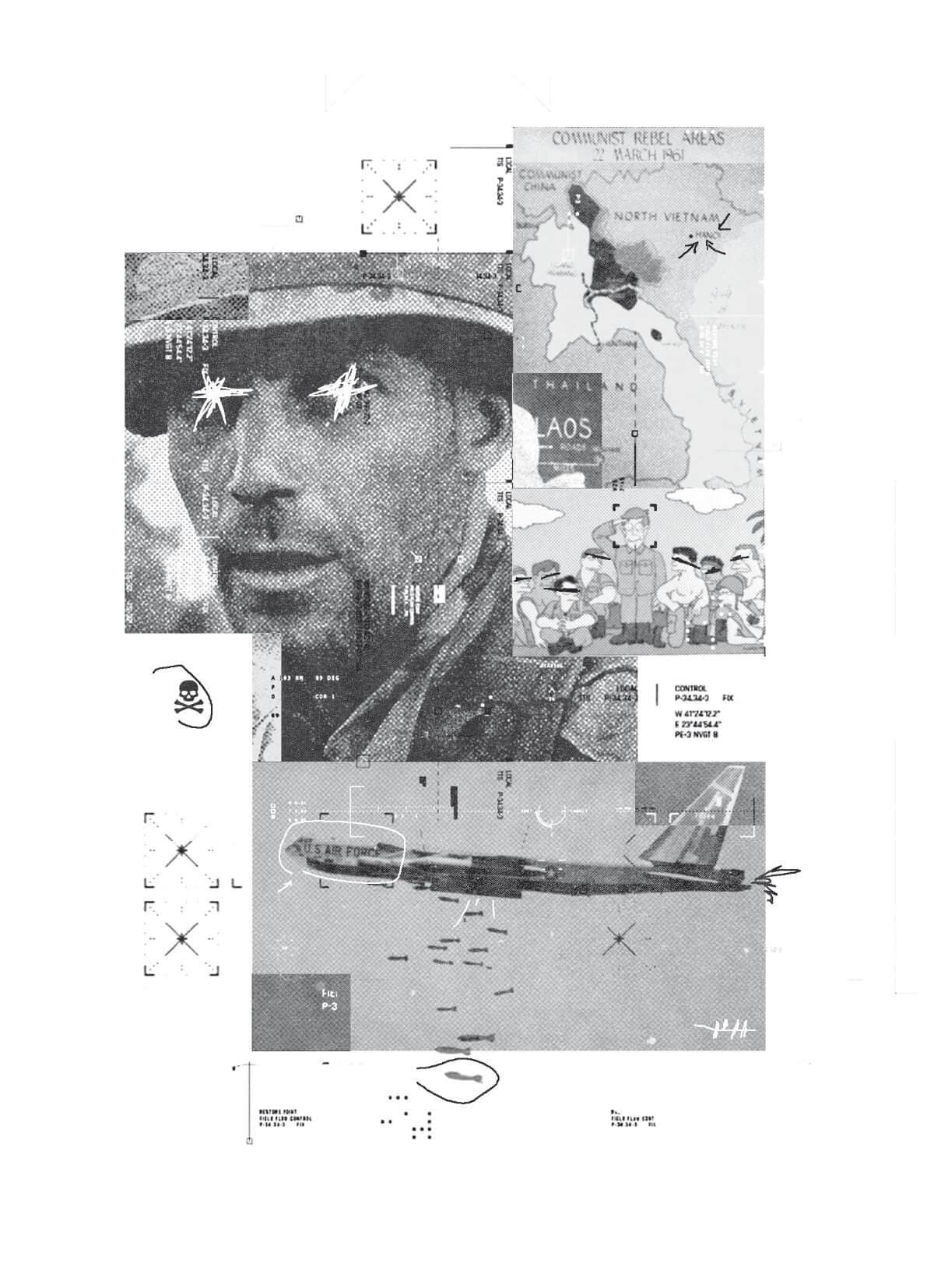
Operation Ranch Hand involved using Fairchild C-123 aircraft—specially modified for that purpose—to spray herbicides over a period of 10 years. In total, the U.S. military sprayed more than 9 million liters of Agent Orange over Vietnam (and neighboring countries such as Cambodia and Laos), an intervention unprecedented in scale in human history. In the short term, these attacks caused the massive defoliation of forests and crops, leading to famine, and reduced the guerrillas’ opportunities to hide. But later, because of TCDD contamination, they also caused thousands of cases of cancer, birth defects, neurological disorders, and chronic illnesses affecting several subsequent generations, both among the Vietnamese population and U.S. veterans. In fact, the large-scale use of Agent Orange is still having consequences today. The companies that produced the herbicides denied for decades that they knew about their effects, though they later had to pay multimillion-dollar compensation.
Perhaps the most perversely ironic detail of Operation Ranch Hand is that the planes bore the motto “Only you can prevent a forest”—in other words, “only you can prevent a forest”—paraphrasing the wildfire-prevention campaign “Only you can prevent wildfires,” in other words, “only you can prevent a forest fire.” The campaign had become famous a few years earlier and featured a cute little bear mascot.
However, despite the technical superiority of the U.S. military (and having sprayed millions of liters of herbicide), the war never turned in its favor. Among other strategies, the Vietnamese army had designed an impressive network of tunnels more than 250 kilometers long, through which its units could move quickly and without being detected. They even spent long days underground, waiting for the right moments to come out and attack. American soldiers had never prepared for this kind of war; they didn’t know where their enemies might appear, and in desperation, the United States kept escalating its interventions and cruelty.
Phan Thi Kim Phúc
Agent Orange wasn’t the only chemical used; a mixture originally developed in the 1930s by Louis FieserLouis never regretted his invention. In fact, he used to say: “I have no right to judge the morality of napalm just because I invented it.” Well. of Harvard University was also used. This mixture consisted of naphthenic acid and palmitic acid, which form an extremely flammable gel that burns very slowly and reaches 1,000 °C on the surfaces it sticks to. Napalm—“na” from naphthalene and “palm” from palmitic—was used at the end of World War II and improved for the Vietnam War. This new version, called “Napalm B,” burned longer and generated even more heat, and it was often sprayed on civilians.
Although fire was literally raining down from the sky, the Vietnamese were never close to surrendering, and the war became an increasingly important issue for the American public. In fact, at Woodstock, the most important music festival up to that point, held in an open field in 1969, antiwar slogans were a fundamental part of the event, as they were of numerous street demonstrations.
On June 8, 1972, a South Vietnamese Air Force plane bombed Trảng Bàng, a city in Tây Ninh Province, in the southeastern region of Vietnam, with napalm. When they saw the South Vietnamese Air Force plane, many people ran desperately, trying to get to safety. The reporters in the area started shooting with their cameras to get the photograph. Everyone except Nick Ut, an Associated Press photographer who decided to wait a moment. Seconds later, he saw a group of children running, including nine-year-old Phan Thị Kim Phúc, naked because the napalm had burned her clothes off. Phan Thị Kim ran and screamed, “too hot, too hot.” Nick, at that moment, while his colleagues were rewinding their film, took what was probably the most harrowing photograph of the war. After an intense debate, because of the girl's nudity and because then-President Richard Nixon initially implied that it was staged, the photograph was published, further increasing opposition to the war.
Nick Ut came to the girl's aid by taking her to the hospital. There, they didn't know how to treat her; they only bandaged her and, believing she had no chance of surviving, left her near the hospital morgue, which incredibly saved her life because if they had tried to change her bandages, the napalm, on contact with oxygen, would have reignited and burned her even more. Instead, the napalm gradually evaporated, and Phan Thị Kim eventually survived, although she spent several months hospitalized and underwent dozens of operations. The photograph of “Napalm Girl” was instrumental in catalyzing the end of the war. The image spread around the world and, in particular, reached every American household, changing the narrative about the role of the United States, which, until then, had continued trying to conceal the immense amount of civilian suffering it was causing. Political and media pressure only continued to mount, and on January 27, 1973, the United States signed the Paris Peace Accords, which provided for the withdrawal of U.S. troops from Vietnam. The two factions still fighting on the ground agreed to a ceasefire, but the war did not end until two years later, in April 1975, when South Vietnamese President Duong Van Minh officially surrendered and the country was unified and renamed the Socialist Republic of Vietnam, with Hanoi as its capital.
Ho Chi Minh did not live to see victory because he died of a heart attack on September 2, 1969. But Saigon was renamed Ho Chi Minh City in his honor.
Nick Ut won the Pulitzer Prize and remains in contact with Phan Thị Kim, who is a peace activist.
I think Darwin would have liked this story.