This content was translated using artificial intelligence and may therefore contain errors.
Pontiac
In the mid-1920s, the American automaker General Motors had a very interesting strategy for its production. It was called the “Companion Make Program,” and consisted of creating four car brands that covered a broad range of consumers’ purchasing power, each with its own identity. They were called Pontiac, LaSalle, Marquette, and Viking. The cars were different, but since all the brands belonged to the same company, many shared engines and assembly platforms, which greatly lowered costs. Thanks to this strategy, General Motors was able to sustain vehicle production during the crisis that followed the New York stock market crash on October 24, 1929, known as “Black Thursday.” However, only one of those brands survived and remained active until 2010. That brand is Pontiac.
In the 1960s, Pontiac reached its peak with the Pontiac GTO, a beast of a car, incredibly powerful for a midsize chassis and with a spectacular design. John DeLorean, a young engineer, took part in the GTO’s development. Thanks to the GTO’s success, in 1965 he became Pontiac’s youngest general manager, and in 1969, Chevrolet’s youngest, in both cases within the General Motors divisions. John was something of a star in the auto industry. In 1973 he left General Motors and founded the DeLorean Motor Company (DMC), whose first car, the DMC-12, was a massive commercial failure. Although it became an icon when Robert Zemeckis chose it to be Doc Brown’s time machine in Back to the Future, DeLorean eventually went bankrupt. Or maybe it all went to hell when John was detained on suspicion of links to drug trafficking. Let’s get back to talking about cars.
After its peak in the ’60s and ’70s, Pontiac was never the same: it started making cars that didn’t turn heads, and sales kept falling. In the 2000s, they brought out a minivan, the Pontiac Aztek, which had one very special feature: it was ugly. Of course, beauty is subjective, but the Aztek is one of the few objectivelyFrom here on, “objectively” means “what I think,” and the two terms are interchangeable and equally valid. ugly cars in history. To no one’s surprise, it wasn’t a success and was discontinued in 2005. Still, like the DeLorean, it became famous thanks to the audiovisual industry: it was the car Walter White drove in the series Breaking Bad.
After several failures, on January 4, 2010, a white Pontiac G6 rolled off the production line. It was a rather unremarkable four-door car, and the last Pontiac ever made, bringing 84 uninterrupted years of car production to a close.
So, what’s the point of all this automotive history? Well, one of the most important parts of the auto industry—and probably one of the least talked about—is naming cars. Chevrolet knows this: it tried to sell the NovaIn Spanish, Nova sounds like “no va,” meaning “it doesn’t go.” Obviously, it was a failure. in Latin America. The Japanese automaker Mitsubishi knows it all too well: in some countries, it had to change the name of its pickup truck, Pajero. And Honda knows it too: when it launched the Fitta, it caused an uproar because in Swedish and Norwegian that’s a vulgar word for female genitals.On top of that, they launched it with the slogan “small on the outside, big on the inside.” Luckily, they later took off a couple of letters and it became the Fit, and today it’s a very successful car, although it has one very particular problem: its rear bumper is incredibly small. In fact, it’s almost impossible to find Honda Fits out on the street that haven’t been hit from behind—a phenomenon known as “the Fit curse.” But Pontiac… ah, what a beautiful name, Pontiac. It sounds great. It has no puns associated with it. All in all, it’s a very well-chosen name. Powerful. It comes from an Odawa chief, a North American Indigenous people, who led a rebellion and, for extra glory, was killed by an ax blow to the back.
The Seven Years’ War
French and English expansionist ambitions caused us humans quite a few problems. The Seven Years’ War began in 1754, when Great Britain declared war on France, and ended—as you might expect, though these things don’t always work out that way—seven years later, in 1763, with the signing of the Treaty of Paris.
A year before the war broke out, Great Britain controlled thirteen colonies in North America. Beyond those colonies lay New France, a vast, sparsely populated region stretching from Louisiana—across the Mississippi Valley and the Great Lakes—to Canada. As its name suggests, New France was under French control.
The border between the French and British possessions was not well defined, and that tends to cause problems. In the upper Ohio River Valley, the French had built several forts to force recognition of their claim to the territory. British colonial forces, led by Lieutenant Colonel George Washington—who was 22 at the time and would later become President of the United States—tried to expel the French in 1754 but were defeated. When news of Washington’s failure reached the British prime minister, he called for swift, large-scale armed retaliation. That was the first moment of the next seven years.
The British government then sent General Edward Braddock to the colonies as commander in chief of British forces in North America. The problem was that Indigenous leaders did not cooperate with him, and on July 13, 1755, during a failed expedition to capture Fort Duquesne, in what is now Pittsburgh, the general was ambushed and killed. After that, the war settled into a stalemate for several years, but eventually swung in Britain’s favor and ended with the signing of the Treaty of Paris. The treaty marked a British victory in which France ceded all its North American territory, except for the islands of Martinique and Guadeloupe and its fishing rights in Newfoundland.
But it wasn’t a victory to celebrate: in North America, the Seven Years’ War sowed more than bloodshed. It sowed the seeds of revolution, a rejection of British colonialism that, a few years later, led to the United States Declaration of Independence. We’re talking, of course, about July 4, 1776.
Two Blankets and a Handkerchief
Pontiac—the chief, not the car—didn’t live to see the creation of the American stateMaybe it was a good thing he didn’t live to see it, because North American Indigenous peoples came off worse after the United States won independence: they were dispossessed of their lands, excluded, and often killed for many years. Martin Scorsese’s 2023 film Killers of the Flower Moon shows in stark detail a series of murders of members of the Osage tribe in 1920, after oil was discovered on their land. It’s a real bummer, especially considering that later they honored an important chief by naming a car brand after him. because he lived from 1720 to 1769. But he fought the English. In fact, in 1763, as soon as the Seven Years’ War had ended, he led the siege of Fort Pitt, located in Pittsburgh. Inside the fort were about 120 British soldiers, under the command of Captain Simon Ecuyer, and around 600 civilians.
Pontiac and his allies tried to enter the fort in May, but when they couldn’t, they laid siege to it for two months.
During the siege, smallpox cases began to rise inside the fort, one of the deadliest diseases in history, which was finally eradicated thanks to vaccines in 1978.Fever: A Brief Collection of Epidemics is a book I wrote in 2021, and I think it tells the story of smallpox very well. I recommend it. Something that also happened to me with Anecdotal Atlas of Science (which I also recommend) is that, once the book was printed, spectacular stories kept turning up that could easily have gone in it. This is one of them. The sick were housed in an improvised hospital inside the fort, where there was no way to stop the disease, especially since the first vaccine in history was still about 30 years away. So the smallpox cases kept growing without letup.
Among the people inside the fort was William Trent, a fur trader who wrote everything down in his diary. It was quite an interesting diary, and it later helped people learn in detail what had happened during the siege.
On June 13 and 14, Trent wrote, “nothing worth mentioning.” On the 21st, he recorded a gunfight, and on the 22nd, that he saw smoke at one end of the fort. But on June 24, 1763, he wrote something more disturbing:
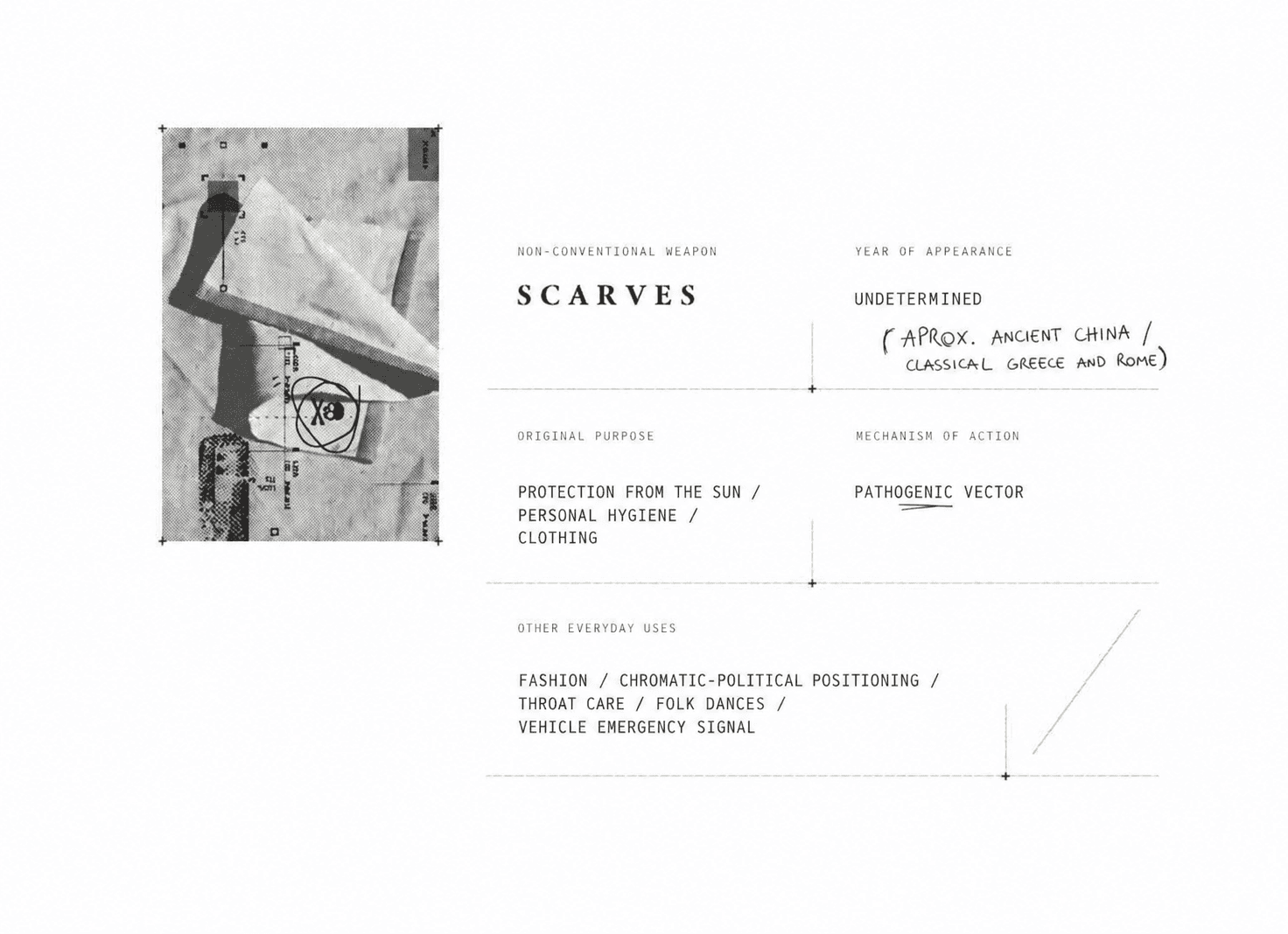
u003cemu003eLast night, two Indians came to the garrison. This morning they left again, after receiving from us two blankets and a handkerchief from the Smallpox Hospital. I hope it has the desired effect. We also gave them two bottles of rum and some beads. In the afternoon, the Indians camped around the fort fired at our sentries, but did them no harm. u003c/emu003e
Trent’s diary entry might easily go unnoticed. But it’s important to interpret it. A group of people under siege by Indigenous people, desperate as their food supplies dwindle, set up a negotiation with the people besieging them, and during the meeting they take a shot that they don’t even know will work: they give them blankets and handkerchiefs, hoping the fabric is contaminated with smallpox.
The impact of the action is unclear. There’s no way of knowing how many infections occurred afterward, much less whether they can actually be attributed to the handkerchief. But because it is so well documented, the action constitutes the first recorded use of organisms—in this case, viruses—as a weapon.
The dispute was ultimately settled by more traditional methods. On August 4, British Colonel Henry Bouquet left Fort Ligonier, about 80 kilometers from the besieged fort, with troops and supplies of flour. Halfway there, they were ambushed at Bushy Run by Indigenous warriors, suffered casualties amounting to nearly a quarter of their troops, and lost much of their cargo of flour. The next day, Bouquet feigned a retreat. In reality, he intended to circle around the Indigenous warriors and attack them by surprise. The plan worked, and the Battle of Bushy Run was a British victory. Four days later, Bouquet returned to the fort and was finally able to break the siege.
Today, you can visit the battlefield. Admission costs 5 dollars, and the site promises to be the only historic site devoted exclusively to Pontiac’s War: the battlefield has preserved its topography intact, and, according to the site’s website, you can feel and understand the positions and maneuvers of both sides perfectly. The 36 wooded hectares also give you a sense of what the setting was like at the time of the battle, and there are self-guided trails and a modern visitor center. Maybe there’s even a student discount, and with a little luck my college ID will do—the one with a photo where I still have plenty of hair. If I’m ever in the area, I won’t hesitate to visit.
Despite the outcome of the Battle of Bushy Run, Chief Pontiac remained in the American popular imagination as a symbol of patriotism and the struggle against British imperialism. The car really was very well named.
A Medieval Invention
Although Pontiac’s story is my favorite about biological warfare, there are three others that show the hardships humanity has faced in its fight against pathogens, and how we’ve come up with ways to tackle them. And they aren’t included in my book Fever: A Brief Collection of Epidemics, so they work as a trailer for those who haven’t read it and as a bonus track for those who have.
Around 1250, The King’s Mirror or Konungs skuggsjá was published in Norwegian. It was a manual written as a conversation between a father and son, offering advice on how to be a good ruler. It was addressed to Magnus Lagabøte, son of King Håkon Håkonsson of Norway, who went on to become king in 1263. Still, The King’s Mirror wasn’t published as a book in the sense we understand the term today—that is, the way this book, for example, was published. Instead, the first manuscript was written by hand, because the printing press did not exist yet,The printing press, in my opinion, arrived extraordinarily late in human history. Thousands of years earlier, humans already knew how to use writing, ink, and wood, which could easily have been used to make molds so poor scribes wouldn’t have to transcribe books letter by letter.and then a few copies were made. Today, about 35 manuscripts copied during the following two centuries survive, in varying conditions, though the original from 1250 has never been found.
The King’s Mirror was published as such, in today’s terms, in the mid-19th century, when the study of the Middle Ages began to be systematized. It contains an interesting passage that says that if you can’t defeat your enemies, you shouldn’t hesitate to destroy them by cunning, spoiling their food and water. Poisoning wells was allowed in war. But that passage is probably the first time the use of biological weapons is mentioned in a military manual, even before anyone knew what it was that poisoned.
King Henry VIII of England didn’t like anyone. He had six wives, and there’s even a rhyme to remember what happened to each one: “Divorced, beheaded, died; divorced, beheaded, survived.” I repeated it several times, but I don’t think it’s a great rhyme. The second one, the one who was beheaded, was none other than Anne Boleyn, accused of adultery. She was executed on May 19, 1536, at the Tower of London.
Henry had three legitimate children and some illegitimate ones, but what he wanted was a son to succeed him on the throne. They say the only thing he truly loved was the Mary Rose, a ship. But not just any ship. An incredible ship—in fact, the most powerful in the world for three decades. Almost everything we know about the use of medieval weapons, we know thanks to it.
They launched it—the ship, not the king—in 1511. It had three decks, about 90 extremely powerful cannons, and a crew of up to 500. They called it “the floating castle,” and in a way, it was. Its name honored Mary Tudor, the king’s younger sister, and the Tudor rose, the dynasty’s symbol. The problem that ended its 30 years of dominance was the same problem that ships that seem impossible to sink tend to have.
On July 19, 1545, in the English Channel, while fighting French galleys (the English fighting the French—who would have thought?), a gust of wind caught the ship by surprise. The gunports were open, and a great deal of water came in through them, causing the ship to heel over in the wind. Inevitably, swiftly, the ship sank.
On the seabed, its remains were covered by very fine sediment that insulated them from oxygen, allowing them to be preserved incredibly well. In fact, the wreck was discovered in 1971, more than 400 years after it sank, in almost perfect condition. Among the remains, researchers found 170 longbows and several thousand arrows—the best-preserved medieval weapons, which can be studied in detail because of their condition. Best of all, they also found the human remains of several crew members and those of Hatch. Hatch was a dog less than two years old, the ship’s pet and a crew member with a very important job: rat catcher. So Hatch wasn’t so much a biological weapon as a shield against disease. A furry, friendly, adorable shield against disease.
The last example I'll give is what happened in 1842 at the University of Wroclaw, Poland. A group of researchers was rescuing a collection of medieval manuscripts that had been left uncatalogued in the library. One in particular, which they called R-602, caught their attention. It belonged to a Genoese notary named Gabriel de Mussis, another person who wrote everything down, and recounted a siege of the city of Caffa by Batu Khan's troops—Batu was Genghis Khan's grandson—as the Mongol Empire continued to expand across the world. Caffa, in what is now Crimea, was a very important Genoese trading center.
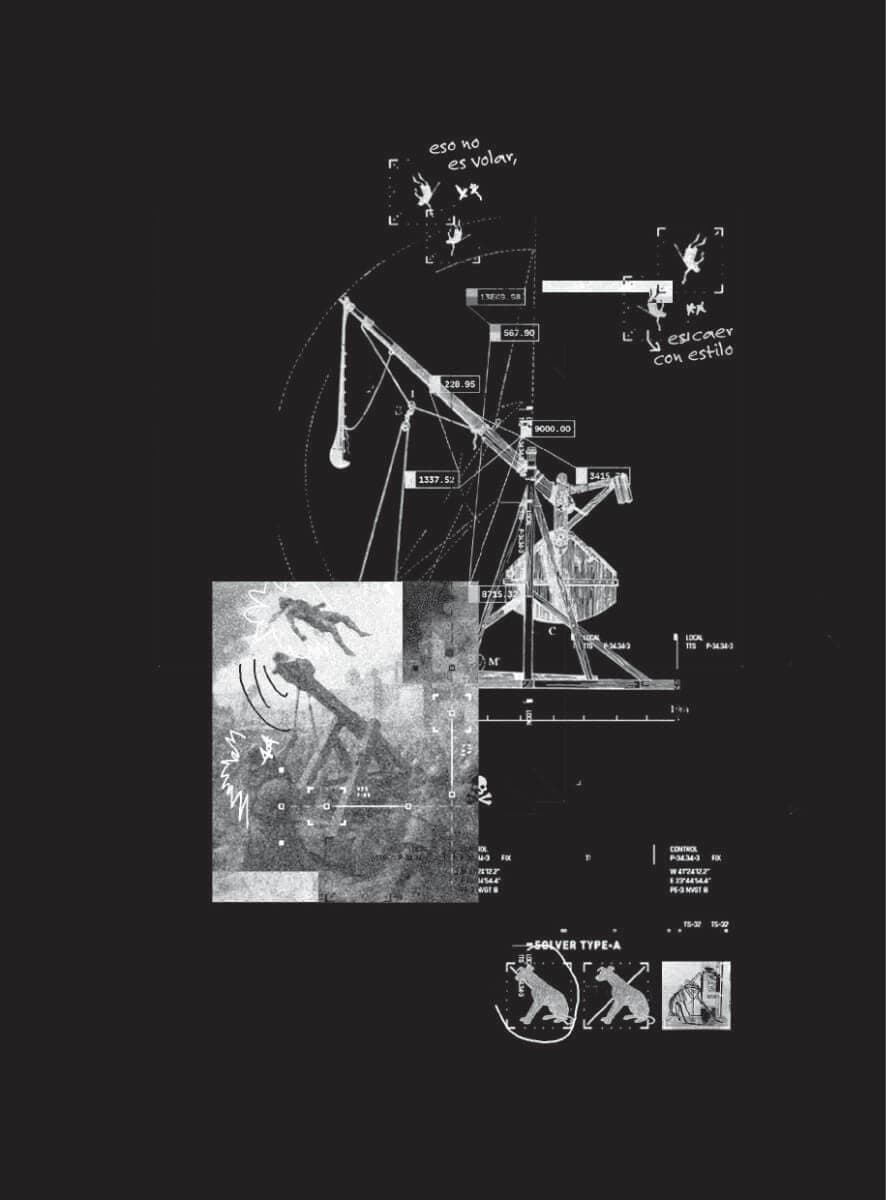
During the siege, according to Mussis's account, several Mongol soldiers began dying of the Black Death, a very serious disease that we now know is caused by the bacterium Yersinia pestis and transmitted by a flea that mainly affects rodents.Another chapter of Fiebre, the book I recommended two footnotes ago, is devoted specifically to the Black Death. To me, it has the most spectacular illustrations. As cases began to rise among the troops, the Mongol soldiers started catapulting the bodies of those who had died of the plague over the walls and into the city. The people in Caffa began to catch it and, panicking, tried to flee quickly to other cities.
That attack with infected bodies (and the spread of those who caught the disease to the cities they fled to) may have marked the beginning of the European Black Death epidemic that killed a third of the population. Or at least that was the consensus for decades. Today, there are some questions about the details: it is not clear that Gabriel de Mussis was in Caffa at the time of the siege.The best anecdote-teller in human history, objectively, was Diego Armando Maradona. In 2004, in an interview, he told the story of the kick Roberto Perfumo—the Marshal, a legendary River player—gave him when he was just making his debut for Argentinos Juniors. “We were playing River at Huracán’s ground. Perfumo… the Marshal, the whole legend. River had an incredible team; Luque was there, they were all there. River played the high-line/offside-trap routine, and then, in one play, I snap out of it and see the Marshal right in front of me, and I wanted to cut back. I push the ball to the right to get away and he hit me right here (he points to his chest). He sent me flying; I landed fifty meters away. Roberto comes over and says, ‘You’re not hurt, are you, kid?’ I say, ‘No, Roberto. Is your foot okay?’ You should’ve felt the kick he gave me.” In another interview, Diego told the anecdote again, but this time with Perfumo in the studio. The Marshal added that, before the match, in the locker room, he had exchanged a few words with Mostaza Merlo, another legendary River player, who knew all the gossip and was changing right next to him. He took the opportunity to ask whether the new kid at Argentinos could play. Merlo replied, “Yeah, watch out, that kid's the real deal.” The best thing about these anecdotes is that the encounter never happened. Perfumo played for River from 1975 to 1978 and faced Argentinos Juniors four times. The first two matches took place before October 20, 1976, the day Diego made his debut. The next one, on April 10, 1977, was at Boca’s stadium: Maradona didn’t play that match because he was about to travel with the Argentina national team. The last match when the encounter could have happened was on March 5, 1978, this time at Huracán’s ground, but Maradona didn’t play that day either, because he had also been called up to the national team. Which goes to show that the quality of a story depends on knowing how to tell it, not on having been there when it happened.Also, given what we know about how the disease is transmitted, with rodents as its main vectors, mass infection through the bodies does not sound very plausible.
In any case, ports, where there are usually lots of rats and lots of people traveling to different places, are crucial to the spread of disease. Especially if there aren't proud little dogs doing their job aboard.
Given the record of the Pontiac scarves, the Hatch shields, and the subtle, not-at-all-creepy Mongol catapults, one tends to be grateful to have been born in the twentieth century, in an urbanized environment where the rule of law prevails.
Still…
Underground 1
In 1974, an experiment known as the “New York subway test” was conducted right in the middle of the New York subway system. In my humble opinion, the researchers didn’t put much effort into naming the experiment, though in their defense, they were very busy violating every conceivable safety and bioethics measure.
The idea was to test how vulnerable the population was to a biological attack. The test consisted precisely of exposing the population to a biological attack and seeing what happened, though they used a bacterium they believed to be harmless.
As the subway train approached the station, glass vials containing large concentrations of the bacteria Bacillus subtilis were tossed out—something like 80 trillion in each vial.
Then they measured how long it took the bacteria to reach the next station, how the airflow in the train affected the bacteria’s viability, and how long they remained airborne. In other words, they asked how easy it was to expose thousands of people to a bacterium, and answered by exposing thousands of people to a bacterium.
Years later, when the documents were declassified, the U.S. Department of Defense admitted that the bacterium could have some impact on health, especially for immunocompromised people. It turns out that all experiments involving the use of biological agents as weapons were run out of Fort Detrick, a military facility covering nearly 500 hectares.The USAMRIID (U.S. Army Medical Research Institute of Infectious Diseases) also operated there. For several decades, it studied the Junín virus, which circulates only in one region of Argentina and causes Argentine hemorrhagic fever. The virus’s reservoir is the corn mouse, a small rodent that eats corn, making it a danger to farmers during harvest season. The disease caused around 30 deaths a year in the 1960s, exactly when it caught the attention of USAMRIID. The institute also took part in developing a vaccine, CANDID#1, which is indeed produced in Argentina. It is highly effective and mandatory for people who live where the little mice are found and work the harvest. And, of course, the U.S. Department of Defense has it stockpiled in case the Junín virus is ever actually used as a biological weapon.
Underground 2
The fear of an invisible attack in the subway became reality on the Tokyo network, one of the largest in the world, on the morning of March 20, 1995. At 7:45, three physicists, an engineer, and a cardiologist boarded five trains at different points on the network and mingled with the crowd. They knew that at 8:15 all five trains would converge at Kasumigaseki, the city’s bureaucratic center. Each of them carried a cheap umbrella and a package wrapped in newspaper. Inside each package was a small bag of sarin, a liquid that becomes an extremely toxic, odorless, colorless gas on contact with the atmosphere, attacking the nervous system directly through the neurotransmitter acetylcholine. Sarin causes constant nerve impulses in the muscles, resulting in a permanent state of contraction. Among other symptoms, victims of the gas have great difficulty breathing and often suffer convulsions; without treatment with atropine, an antidote that releases the neurotransmitter from its receptor so the muscle can relax, death comes very quickly.
The umbrellas the men carried had slightly sharpened tips, which they used to make a small hole in each package at exactly the moment the doors opened at the central station. Everything went according to plan: immediately after puncturing the bags, the five men got off their respective trains with their five umbrellas, disappeared into the crowds, and got into cars waiting for them on the streets. Meanwhile, the poisonous gas began spreading throughout the network.
Within minutes, the air in the train cars grew thick with invisible vapors, and passengers began to feel nauseated. Many collapsed on the train floors, struggling to breathe. The trains went two more stops before they came to a halt and the evacuation alarm began to sound. People affected by the gas began to gather in the streets.
By the time subway service had come to a complete stop, the story was already on every television channel. The final death toll was 12. More than 5,500 people suffered various kinds of injuries.
The men were members of Aum Shinrikyo, a cult led by Shoko Asahara whose goal was to dominate the world. How? By starting a bacteriological war, of course.
You People Are Nothing but Negroes
In an act of restorative justice for the bad reputation of handkerchiefs, scarves, and poisons, I refuse to end this chapter without mentioning Isadora Duncan.
Isadora Duncan was an American dancer born in 1877, considered by many critics to be the creator of contemporary dance. She never studied dance, but founded her own school at 18 and quickly became known all over the world.
Isadora was also quite controversial, a fact well illustrated by her only visit to Buenos Aires, in July 1916, during the First World War.
Her first performance was not particularly well received; Argentine audiences were used to classical dance, and the critics were unkind to Isadora’s dancing. In her second performance, she danced freely while wrapped in an Argentine flag as she performed the Argentine National Anthem. This nearly led to the cancellation of the remaining performances, because the manager of the Coliseo Theater, where she had performed, said she had broken her contract with him by giving an unscheduled performance. Thanks to the tour’s musical director, she was able to keep performing. In any case, her shows were canceled after the third performance, when, seeing that the audience was talking while she danced, she shouted, “Vous n´étes que de Négres,” “you are nothing but Negroes.” Of course, she had to cancel the rest of her performances, after which she left behind the coat and jewelry her lover, Paris Singer, heir to the sewing machine fortune, had given her, because she had no way to pay for the Plaza Hotel in Buenos Aires.
Well, it also caused quite a bit of trouble that she wanted to dedicate her performance to Richard Wagner, a German composer—and Germany was at war with the United States at the time.
A few years after her fateful visit to Buenos Aires, on the night of September 14, 1927, Isadora was in Nice when she got into an Amilcar GS, a convertible made in France.
The brand name, in this case, is an imperfect anagram of its owners’ surnames, Joseph Lamy and Émile Akar. They were very small, lightweight cars, and quite fast for their time. They were not status symbols, but artists often chose them, so they were very well known.
When she got into the Amilcar, Isadora was wearing a very long red silk scarf. At the wheel was a young Italian man named Benoît Falchetto. According to some very unreliable sources, before getting into the car Isadora said aloud, “Goodbye, I’m off to glory.”
When Benoît accelerated, Isadora’s long scarf fluttered and caught in the car’s rear wheel, tightening around her neck and killing her instantly. Thus proving that death by scarf can do without poison and even without intent. But never without poetry.
After the Great Depression of the 1930s, Amilcar tried making bigger, more conventional cars, but they did not succeed, and the company finally closed in 1938 after almost two decades of production. Maybe the imperfect anagram wasn’t such a good name after all.
Ciencia + Epidemias + Guerras: la trilogía completa de un autor que logra hacer graciosa hasta a la Fiebre Amarilla.
No es un bunker antiaéreo, pero esta sobrecubierta protege tus tres carbalibros y los hace lucir mucho mejor. Cuidá las cosas que te hacen feliz. Impresa en serigrafía con tinta blanca sobre acetato, en Imprenta Cumbre.
Incluye: - Las armas tontas | Breve inventario de astucias y torpezas bélicas - Breve atlas anecdótico de la ciencia - Fiebre: Breve colección de Epidemias - Sobrecubierta de edición limitada. Impresa en serigrafía con tinta blanca sobre acetato.
Trilogía Carba$94.000$104.700
Ciencia + Epidemias + Guerras: la trilogía completa de un autor que logra hacer graciosa hasta a la Fiebre Amarilla.
No es un bunker antiaéreo, pero esta sobrecubierta protege tus tres carbalibros y los hace lucir mucho mejor. Cuidá las cosas que te hacen feliz. Impresa en serigrafía con tinta blanca sobre acetato, en Imprenta Cumbre.
Incluye: - Las armas tontas | Breve inventario de astucias y torpezas bélicas - Breve atlas anecdótico de la ciencia - Fiebre: Breve colección de Epidemias - Sobrecubierta de edición limitada. Impresa en serigrafía con tinta blanca sobre acetato.
Las armas tontas$34.900
Historias reales de seres humanos intentando convertir en armas los objetos más improbables. El punto exacto donde coinciden la guerra, la ciencia y la estupidez.
172 páginas. Encuadernación Binder. Cubierta impresa a dos tintas (negro + Pantone plateado). Ilustrado por el estudio de diseño gráfico The Negra.
Biografía del autor: Juan Manuel Carballeda. Buenos Aires, 1⁰ de marzo de 1984. Doctor en Biología, docente de la Universidad de Buenos Aires y la Universidad Nacional de Hurlingham e investigador del Conicet. Trabaja con virus. Colabora con medios gráficos y audiovisuales. Escribió Breve atlas anecdótico de la ciencia (El Gato y la Caja, 2019) y Fiebre. Breve colección de epidemias (El Gato y La Caja, 2021). Nunca mató a nadie.
Historias reales de seres humanos intentando convertir en armas los objetos más improbables. El punto exacto donde coinciden la guerra, la ciencia y la estupidez. En formato ebook, porque si un pañuelo puede ser un arma homicida, un libro puede ser digital.
Formatos .epub y .mobi.
Biografía del autor: Juan Manuel Carballeda. Buenos Aires, 1⁰ de marzo de 1984. Doctor en Biología, docente de la Universidad de Buenos Aires y la Universidad Nacional de Hurlingham e investigador del Conicet. Trabaja con virus. Colabora con medios gráficos y audiovisuales. Escribió Breve atlas anecdótico de la ciencia (El Gato y La Caja, 2019) y Fiebre: Breve colección de epidemias (El Gato y La Caja, 2021). Nunca mató a nadie.