This content was translated using artificial intelligence and may therefore contain errors.
The Commander
In the early 1950s, the Swiss company Schweppes wanted to introduce its tonic water in the United States. It wasn’t easy at all. Although tonic water was produced in the country and imported, it was consumed only on a small scale. Schweppes wanted to make a big splash, produce the drink in the country, and sell it on a massive scale in a market where Coca-Cola and Pepsi accounted for almost everything.
They had to make a strong entrance, so the company executives went to New York, where the world’s most important advertising agencies were based. They had to choose between two: Ogilvy & Mather, on 48th Street, and Doyle Dane Bernbach (DDB), just three blocks away, on Madison Avenue.Although they don’t appear under their real names, these agencies, along with others located nearby or on Madison Avenue, inspired Mad Men, one of the best series in the history of humanity.
The styles of the two agencies were poles apart. DDB’s most famous campaign was for the Volkswagen Beetle, with simple slogans like “think small,” showing a photo of the car with a large area of white space, set in the simple, symmetrical Futura typeface. The idea was to present the Beetle as a little car, not very pretty, but one that would take you wherever you wanted to go.
Ogilvy & Mather, by contrast, was the complete opposite: its ad campaign for the Rolls-Royce, a luxurious English car, had the headline: “At 60 miles an hour, the loudest noise in this new Rolls-Royce comes from the electric clock.” Set in the very elegant Caslon typeface, the ad, which ran to more than 600 words, contained technical details that showed just how spectacular the car was.
Both campaigns were successful. VW managed to establish its Beetle in the American market—a German car, just a few years after World War II, no less. And Rolls-Royce, with an ad considered “the best-written advertisement in history,” doubled sales of its luxury car.
You might think that, since the product was tonic water, Schweppes’ executives would go with DDB, but no. They chose the pompous Ogilvy & Mather.
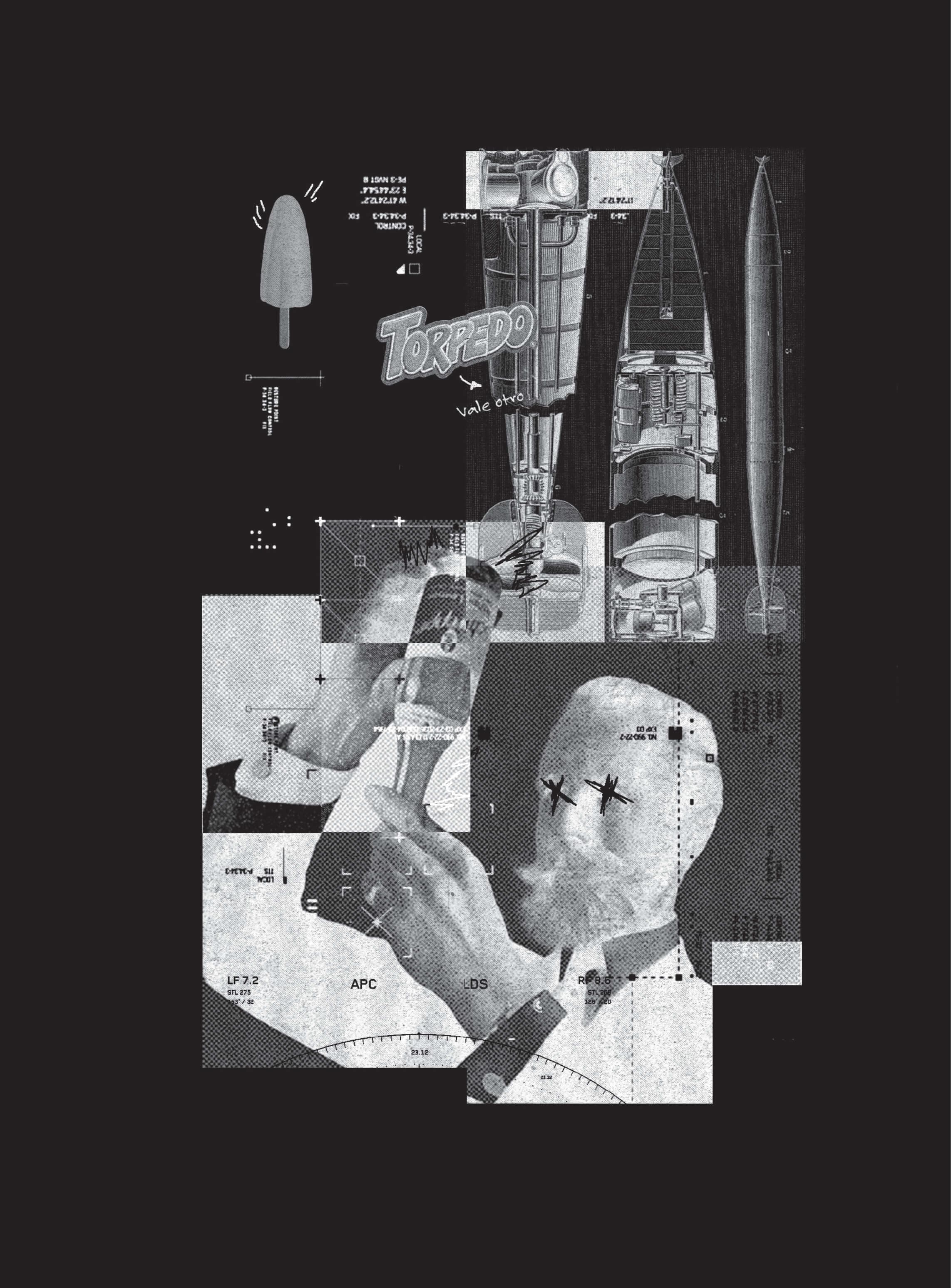
David Ogilvy, the manager, had an idea: turn tonic water into a stylish drink. To do that, they created a character, Commander Edward Whitehead, who was a real person; in fact, he was the president and CEO of Schweppes’ subsidiary. There were several TV commercials, directed by David Ogilvy himself (some are on YouTube, and they’re spectacular), and more than 40 print ads, all to build the character of Commander Whitehead. In the ads, he was portrayed as elegant, with a perfectly trimmed beard, a British accent, and evening dress, at social gatherings where the conversation always led to the same topic: Schweppes tonic water was now available in the United States. And he always ended up talking about the perfect fizz achieved by Schweppes. He called it “Schweppervescence.”
The campaign was a success: sales of Schweppes tonic water increased by 500%. In the end, the Commander and the Rolls-Royce ad were Ogilvy & Mather’s biggest successes.
Ocean Liners
The real-life Commander Whitehead had fought for the English navy in World War II. They say it was his grandfather, Robert Whitehead,Although this book is written in an informal tone, everything in it has been fact-checked, except for this detail about the relationship between the two Whiteheads, for which we couldn’t find reliable sources. But even what I said earlier about Mad Men being one of the best series in the world is true: it appears among the top five in countless rankings, including the BBC’s, which surveyed 206 experts from 43 countries. There, Mad Men ranks second in “Best TV Shows of the 21st Century.” First is The Wire, and third is Breaking Bad. another English sailor, who invented the torpedo in 1866. Actually, it wasn’t that he invented it so much as that he added three essential components. One was the immersion chamber, which kept the torpedo at a constant depth by measuring the external pressure. If the torpedo sank too far, the pressure increased, and that increase moved a piston, which in turn moved a small tail rudder that raised the torpedo until the pressure (which is directly proportional to depth) was balanced.
The other major component was a compressed-air engine that allowed it to travel 770 meters to its target, a great distance for the time. Finally, there was a pendulum that detected whether the torpedo was tilting and corrected its course.
With these three additions, torpedoes could now be fired without losing their target. As long as the target was straight ahead.
As you might expect, several countries were interested. Germany was one of the first. In 1873, it bought the design on the condition that the projectile’s speed be increased. That was done, and the German government signed a contract for 100 torpedoes, then established the Schwartzkopff factory in Berlin to produce them under license.
The torpedo was an astonishing advance in warfare for a reason that seems obvious: torpedoes strike below a ship’s waterline, where, because of the weight involved, it is much harder to build a reinforced structure. What’s more, below the waterline, even minor damage is far more serious than damage above it, where repairs can be made without water getting in. On top of that, torpedoes are very cheap compared with what they destroy. The torpedo marked the end of the battleships’ naval supremacy.
But, of course, the world of ships wasn’t limited to warships. In the early 20th century, Germany and Great Britain were engaged in a sort of competition over who could build the biggest, heaviest, and most luxurious ship. Until 1906, the winner was the SS Kaiser Wilhelm II, a German ocean liner 215 meters long (which, in ship-speak, is called its “length”) and weighing a little over 19,000 tons (which, luckily, are also called tons in ship-speak). But in 1907, Great Britain launched two sister ships, the RMS Lusitania and the RMS Mauritania, built by the Cunard Line. The main purpose of building these two giants, besides carrying thousands of passengers across the Atlantic, was to make them a little longer and heavier than the German ship and boast that they had the biggest ships in the world. And they did. The Mauritania and the Lusitania weighed more than 30,000 tons and were 240 meters long.
But the competition continued: in 1912, the other British company, White Star, launched the Titanic. That same year, the SS Vaterland, which was longer and heavier than all the others and was German, made its maiden voyage. The problem was that the rivalry between the great powers kept escalating. At this point, it might seem like a silly contest over “who had the longest ship,” but in reality it wasn’t just about who built the biggest ships; it was also, above all, about the division of the colonies after England’s rapid expansion in the second half of the 19th century. Building bigger ships demonstrated the powers’ technological capabilities. And still, despite everything, the English sold the torpedo design to the Germans. A grave mistake.
As the rivalry escalated, two major blocs formed: the Triple Entente, made up of France, the United Kingdom, and the Russian Empire, and the Triple Alliance, made up of Germany, Italy, and the Austro-Hungarian Empire. As you can imagine, it all ended very badly: World War I began on August 4, 1914.
A few months later, on April 15, 1915, in the middle of the war, the German embassy published a notice in The New York Times that read: “Travelers intending to cross the Atlantic are reminded that a state of war exists between Germany and her allies and Great Britain and her allies; that the zone of war includes the waters adjacent to the British Isles; and that, in accordance with formal warnings issued by the Imperial German Government, vessels flying the flag of Great Britain, or of any of her allies, are liable to destruction in these waters, and that passengers traveling to the war zone on ships of Great Britain or her allies do so at their own risk.” Talk about a reassuring message. Especially since the same page advertised a voyage by the British-flagged RMS Lusitania, which sailed the New York–Liverpool route and was due to depart the American city on May 1.
The RMS Lusitania sailed for six days in relative calm. First-class passengers enjoyed the ocean liner’s immeasurable luxury, which even included a very modern central heating system that distributed warm air using electric fans. There were also fireplaces where you could watch the flames while drinking champagne, and the food was good: passengers chose between tournedos béarnaise and chicken Marengo as their main courses, and listened to shellac records.Which had only just been invented, as you’d know if you were reading this book in order like a normal person. Meanwhile, life in the trenches was horrible: it was cold, muddy, and terribly smelly; dead bodies lay nearby; it was crawling with rats and lice; there was poison gas and, above all, uncertainty. The war had been deadlocked for several years, and trenches had been dug on both sides, where millions of soldiers died without gaining ground. There were endless battles, like the Battle of the Somme, which lasted almost five months and saw more than a million casualties along a 24-kilometer front. And there, in those hellish scenes, records were played too, but with fake news or disturbing sounds to keep the soldiers in the opposing trench from resting. Somehow, I think all the incredible technological advances of the 19th century were used in World War I to kill people.
But let’s leave the horrors of war for a moment and return to the Lusitania’s peaceful comfort. On the morning of May 7, it was almost at its destination. The captain, William Turner, did not find the Royal Navy launch that, as was customary in those days, would escort him through British waters. Even so, he decided to continue. On top of that, there was a lot of fog, which shouldn’t have surprised him—he was arriving in England, after all—but it forced him to slow down. They had approached the coast, which was now visible, and in fact many passengers went out on deck to admire it despite the cold and damp.
At that moment, looking at the surface through the periscope, sailor Walther Schwieger of the German submarine U-20 wrote in the logbook: “A four-funnel ship and two masts. Appears to be a large passenger ship.” Ten minutes later, with the Lusitania on a straight course and 700 meters away, the submarine captain ordered the last torpedo he had left to be fired. The impact below the waterline caused a huge explosion on the Lusitania and made it list rapidly (I think in ship-speak that’s called “listing”), so much so that the lifeboats—which, thanks to the Titanic disaster three years earlier, were now enough for everyone—could not be lowered. The Lusitania sank off the English coast in just 18 minutes. Almost 1,200 people died. Almost a hundred years later, an investigation in 2011 determined that, despite not being declared, the ship was carrying a large quantity of ammunition, which made the explosion so powerful after the torpedo struck.
Two years later came the event known as the “Zimmermann Telegram,” a document intercepted by British Intelligence. It was a telegram sent on January 16, 1917, by Arthur Zimmermann (hence the name, of course, the “Zimmerman Telegram”), who was the German Empire’s foreign minister. In the message, sent to the Mexican government, he promised to help if Mexico declared war on the United States. The telegram and the sinking of the Lusitania, which, despite being British, cost many Americans their lives, were the arguments the United States used to finally enter the war in 1917, an event that tipped the balance and led to the victory of Great Britain, France, and the United States the following year.
A Sandwich and a Gin and Tonic
Gavrilo Princip was born on July 25, 1894, in a village in western Bosnia, a region that was then under the control of the Austro-Hungarian Empire. Although only about 20% of the population in Bosnia could read and write at the time, Gavrilo was able to go to school and, in fact, became an avid reader. They say he read everything he could get his hands on: novels, poetry, political pamphlets, anything. In 1911, probably because he had read one of those pamphlets, he began to get involved in politics and joined a nationalist group called Young Bosnia, which dreamed of freeing the South Slavs from imperial rule and uniting them in a single large country made up of Bosnia, Serbia, Croatia, and Montenegro.
On June 28, 1914, Archduke Franz Ferdinand, heir to the Austro-Hungarian throne and a symbol of oppression to many, announced that he would visit Sarajevo, the capital of Bosnia. The members of Young Bosnia saw an opportunity. Gavrilo Princip, along with Nedeljko Čabrinović and Trifko Grabež, received training from the Black Hand, a secret Serbian military group, to assassinate the archduke during his visit. The training wasn’t very professional; they had only a sketch of the route, small weapons, a homemade bomb, and cyanide capsules.
Franz Ferdinand was going to tour the city with his wife Sophie, Duchess of Hohenberg, in a 1911 Gräf & Stift convertible, an incredibly luxurious car for the time. According to the plan, Čabrinović would act first: the moment the car passed in front of him, he was supposed to throw the bomb. When the moment came, he did, but Franz Ferdinand saw it and was able to stop it with his arm to protect his wife. The bomb fell to the ground, exploded beneath the next car in the motorcade, and wounded several people.
The assassination attempt had failed. But incredibly, instead of leaving the city, the archduke wanted to visit the wounded in the hospital and got back into the car. This time, for the last time.
It was a little after 10:30 in the morning. It was decided that the motorcade would take the archduke along Appel Quay, which ran alongside the river and was wide enough to avoid the inner streets, which were very narrow and would allow people (and potential militants) to get very close. But nobody told the driver about this change of route. Meanwhile, Gavrilo Princip, certain that the plan had failed, did what we all do when something doesn’t work: went to get a sandwich. In his case, at Moritz Schiller’s deli on Franz Joseph Street, a few meters from Apple.
At one point, while enjoying his sandwich, Gavrilo heard the governor, who was accompanying the motorcade, shouting. He was warning them that this wasn’t the right route. On the way to the hospital, the car’s driver had turned onto the street with the deli and, despite the governor’s shouting, stopped right in front of Gavrilo. On top of that, the driver’s nerves caused the car’s engine to stall, giving Gavrilo time to pull out his weapon, a small 7.65 mm Browning pistol, and fire twice, killing the archduke and his wife. All this with a sandwich in his other hand. Well, maybe this detail hasn’t been properly fact-checked either. Although many sources tell the sandwich story, it’s striking that it became popular after the British television documentary Days That Shook the World premiered. Primary sources don’t mention a sandwich, although they do agree that Gavrilo was in that spot just when the motorcade made its mistake. There’s also one argument frequently used by those who reject the sandwich story: that it was too early, though that doesn’t seem like a very convincing argument to me, since I could eat a sandwich at 10:30 in the morning. In any case, I much prefer the idea that someone changed the course of human history forever with a sandwich in his hand, and I’m going to choose to believe this version.
The Austro-Hungarian Empire immediately accused Serbia of the attack because of the conspirators’ links to the Black Hand. Two days later, in Berlin, Kaiser Wilhelm II and Chancellor Bethmann-Hollweg promised Austria-Hungary unconditional support if it decided to attack Serbia. A month after the attack, the Austro-Hungarian Empire declared war on Serbia, and the bombardment of Belgrade, its capital, began. The Russian Empire then ordered the mobilization of its army, so Germany, an ally of the Austro-Hungarian Empire, declared war on it. France responded by mobilizing its army in support of Russia, leading Germany to declare war on France too. Germany invaded Belgium so it could attack France from the north. The United Kingdom then declared war on Germany, defending Belgian neutrality. And then, once the last piece of that complicated domino had fallen, World War I began on August 4, 1914, 37 days after the archduke’s assassination.
After the attack, Gavrilo Princip tried to take a cyanide capsule, but just as it had for his companion (the one who threw the bomb), the cyanide was past its expiration date and had no effect. He was arrested immediately and died of tuberculosis, still in prison, a few years later, in 1917, before the war ended. Until then, he had been kept in isolation and gone hungry, though what he regretted most was having nothing to read.
Some people think that if Gavrilo hadn’t decided to eat a sandwich, World War I wouldn’t have broken out. But even I, having made my position on the sandwich’s role in the course of human history quite clear, don’t agree. I think the war would have broken out anyway, because the great trigger wasn’t a sandwich. It was a gin and tonic.
Fussy Soldiers
I’ve always said that pathogens were the great protagonists of human history. At first, people didn’t believe me, but after living through a pandemic, that changed a little. In fact, the book Fever. A Brief Collection of Epidemics, which comes before this one, tells the stories of different pathogens that shaped human history in eight chapters. Is this another ad for my previous book? Well, partly, but I’m also going to offer one more example.
Malaria was a pretty big problem for the British Empire. In fact, during the American War of Independence (which we covered a couple of chapters ago), it played a crucial role. In the summer of 1781, the Battle of Yorktown took place, where British troops faced the revolutionaries in the wetlands of South Carolina. In the wetlands. In summer. Ideal for mosquitoes. And where there are mosquitoes, there may be malaria—and that’s exactly what happened.
American militiamen were used to living with disease; the British, who came from cold regions where mosquitoes cannot thrive, were not.Robert Koch, who disputes with Louis Pasteur the claim to have discovered microbiology, described the concept of acquired immunity to malaria in 1900, three years after it was discovered that the disease is transmitted by mosquitoes and that its cause is a parasite. He compared the blood of people living in areas where the disease was highly prevalent, who had probably contracted it at some point in their lives, with the blood of people who came from areas where the disease was absent and who probably had not—let's call it virgin blood. When he compared them, Koch observed that virgin blood was far more permissive to the parasite's development than the blood of people from areas where the disease was highly prevalent. In other words, there was something in the blood that prevented the parasite from developing: acquired immunity. Today, it is not known for certain where this immunity comes from. It is thought to involve several factors, but its effect is very well documented. The problem for the British was that, by the time of the battle, half their battalion had contracted malaria. The British refer to it as “the defeat at Yorktown,” after which the Treaty of Paris was signed, recognizing American independence, which had been declared some time earlier.
John Small—the editor wouldn't let me make a joke about his name—was a physician at the Royal College of Surgeons of Edinburgh. In 1845, two years after qualifying, he joined the army and was posted to Mauritius, a small island in the Indian Ocean, where, once again, malaria particularly affected the British. Small must have known the story of the surrender at Yorktown and began looking into it. By then, several articles described the effects of quinine, a substance known for centuries to Indigenous Americans and extracted from the bark of the cinchona tree. Though at the time, this was not known. In fact, they didn't even know that the disease was transmitted by mosquitoes. But whether we know it or not, quinine acts in the digestive compartment of Plasmodium, the single-celled parasite that causes the disease, preventing it from breaking down hemoglobin (a protein it obtains from its host). This ultimately causes a buildup of intermediates that are toxic to its digestive system and kill it.
Small was the first to recommend the use of quinine in the English army. This was excellent news for Great Britain, which suddenly savored the possibility of adding some 25 million square kilometers to its empire through sheer military conquest—the greatest imperial expansion in human history, and we know how that ends.
But there was a big problem: quinine was very bitter, and the soldiers didn't want to take it. In other words, the expansionist ambitions of the world's leading power in the 19th century ran up against the soldiers' taste buds, which, as any high-ranking military officer knows, can get very fussy.
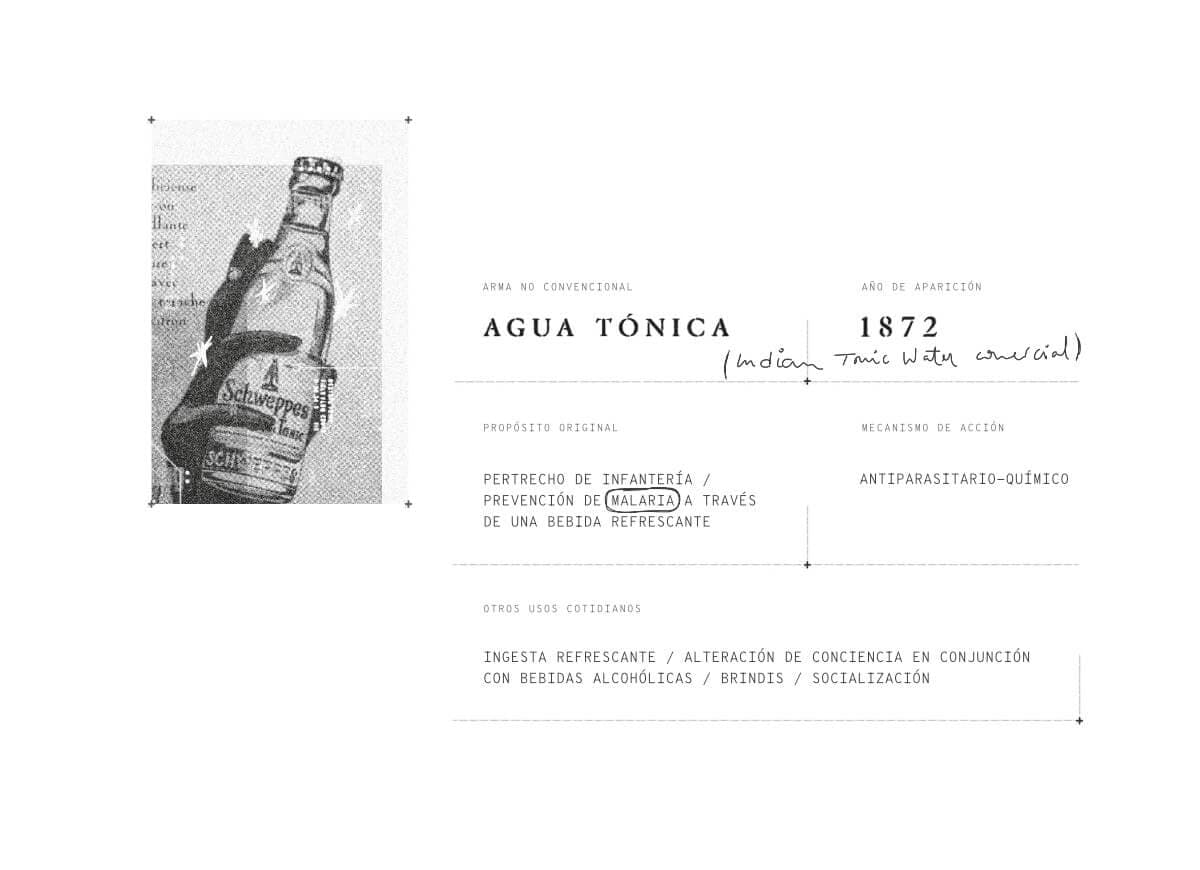
But the British found a way around it: they added gin, which made the quinine much sweeter, and that's how, as those of you who've read my book Fever already know, the gin and tonic was born. And the expansion of Great Britain, of course. Tonic water was originally called “Indian Tonic Water” because it was, quite literally, the star of British expansion in India, without which the First World War, in which around twenty million people died, would never have happened.
A Few Words from Sir Winston Churchill
Schweppes was a soda-water factory founded by the German watchmaker and scientist Johann Jacob Schweppe, who had developed a method for carbonating water—in other words, he had invented soda water. In 1792, Schweppes moved to London, where Erasmus Darwin, Charles's grandfather, became very interested in the drink, which he even used as medicine. I love sparkling water, but I couldn't say it has any health effects beyond hydration, which is very important anyway.
It wasn't until eighty years later, in 1872, that the company founded by the now-deceased Jacob began manufacturing its flagship product, Indian Tonic Water. Two world wars later, Schweppes set its sights on the American market. And, as we saw, it succeeded thanks to Commander Whitehead.
Winston Churchill used to say: “The gin and tonic has saved more English lives and minds than all the doctors of the Empire.” I think he exaggerated a little. The truth is, it also killed many others.