This content was translated using artificial intelligence and may therefore contain errors.
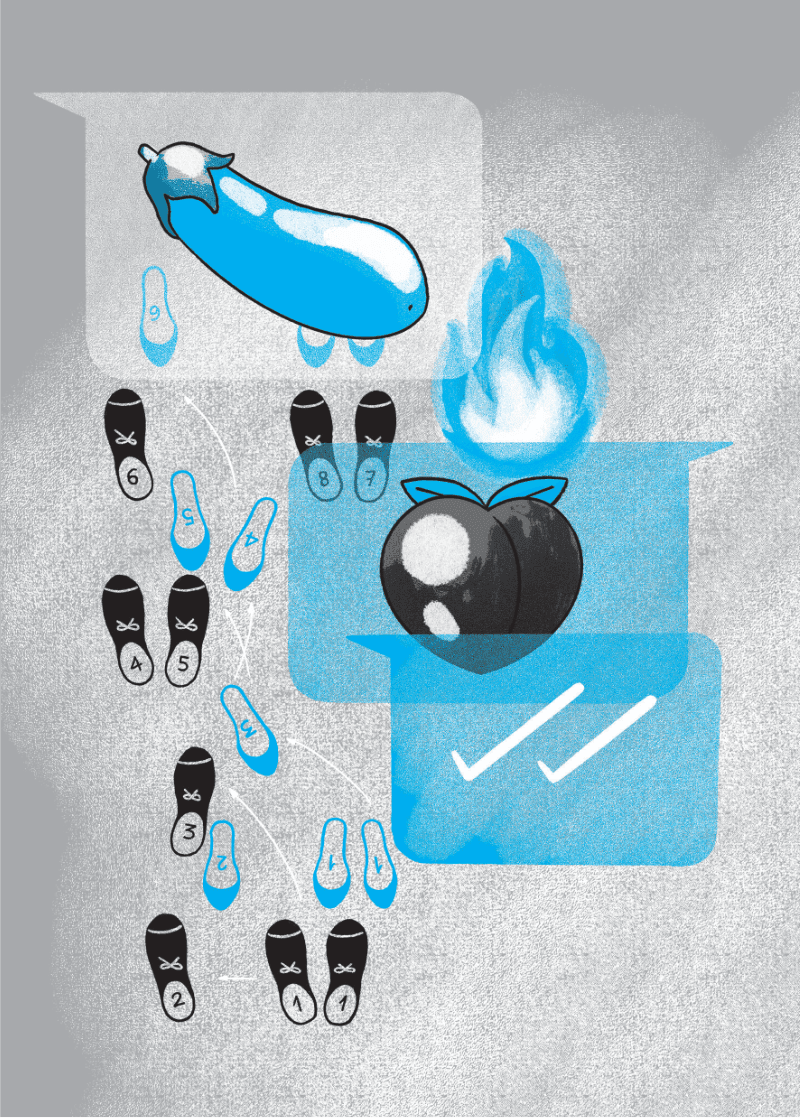
Two psychologists from Buenos Aires, Isabel and Elena, organized a speed-dating event for neurodivergent people. The criterion was simple: anyone who identified as part of that group and wanted to meet others was welcome. In the end, it turned out to be mostly a gathering for people on the autism spectrum. The idea had come about after they watched Love on the Spectrum, a series that moved them with its portrayal of how difficult it is to understand the dance of steps, ceremonies, and indifferences that love requires. And how, despite everything, people keep looking for it. This isn’t a search for affection, support, or care. It’s the search for romantic love. The kind that throws your body into disarray. The kind that tears you away from the person you were and distracts you from everything. The kind that makes the idea of life carrying on unchanged intolerable if the other person isn’t there.
“Some parents brought their children from San Fernando to Palermo, in the rain. We really realized there was a desire for this to happen,” Elena said. To create a more comfortable environment, they closed the bar to other customers, dimmed the lights, and made sure nothing was too loud. They put together cards with questions, a WhatsApp guide to small talk that suggested prompts such as avoiding vague openers like “and you?” and replacing them with concrete questions with options (“Are you more into low-key plans or social ones?” “What have you been excited about lately?”), advice on letting the other person finish without talking over them, keeping the conversation going by asking follow-up questions about the last thing they said (“You said you’re doing X—what do you like about it?”), and normalizing a “request for translation” when double meanings came up (“I get lost with irony—could you say that directly?”). The conversation rounds were timed at 8 minutes, and participants were given a form with large boxes to mark whether they wanted to meet again and with what intention (friendship, a date, or keep talking), without being required to exchange contact information on the spot. The idea underlying these guides is to make the rules explicit rather than assume them.
They allowed twenty minutes for people to arrive. The first person to get there leaned against a wall. The second did the same. Before long, almost everyone was lined up in silence against the same wall. Meanwhile, the bar tried to behave like a bar. A waitress, a cook, a bartender at the ready. But several people didn’t order anything because they weren’t thirsty. Someone ordered a brownie. It was six in the evening and, for him, it was time for an afternoon snack.
In the preliminary forms—where each person described what they were looking for in terms of gender, appearance, and personality—preferences were very open-ended. Many didn’t mind the other person’s gender or neurological label. In that openness, criteria that were less about identity and more about how someone treated them and practical compatibility came up repeatedly: that they be romantic, a good person, polite, and like the same things I do. For many neurodivergent people, the “same things” aren’t a whim. Interests serve as a shared language and a safe space to get closer without having to guess the codes. They make it possible to keep a conversation going, regulate anxiety, and build intimacy gradually, around shared rituals, information, and rhythms. Yet when they imagined love, the scenes were different. Deeply conventional. Flowers, candles, engagement rings, a honeymoon, a life built around shared interests. This cultural grammar, drawn from movies and inherited emotional education, was the visible mold for the intensity they hoped for. At the gathering, by contrast, intensity moved more cautiously. Most chose the “friendship” box at the end of the rounds, and that night only one connection was marked as “romantic.” Isabel and Elena didn’t read those numbers as a failure, but as an X-ray. People want, but they test the waters. They want a lot and show little. Marking “friendship” served as a threshold, a way not to withdraw completely or go all in at once, and perhaps also a way of saying that what they had experienced still didn’t resemble the fierce ardor they imagined could arise all at once.
Desire doesn’t appear as a neat preference, but as a burning urgency. A “please, let them fall in love with me,” the mind completely occupied. The feeling of finally entering the club of people who understand why a song can hurt, for whom poetry doesn’t sound exaggerated. The desire for love refuses to be domesticated. It doesn’t accept watered-down versions. It’s fierce, insistent, sometimes desperate. It appears even when everything else is there. And no matter how much it’s criticized today, no matter how much it’s seen as a dangerous way to organize one’s life, it’s still there. Pushing.
Falling in love is, above all, an expansion of life. It’s the concrete possibility that the world doesn’t end at the limits of one’s own skin. That there’s another horizon from which to look, another center of gravity to reorganize the days. This force is profoundly transformative. The Spanish philosopher José Ortega y Gasset (1883–1955) defined it this way: to love is to leave oneself and take up residence in the other. By this he doesn’t mean merging with the other, but rather radically reorienting one’s own attention and experience. Life is seen from a new angle, everyday details gain or lose weight, the landscape is transfigured because someone else inhabits it. In Argentine history, Camila O’Gorman embodies that principle in an extreme way. A young woman from a respectable family, educated in a convent, with her whole destiny written out in advance, fell in love with Ladislao Gutiérrez, a priest. And instead of hiding it or resigning herself, they eloped. Juan Manuel de Rosas found out and, scandalized by the affront to religion, had them executed by firing squad. Camila remains a symbol today that love isn’t a lukewarm refuge, but a force capable of rebuilding people almost completely. The French philosopher Alain Badiou (born 1937) agrees on one decisive point: to love another is to take the absolute risk of seeing the world from the point of view of the two.
And that emotional, inner force of love coexists, without much contradiction, with practical accounting. Being in a relationship is also logistically efficient. By contrast, being single costs more. Rent on a studio apartment falls on one salary, utilities aren’t split, there’s always too much tomato sauce. For women, the cost increases with the late-night taxi for safety or furniture that can’t be moved without help. Urban and economic architecture is designed around the couple as the basic unit, from tables for two to loans that favor stable “households.” There’s a tax on being single, emotional and material. The couple works as a micro-cooperative for survival. Problems stop being individual. There are two perspectives to solve a move, two incomes to cover rent, two bodies to take turns when one is ill. Years ago, the story became known of a researcher’s former partner who, after their separation, asked to be included as a co-author on his papers for the hours she’d spent correcting his manuscripts. An extreme example of how invisible labor sustains visible careers. This arrangement coexists, especially for many women, with an equally strong desire: independence. It’s the tension between two legitimate needs that today’s world forces us to choose between far too often. One can long for a hand to help lift a piece of furniture—sometimes too heavy for a woman, especially when design tends to be androcentric—and, at the same time, feel proud of having managed it alone.
Yet building that cooperative has become a maze. “The good thing is meeting people outside your circle; the bad thing is that it’s all very fleeting,” says Martina, a 33-year-old feminist screenwriter, about dating apps. She describes the match that never leads to a date, the date canceled without explanation, the conversation that suddenly dies out. One friend hates that the interaction always falls to him, from starting the conversation to planning the meetup. Another says nothing interesting can come from a space designed for superficiality. “When I’m really looking, I look outside the apps,” he says, admitting he probably would have swiped past someone on an app whom he was attracted to in real life.
More and more, chats are starting to resemble job interviews, many of the people interviewed say. “They don’t ask follow-up questions,” Martina sums up. Asking follow-up questions means showing interest; it means listening. Without listening, it’s impossible to build a shared scene, that minimal past any story needs to get started. Here, the mechanics of the platforms collide with the nature of desire. Ortega y Gasset argued that love isn’t the sum of someone’s qualities, but a sustained preference for a “style of being in the world.” One loves a way of moving through life, a specific cadence in the everyday, the way someone laughs at a misfortune while biting their lip or knows how to keep a profound silence in the face of grave news. That choice requires closeness, repetition, the passage of time. It can’t be compressed into a decision made in seconds, between one scroll and the next, based on a photo in the cold light of a phone glimpsed while getting on a bus.
“Rejection really wrecks my patients, honestly,” one of the psychologists said. The bluntness of the phrase is necessary, because the mechanism seems abstract—a rejection of a photo, of a carefully composed text—but the wound is very concrete and personal. It’s internalized as a total judgment. Many of her patients describe needing to be in a particular state of mind, a kind of psychological armor, even to open an app. A single rejection is tolerable, but over time a person’s mood gets worn down: the ghosting, the matches that never reply, the conversations that fade for no reason. It’s a constant parade of micro-rejections, difficult to process when emotional reserves are low from everyday erosion.
Faced with this exhaustion, some people—men especially—tend to suggest dynamics that remain entirely online. Therapists who work with young men observe how sexting has become normalized, beyond the playful aspect, as a logistical solution. It works as efficient validation: it offers sexual release and a minimum of recognition, without the associated costs. It eliminates the financial cost of a date, the vulnerability of face-to-face exposure, the anxiety of interpreting body language in real time. It’s enough. It solves the equation when resources—financial, emotional, temporal—are scarce. It also operates as personalized, interactive pornography, a satisfaction that completely avoids the risk of embarrassment in person. This retreat coincides with an environmental shift: the home, saturated with screens and on demand, entertainment, no longer bores anyone, pushes no one out into the street. The libido, like so many other things, finds private channels that demand less energy and offer an illusory control over the outcome.
Over this already exhausting terrain, another fracture takes hold: the gender divide, a growing, systematic, highly politicized distance in how people live, feel, and understand the world, and disparities in experiences and opportunities based on gender. It’s no longer an abstract debate but a host of everyday conflicts. It manifests as constant interpretive exhaustion: what’s taken for granted, what has to be explained, what gaze is perceived as a threat, what silence as an offense. For many women and LGBTQ+ people, the issue is no longer merely one of emotional openness, but of establishing a basic boundary of integrity, refusing to constantly negotiate the right to their own experience of reality. The historical conflict once settled before external authorities—the family that disinherited, the law that persecuted—is now fought in the territory of intimacy. The crucial question is no longer “Do you believe in equality?” but “Do you recognize my pain, my history, my name?” Denying that recognition erases the person standing in front of you.
Demanding these basic consensuses of respect, however elementary and just, reduces the pool of potential partners. Rightly, it filters out those unwilling to do that minimal work of recognition. Dating apps, in theory, expand access to an infinite number of strangers. But these ethical filters, necessary for psychic survival, dramatically contract that field. Loving responsibly—without denying the other person’s reality or renouncing one’s own—becomes an exercise in high precision, with less room for error. It’s the collective effect of an era that demands more political clarity in bed than perhaps ever before.
This fatigue of the possible—the exhaustion of looking for each other, the constant negotiation—doesn’t end when you find a partner. It changes. It takes the form of a particular loneliness, one that Sandra, a 65-year-old pharmacist, divorced, with a 30-year-old son, defines as “domestic exposure to the elements.” It’s the exposure of someone who is accompanied but not sheltered. There are no dramas; what happens is a slow process of erosion. Attention, that fundamental resource, withdraws without notice. Conversations shift to the pure logistics of living together. Spontaneous gestures of care are replaced by practical silence. The gaze more often seeks the neutral safety of a screen than the complexity of a familiar face. It’s the loneliness of physical presence without emotional availability, a company that takes up space but has stopped inhabiting the scene.
This loneliness finds a physical resonance, a texture that Evelyn, Sandra’s massage therapist, recognizes on her table. There she treats stress-related muscle knots, but also a different kind of need. She senses a particular stillness in certain bodies, skin that seems to have forgotten its history of touch. They book massages because, according to Evelyn, beneath an apparently blasé attitude, they’re seeking intentional, non-utilitarian contact, care exercised deliberately. The skin, in its cellular memory, archives the prolonged absence of tenderness and intention. Under her palms, she feels those tissues absorbing the contact with a silent urgency, like dry earth receiving the first rain. It’s the somatic record of a private deprivation, bodies that have stopped being a territory of shared discovery and become a cold landscape that no longer seems inviting to explore.
One seeks in the other a refuge from exposure to the elements of the world. And sometimes, within that refuge, the same climate of disconnection one wanted to escape is reproduced. When the habit of sharing the world fades, the couple is reduced to a structure of logistical coordination. Conversations orbit around schedules, appointments, and bills. Love has always included a dose of logistics to make life together viable, but it can’t survive if it becomes only that. The most insidious danger is the absence of available attention within companionship.
What love needs is people who are available.
And to navigate this geography without guarantees, certain internal and external conditions become crucial. The first is a renewed capacity for rejection. Developing an emotional skill that allows you to receive a no without it becoming a sweeping verdict on everything you are means understanding, in your body and not only in theory, that rejection is often not a judgment of your very essence, but the cold result of a mismatch and certain conditions: algorithms that prioritize new faces, timing that doesn’t line up, other people’s inaccessible moods. It’s the work of distinguishing your own worth from the outcome of an interaction, a slow lesson that dating apps, with their instant, silent feedback, constantly sabotage.
The second condition is deeper and structural: a foundation of self-esteem that doesn’t depend on romantic validation. Here, the recognition theory of philosopher Axel Honneth offers an indispensable key. Honneth argues that basic self-confidence—the right to feel that one exists and deserves a place—doesn’t arise from a vacuum, but is built on three pillars of social recognition. Love, in its primary forms (family, friendship), gives us our initial emotional security, the certainty that we’re worthy of care. Rights, legal and moral respect, confirm us as equal subjects, bearers of a dignity that cannot be violated. Solidarity or social esteem values our concrete abilities and contributions, what we know how to do and bring to the community.
When the triad of these pillars is weak or threatened, a person enters the emotional marketplace with emotional debt. It’s much easier to take a risk in the uncertain terrain of love, expose your vulnerability, tolerate failure, when the rest of the world has granted, even minimally, the kinds of recognition Honneth mentions. If work is precarious and devalued (breaking the pillar of esteem), if you live without the security of having basic rights guaranteed (breaking the pillar of respect), or if you carry a history of detachment (breaking the pillar of love), the search for a partner is overloaded with an impossible expectation of repair. No number of likes, matches or occasional compliments can make up for the absence of that web of recognition. That’s why contemporary romantic exhaustion, besides being a problem of algorithms or social fatigue, is also a symptom of the weakening of these spheres. The fragility with which many people build their self today is often a reflection of a world that offers fewer safe places where we can feel real, legitimate, and valued.
From there arises the question of whether a radical redistribution of expectations is possible. The romantic couple has been burdened, especially in contemporary urban life, with a disproportionate structural weight. It’s expected to be at once a unique emotional refuge, an economic safety net, a shared identity project, and the primary—sometimes only—source of intimate care. It’s a burden once distributed across a broader, more tangible community: the extended family, the neighborhood, local institutions, lifelong friends who lived nearby. Today, that web has frayed because of mobility, the precariousness of time, and the specialization of adult lives.
Building solid friendships capable of bearing weight, weaving concrete support networks—even small ones—and reclaiming nonproductive time for community are not simple tips for well-being. Their existence means a relationship doesn’t have to be the only pillar supporting an entire life. It takes away the pressure of having to be the answer to everything: fear, finances, loneliness, boredom, lack of meaning. Life as two can be a powerful refuge, but it can’t be the only one. It needs a broader, more resilient web around it to sustain it.
The neurodivergence gathering ended as it began: with attentive silence. When the timer went off, there was neither euphoria nor disappointment. What remained was a strange, almost professional calm. The feeling of having made it through a scene without getting hurt. Some people helped stack chairs, as if moving objects could delay the decision to leave. Outside, a father waited in the drizzle to take his son back to San Fernando. All that logistics, those trips, those forms were also part of the setup. Love as an intimate matter, sustained by a network of other people’s efforts.
Before leaving, Elena said the most surprising thing was how seriously everyone took the act of meeting each other. Nobody laughed at anyone. Nobody humiliated anyone. Nobody played it cool.
How many spaces like this are needed before the first step stops feeling like a leap into the void? How much practice with difference is needed before asking two people to invent, from scratch, a world they share? So love doesn’t have to hurt so much. So it doesn’t have to solve everything. So it can be lived through without anesthesia or retreat. So one can simply order a brownie at six in the evening and share it.
Crónicas, ensayos, perfiles y análisis para explorar la epidemia de soledad del siglo XXI. Más que un libro, la radiografía de una sociedad que ha logrado optimizarlo todo, excepto los vínculos.
152 páginas. Papel bookcel 80 gramos. Impreso a dos tintas. 14,5 x 20 cm. Ilustraciones de Paula Maneyro.
Biografía de la autora:
Victoria O’Donnell es socióloga (UBA) y magíster en Métodos Cuantitativos en Ciencias Sociales (QMSS) por Columbia University (Nueva York, Estados Unidos), con financiamiento Bec.ar–Fulbright. Consultora, docente e investigadora especializada en tecnología y salud mental. Dictó clases en la UBA, la UNSAM, FLACSO y CEPAL. Se desempeñó en análisis y estrategia en la función pública, en el sector privado local, organismos internacionales, empresas globales de tecnología y clínicas de salud, con foco en enfermedades crónicas no transmisibles, salud mental y consumos problemáticos.
Crónicas, ensayos, perfiles y análisis para explorar la epidemia de soledad del siglo XXI. Más que un libro, la radiografía de una sociedad que ha logrado optimizarlo todo, excepto los vínculos.
Formatos .epub y .mobi.
Biografía de la autora:
Victoria O’Donnell es socióloga (UBA) y magíster en Métodos Cuantitativos en Ciencias Sociales (QMSS) por Columbia University (Nueva York, Estados Unidos), con financiamiento Bec.ar–Fulbright. Consultora, docente e investigadora especializada en tecnología y salud mental. Dictó clases en la UBA, la UNSAM, FLACSO y CEPAL. Se desempeñó en análisis y estrategia en la función pública, en el sector privado local, organismos internacionales, empresas globales de tecnología y clínicas de salud, con foco en enfermedades crónicas no transmisibles, salud mental y consumos problemáticos.