DISCLAIMER: The following article was finished and edited just one day before the Cambridge Analytica Gate blew up to its current magnitude. Any forecast of the present —today’s future— from that past is pure speculation. But our prediction turned out pretty good. In your face, Nostradamus (?)
I swear I didn’t want to get into the world of social networks. I resisted Facebook, I was afraid of Twitter, the very idea of Snapchat gave me hives. Why would I need it? What could it give me? Could I even contribute anything? But things just happen: first some friends, then the kids, then you can reconnect with classmates from school, college, work, exes. And so, almost without noticing, I gave in.
So I fell into their nets (heh) and became part of the largest group of people on our planet: 2 billion people inhabit Facebook, and the number is rising. It has already surpassed the population of China and India (1.38 billion and 1.331 billion inhabitants, respectively). That’s at least 2 billion selfies, puppy videos and 5 MILLION HAPPY BIRTHDAY GREETINGS FROM GRANDMA TITA WRITTEN IN ALL CAPS.
But while intense neighbor stalking is going on, Facebook is collecting data.
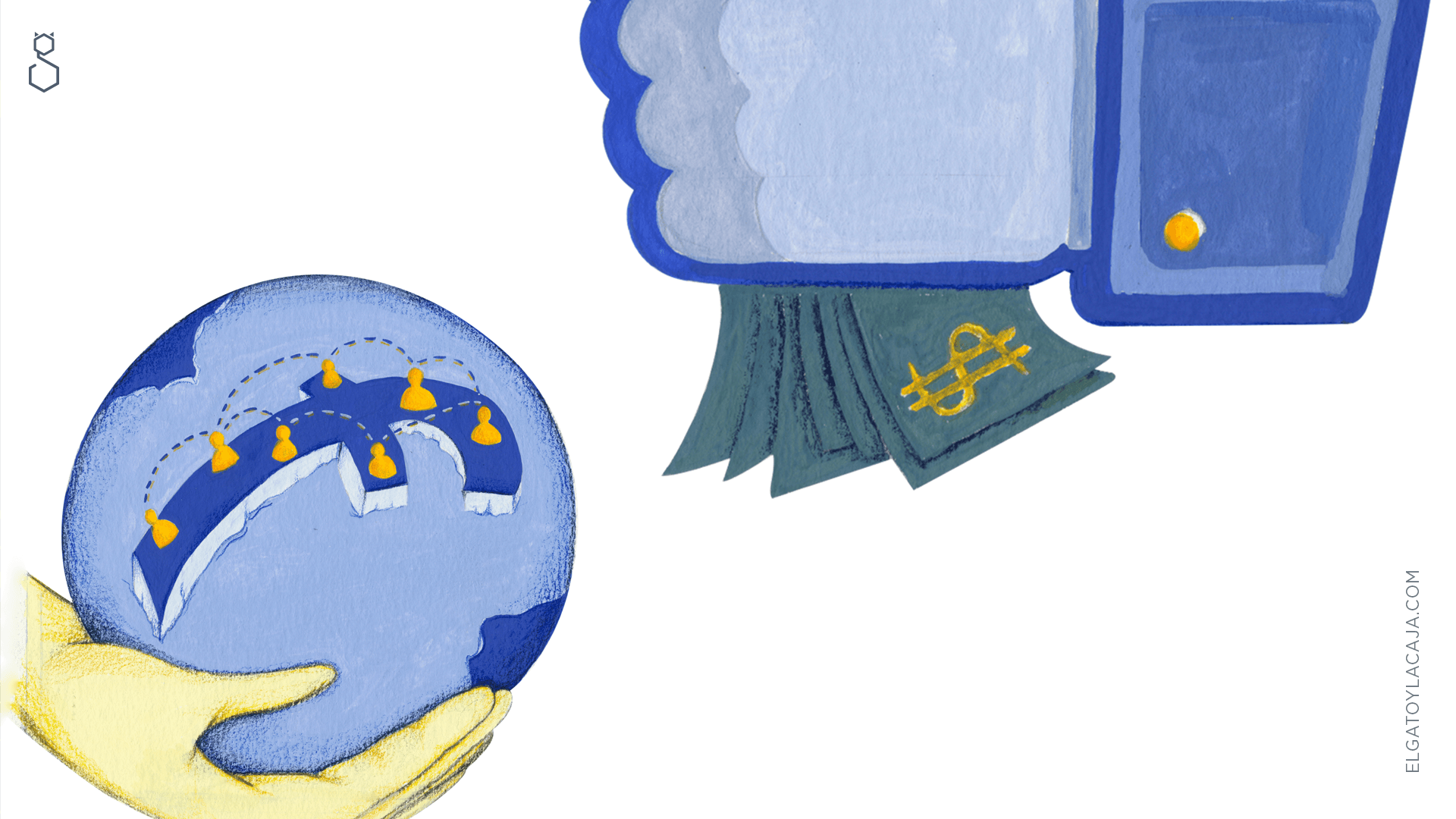
Every time we click that friendly little hand with the thumbs up (known as ‘me gusta’ or ‘like’) we’re telling everyone, but also Facebook, about personal, political, sexual, gastronomic tastes, occupation, income level, and pretty much everything imaginable (and then some).
The tiny thumbs‑up symbol was created in 2009 and since then it has become a constant there and in the rest of the internet. The company reported that there are about 800 million likes per day to support everything: singers, sodas, giveaways, politicians and various etceteras. This implies a growing stock of public data available to advertisers and almost anyone interested in that information.
The dangers posed by technology if its capabilities aren’t properly understood in their full dimension is a topic of constant debate in different circles. Very often, the almost infinite number of cute photos posted on Facebook are used by some people as bait for commercial purposes in the best of cases and/or for nefarious purposes in others, as investigated by Facecrooks, a site that monitors scams and other illegal behaviors on Facebook.
In the first episode of the third season of Black Mirror, the main character lives in a society obsessed with public ratings that people give each other through a social network. Nowadays, the like has become such a widespread form of expression that, just as we can say that Jules Verne, George Orwell or Ray Bradbury predicted the future, several scholars predict that it won’t be long before that episode becomes a tangible reality.
An interesting case is that of the young Austrian lawyer Max Schrems who in 2012, concerned about security on social networks, founded the NGO Europe versus Facebook, dedicated to identifying abuses in the privacy policies of Social Networks, and he set a legal precedent. It all started when Max and two colleagues began to investigate how Facebook uses users’ personal data. That’s how they discovered that there are more than 50 types of data collected by the social network (friendships made and broken, ‘status’, relationships and even deleted messages; which in reality just become messages we can’t see but that still exist). Facebook has so, so much information that it is able to obtain data about a person from what users write about them, even if they don’t tag them or post on their wall.
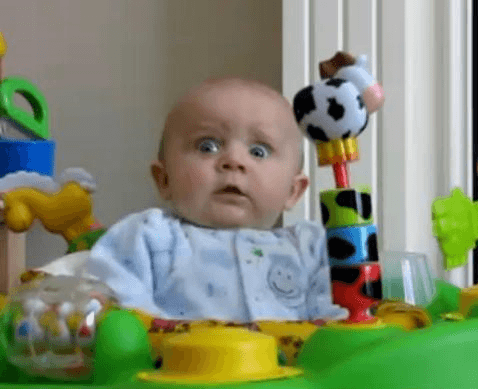
When you find out that Facebook knows what you had for dinner last night and the night before and the one before that and the one before that.
Max’s NGO sued the European branch of Facebook for violating the data protection law, specifically for breaching European Union privacy laws (Facebook applies US regulations, which are much more lax). Specifically, they were accused of collaborating with Prism, the controversial US mass surveillance program that, according to Edward Snowden, former analyst at the US National Security Agency (NSA), allowed access to the data of millions of citizens: data stored on servers belonging to Google, Facebook and Skype, among others (parenthesis and redundant recommendation: Snowden, directed by Oliver Stone, shows how ‘Big Brother’ operates through laptop cameras).
Finally, in October 2015, the EU Court of Justice in Luxembourg ruled that the private information of citizens was not being adequately protected.
Recently, on this side of the ocean, US president Donald Trump signed a law that allows Internet providers to sell user data (such as browsing histories or location) without prior consent. Does this mean that the data we have on Facebook, Instagram, Linkedin, WhatsApp (all US companies) can be sold to other companies so they can process it for who knows what purposes? Exactly. In other words, now Donald is openly allowing someone to buy my data from a company and know every site I’ve browsed, every word I typed into the search engine, every enter I hit, every click with the mouse; and that information will end up in the hands of unknown people and for uses that can’t be audited at all. And if every last glimmer of privacy is lost along the way, well, so be it.
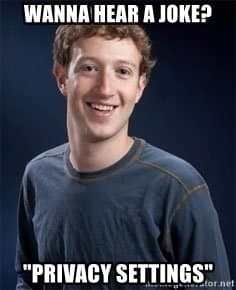
But that’s not all. Just as they can sell my data, these companies can also filter what I post, or even what I see. Indeed, social networks filter information, but it should always be for the sake of people’s wellbeing and freedom of expression. No one would ever suspect that the filters serve economic and/or political convenience. Irony emoji.
If we browse the internet looking for, for example, information about a gym, ads for energy foods, promising diets, discounts on meal services, self‑help groups and every service we can or cannot imagine will appear. At this point, we already know that there’s no such thing as coincidence here. These ‘services’ can be automated or manual. What does manual mean? That there are real flesh‑and‑blood people whose job is to constantly post information on different social networks. These are the famous ‘trolls’ everyone’s been talking about lately and who are increasingly present at the political level. In fact, they say that the management of social networks had a big influence on the elections in the country up north, where messages were sent according to people’s profiles and therefore reached them in a much broader, more direct and more powerful way.
And in that sense, how are things at home? The influence social networks exert is already obvious, especially when they take a stand, for example, for a political party. In fact, Facebook itself, on its own page, talks about its successful business cases for all the brands that hired it, among others: Chevrolet Argentina, Toyota Argentina, Tarjeta Naranja, American Express and Mauricio Macri. What? Mauricio Macri? Yes, the product Mauricio Macri.

All this is written on Facebook’s success story page, I suppose in the hope of attracting other political parties or the highest bidder. How much does the service of improving your public image cost? Is it within everyone’s reach? Is it really a service for whoever pays the most? Facebook itself lays out the details very clearly there.
Segment and conquer
All that information collected when we give a like, post a video or click on a link often includes our location (neighborhood or province), often without us realizing it. This is complemented with information from our profile, which ranges from groups we belong to, to the places we visit and the events we attend.
These and other data we post on social networks make it possible to build a complex profile for each user (both for AUNT NORMA WHO SIGNS EVERYTHING IN ALL CAPS and for 92% of Argentina’s population, to pick a nearby example) and then build groups of users from similar profiles. This process is called ‘segmentation’ and can be used to distribute advertising in a personalized way. At their clients’ request, the sellers of our information define segments, for example, by income level, area of residence and topics of interest (both of the person analyzed and of the emotionally closest profile they have), and then, with all the data obtained from likes, they send each group (segment) specific photos and videos that target their topic of interest. The data can be cross‑referenced in many ways. The only real limit is creativity.
The company Cambridge Analytica specializes in strategic communication for electoral processes. What they call their greatest success story is the work they did for (again) Donald Trump’s campaign. As they themselves explain, for this case they crossed not only social‑network data, but also other databases with information about club memberships, credit card purchases and memberships in different organizations. To this whole cocktail they added psychometric profiles, that is, they measured people’s psychological traits: open to change, conservative, organized, extroverted, warm, irritable, competitive. This way (and at this point it’s key to express a certain agnosticism regarding how capable these psychometric profiles actually are of yielding informative categories), they obtained a segmentation of the population that might vote for Donald and sent each group personalized advertising, after first doing an A/B testing. What’s that? It consists of developing and testing two versions for the same strategy and measuring which one works better. In a nutshell, they separate 10% of a selected group and send half of them one model —whether video and/or photo— and the other half the other one (that’s where the term ‘A/B testing’ comes from) and measure which one performed better, that is, which got more likes and shares. This way, the data themselves teach them how to craft the best information to send to their targets.
These marketing techniques can change behavior in populations. And this doesn’t happen only in North and South America; there are also published cases in Italy, Colombia, India, Indonesia, Thailand, Argentina and the list goes on and on. Much more complex and interesting scenarios could be mapped out (and, in fact, they are), but just with these examples it’s already possible to grasp the magnitude of the power that we ourselves, with our own clicks and likes, give to social networks.
For anyone who thought opening an account on a social network was free, now you know it’s not. Puppy videos, reconnecting with classmates from school, college, work, exes; all of that is paid for with our data.
If you liked this article, give it a Like.