Versión en castellano por acá.
In A living future we proposed that biology has become the foundational technology to revolutionize the way our civilization organizes matter (which is why we call that process a “material transition”). This time, the question is no longer just where that transition is heading. We want to understand what makes it possible for this technological body to aim so high and why we believe it can do so only now, what its capabilities are, and what kind of productive matrix we can build upon them.
Part I | Everything the light touches
The internet took decades to name itself. First, it was a constellation of tools, protocols, pieces of infrastructure, use cases, and solutions in search of problems. Not even its key players fully understood the phenomenon they were a part of. There were pieces, there were nodes, but there was no system, no topology, no architecture of meaning. The vocabulary was functional and local: packet switching, internetworking, TCP/IP, server, network of networks. Words invented to name small parts of a world, never the world itself.
Faced with this lack of a name, every little piece of the nascent internet was filed under a pre-existing category. A bookstore selling over the web was “retail.” Email was “telecommunications.” A server was a “machine,” and machines are “infrastructure.” To some extent, it was true: every piece, viewed up close, indeed looked very much like the specific ancestor it descended from. We classified all the pieces separately, and each one fell into a different drawer. The internet, as a complete phenomenon, wasn't in any of them.
Today we are seeing something similar in the technological revolution that interests us: the biotechnological one. A series of capabilities are beginning to appear in medicine, agriculture, food, industrial chemistry, materials, construction, and even computing. Each retains the name of the vertical it lands in. And yet, underneath, a common infrastructure is beginning to emerge that needs to be named.
All scales of matter
Biology already participates in all productive systems: food, medicines, fertilizers, textiles, construction materials, objects, buildings, fields. Everything the light touches, as Mufasa would say. But that doesn't mean it's the protagonist. Today, the protagonist is still petrochemicals, and almost everything depends on it: the agricultural system, materials, a good portion of pharmaceutical precursors, dyes, solvents, construction. Our material system today relies on the ability to massively extract and transform carbon molecules from that concoction macerating beneath the rocks which, although it gave us over a century of accelerated development, is also starting to smell like something's burning everywhere.
In this context, biology as a broad-based technology draws attention not so much for its ability to replace existing products as for the way it cuts across them. And not just products, but entire services and industries. This new technological body is beginning to produce the world and redefine productive segments as we imagine them today, across all scales of matter.
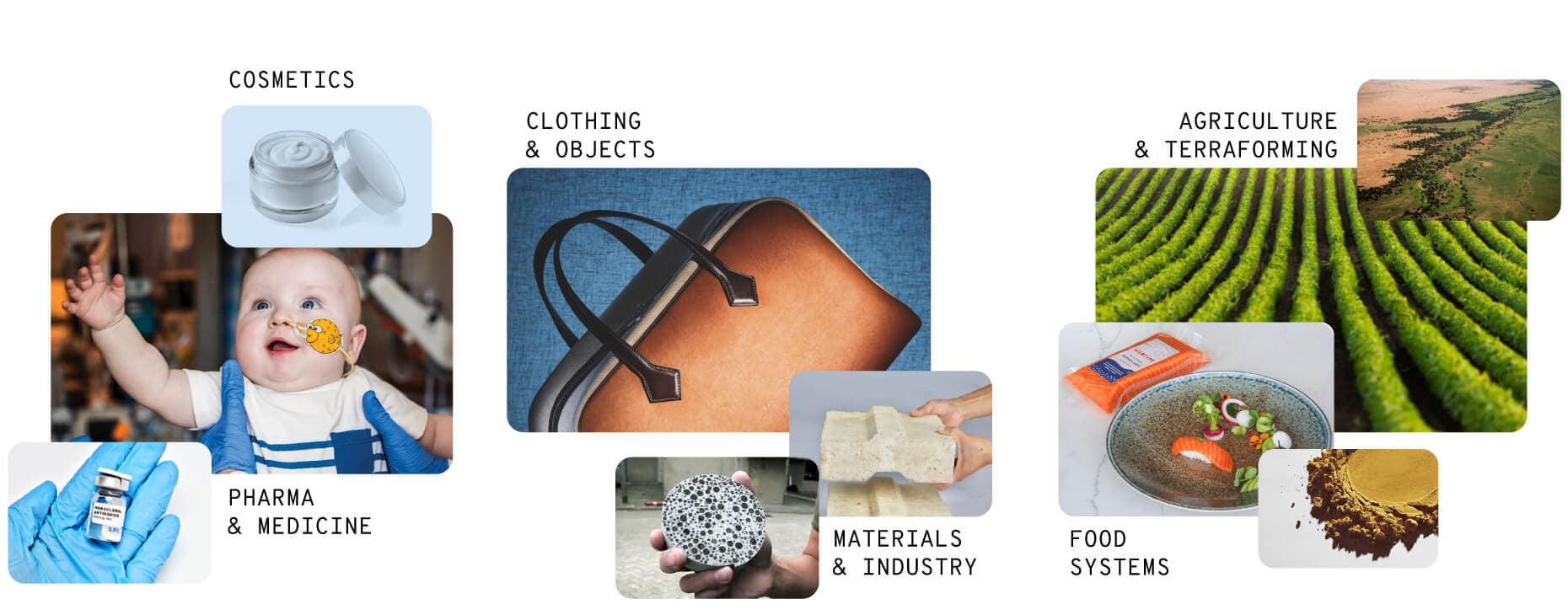
At the extreme of the small. For decades, biology has been the enabling technology for frontier innovation in ordering atoms into complex molecules. Monoclonal antibodies, oncological treatments that were impossible ten years ago, gene editing in babies with rare diseases: all are children of the same logic of operating on life at the molecular and cellular scale. Today, cutting-edge medicine is biomedicine, but we call it “medicine.” And although nobody walks into a pharmacy and asks for a biotechnological product (they ask for the medicine, the vaccine, the thingamajig that does the thing you need, not the way it was produced), what they take home is applied life sciences, techniques, and technologies.
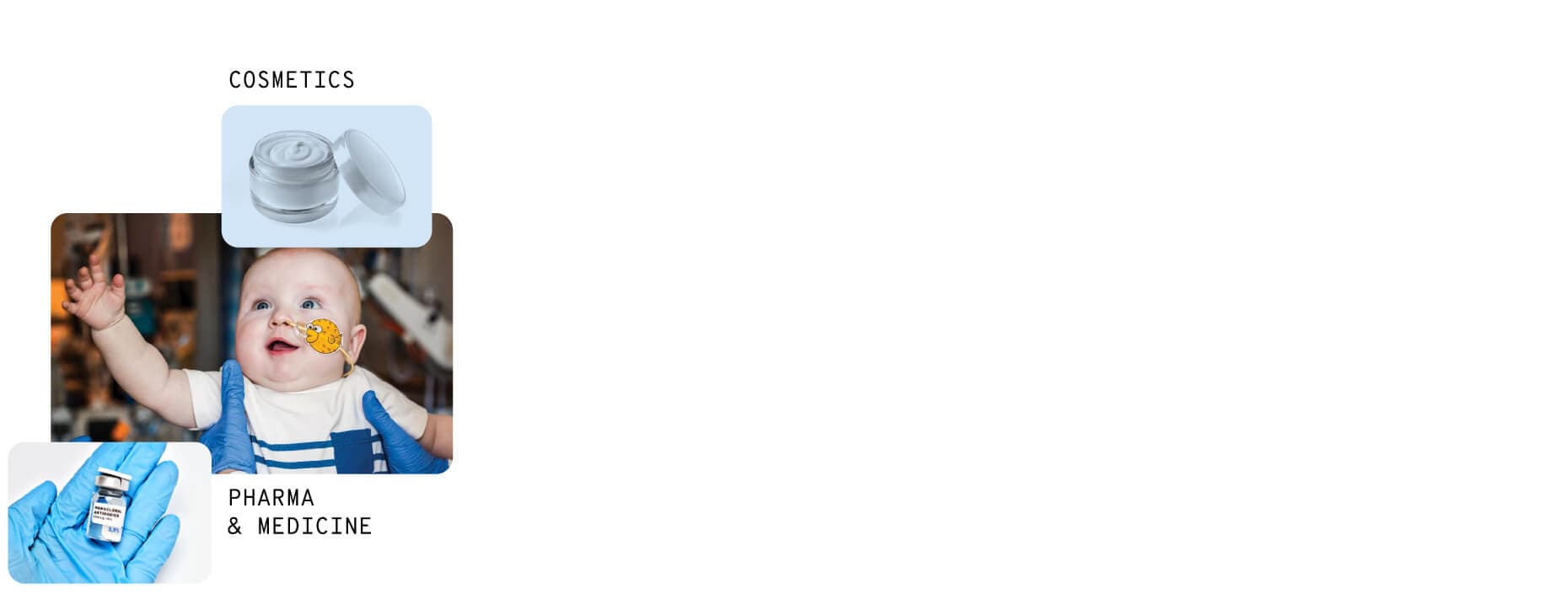
A jump in scale, towards objects. Hermès sells a bag made from a material developed by California-based MycoWorks from mushroom mycelium. The same material later ended up in a Ligne Roset armchair and in the interior panels of a Cadillac concept car. When someone buys that bag, they aren't just buying an Hermès; they're also buying mycelium.
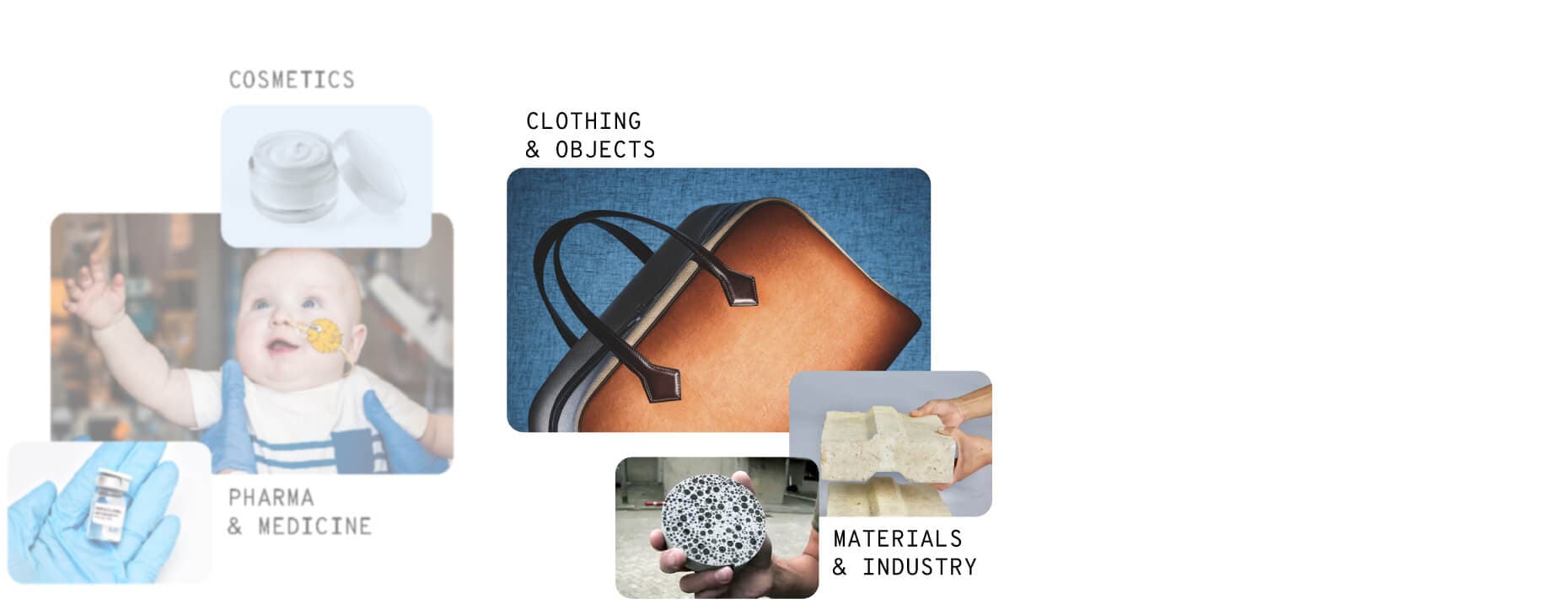
Another jump, towards the built environment. There is concrete mixed with bacteria capable of repairing cracks from the inside, and bricks made from agricultural waste. The tender document calls it “concrete,” the construction site calls it “material,” and the specifying engineer evaluates it under the same standards they would evaluate any other. It’s still concrete. But with bacteria. They’re still bricks. But made from plants.
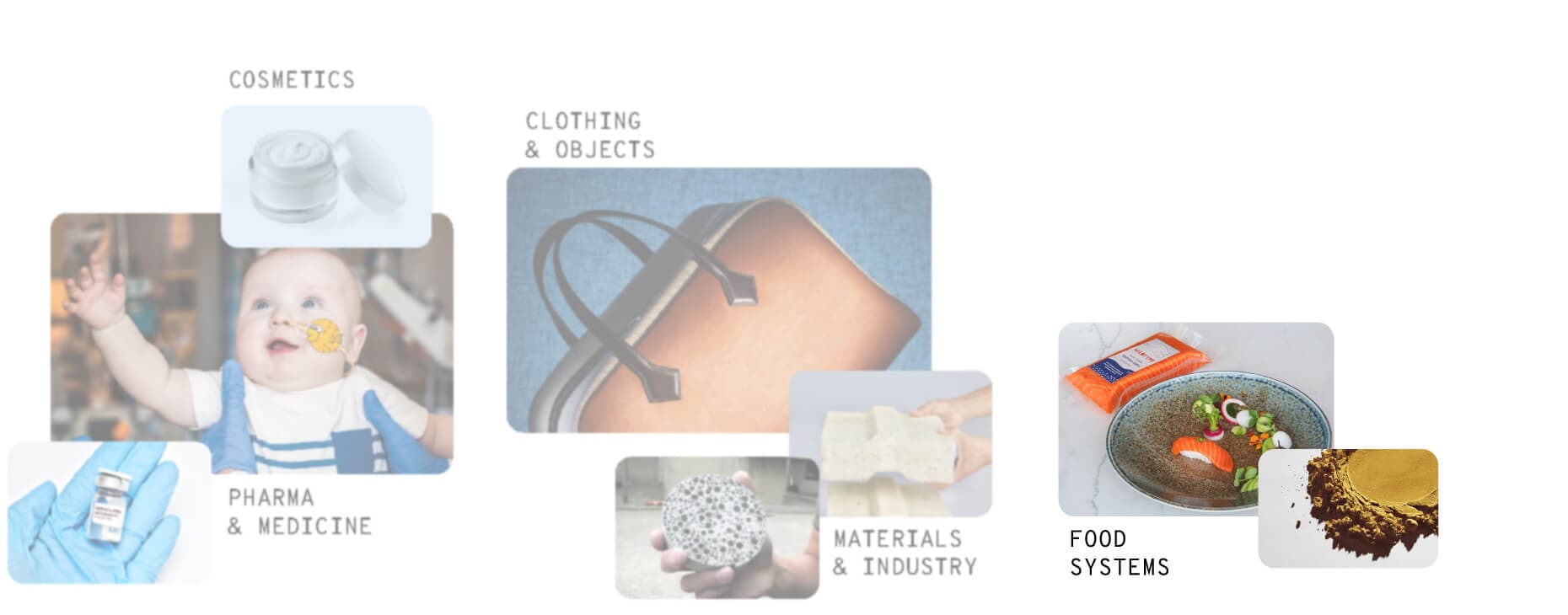
Or towards what we eat. From cell-cultured salmon, available in a practical pouch, to plant-based products found in any health food store, thousands of food products have gained market share by providing quality protein in a way that is almost invisible to the user. There are specific cases worth highlighting: Solein, by the Finnish company Solar Foods, cultivates microorganisms in bioreactors using carbon dioxide as a carbon source and hydrogen gas—generated by water electrolysis with renewable electricity—as an energy source. The bacteria grow, accumulate protein-rich biomass, and that biomass is processed into a food powder. It is a protein factory where the field has been replaced by a tank, and photosynthesis by an electrochemical chain. Food that grows in reactors with an extremely small land footprint.
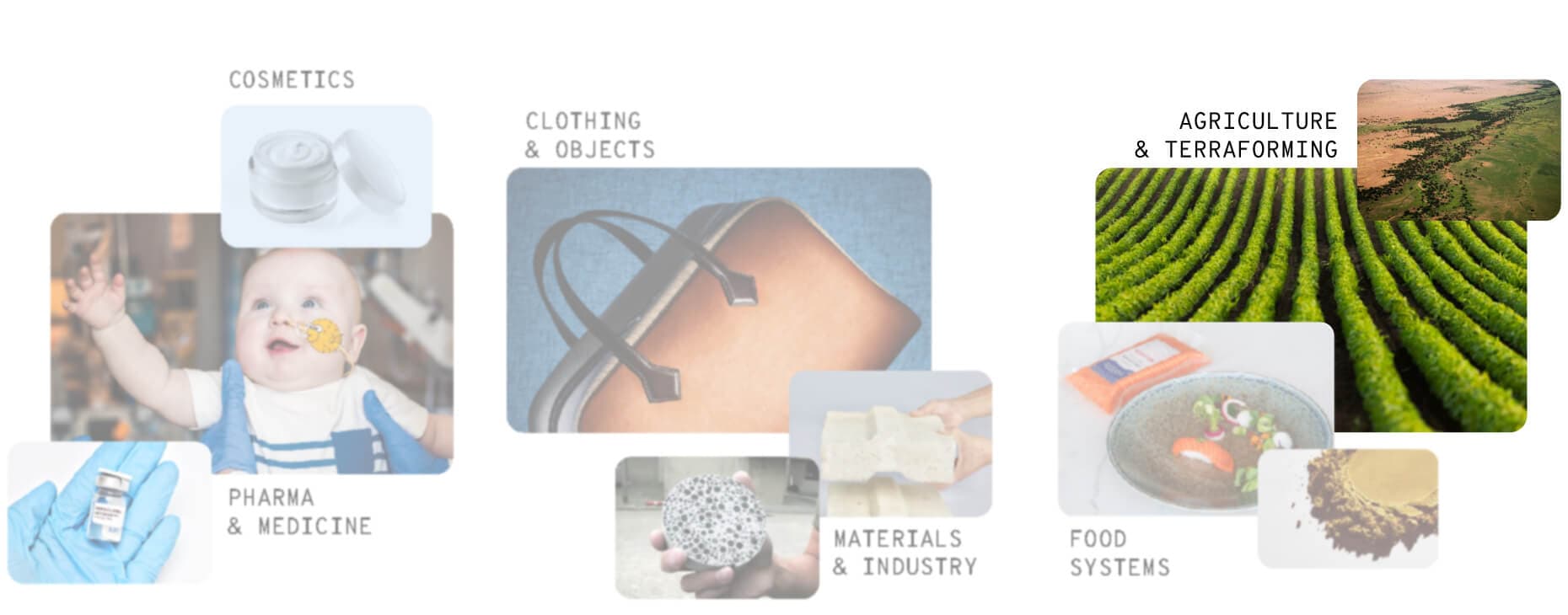
Finally, the largest scale. The markets for biofertilizers and biopesticides have seen double-digit growth for years, replacing petrochemical-derived inputs. Regenerative agriculture—marginal until recently—is beginning to be implemented on a large scale thanks to nature management technologies enabled by artificial intelligence. Those looking at tools to understand, measure, and restore biodiversity call it “Nature Tech.” But in agriculture, people still talk about “agriculture.” At best, it's called “modern agriculture.” Underlying it all, the phenomenon is the same.
Diagonals
We learned to think in verticals, but technological revolutions are full of unexpected diagonals that force us to ask ourselves a ton of questions. Or perhaps, variants of the same fundamental question. Let's see:
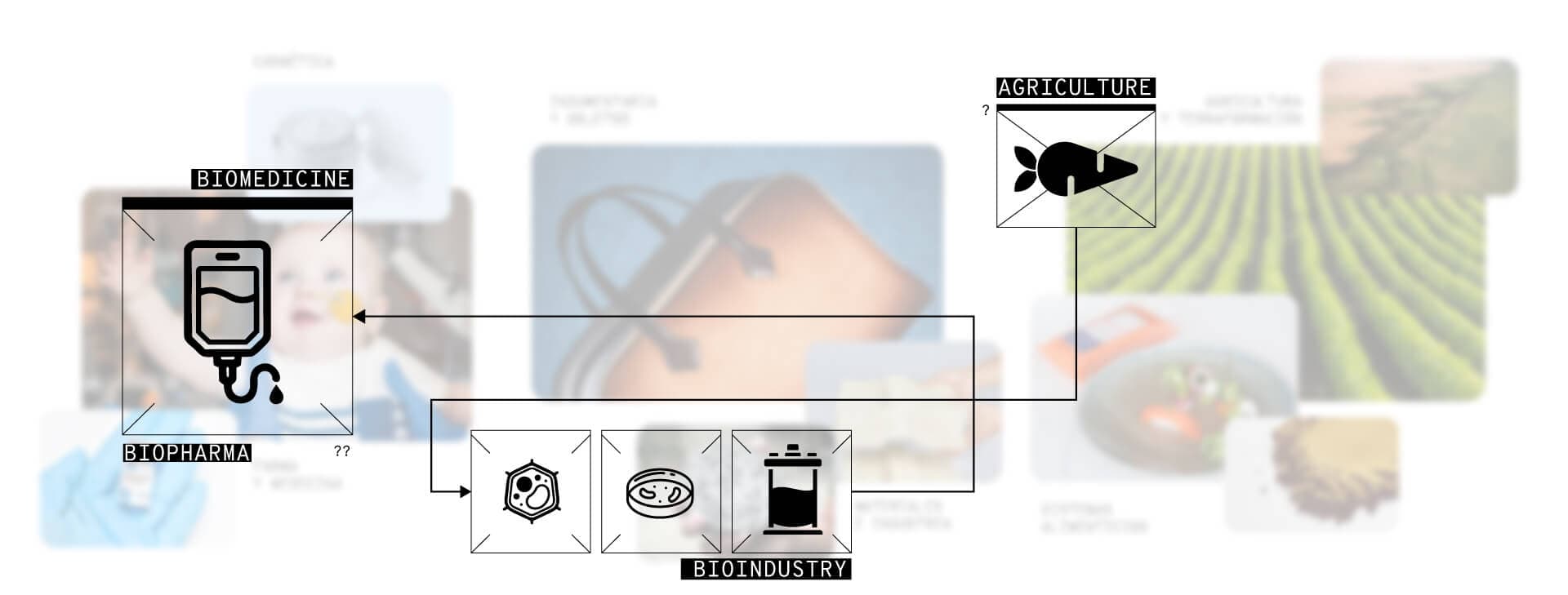
Elelyso, an FDA-approved treatment for Gaucher disease, is a recombinant human enzyme produced in modified carrot root cells cultured in bioreactors. What does it tell us in terms of industry or sector that the platform is plant-based if the process takes place in a bioreactor and what we are growing is a medicine? Is it agriculture because we are growing carrots? Is it pharma because the product is a drug? Or is it bioindustry because the carrot functions as a factory?
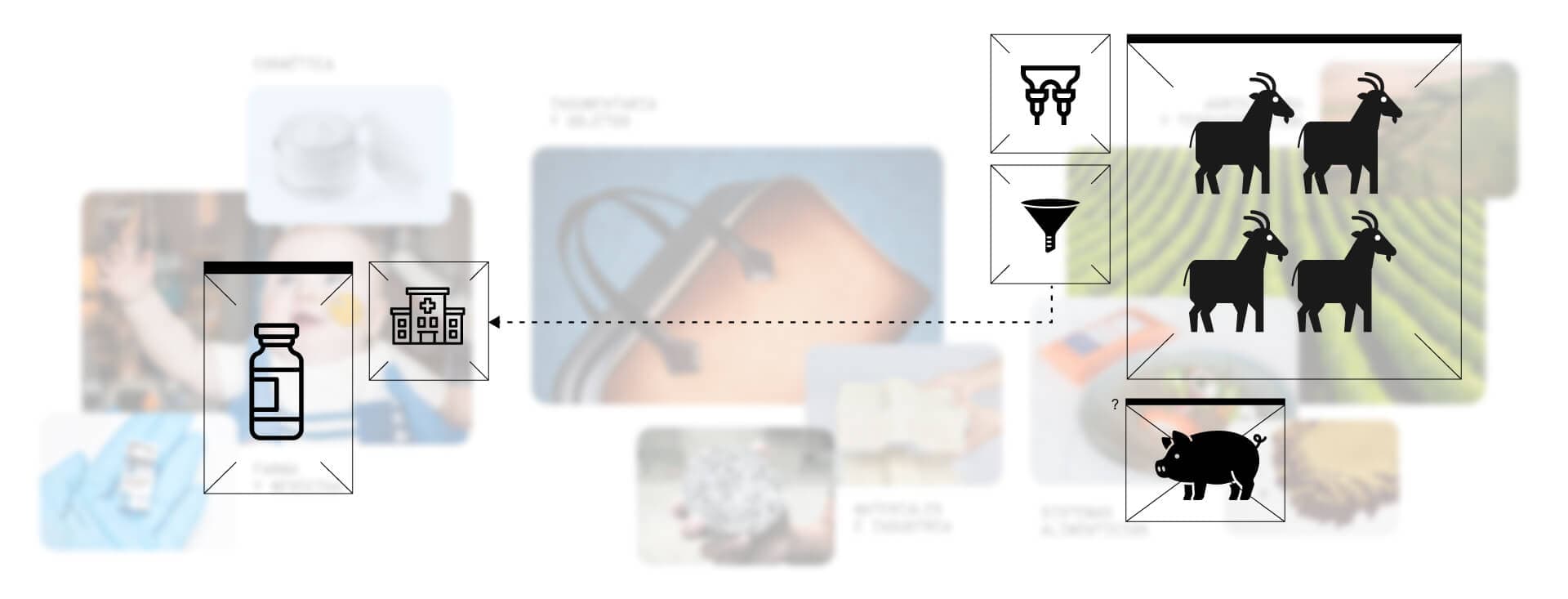
The question gets even weirder with animals. For example, in 2009, the FDA approved a line of transgenic goats whose milk contains recombinant human antithrombin, which is then purified and turned into a medication. Cases like this are enough to show that pharmacy has begun to share the same technological body as livestock farming. But it can also happen the other way around: Perfect Day uses microorganisms to produce whey protein via fermentation, just like the one found in cow's milk. Using that protein and other ingredients, Tomorrow Farms launched Bored Cow, a beverage pitched as animal-free milk.
If it's a medicine, is it livestock farming? If the process involves no cows, is it milk? In 2024, a 62-year-old man received a kidney from a pig with 69 genomic edits. And the question is the same once again. In a case like this, does the pig still count as livestock? Is it a medical platform? Is the kidney an organ, a biotechnological product, or a therapy?
There are also human and mouse neurons cultured over microelectrode arrays, connected to a digital environment and capable of modifying their activity during a simulated version of the video game Pong. The platform that descended from that experiment already exists as a commercial product, and its mere existence is enough to reformulate the same uncomfortable question: is it still a computer if its computing capacity runs on carbon in a sweet, liquid medium instead of electrified silicon? What vertical of the industry as we know it is a biological computer?
What BIO is
There are words floating around: biotechnology, bioeconomy, bioindustry, life sciences, biomedicine, biopharma, bioinformatics, biocomputing, bioinputs, bioproducts. They all illuminate something real. None of them fully contains the entire phenomenon.
Therefore, we decided to call “BIO” the emerging technological body that allows us to use information and functions from living systems to generate material capacity. Producing the world with biology. Its novelty lies in the articulation of tools that make these functions increasingly readable and allow us to test, reproduce, and deploy interventions upon them. Some capabilities are novel and sit on the frontier of a future approaching at high speed. But others are ancient; what has changed is how well we can understand them, combine them, and what we can do with them: organizing material transformations with precision, reducing energy demand in certain processes, optimizing land use, and exerting other pressures—different, better ones—on living systems.
That's why it's not enough to say that we use organisms to produce things. After all, that isn't new: we have been making beer, cheese, bread, crops, and domesticated animals for thousands of years. The novelty is explained by a convergence. Molecular biology, sequencing, and gene editing meet ecology, behavioral studies, bioprocesses, sensors, automation, and computing. Today we can observe better, test interventions, measure their outcomes, and use what we learn to intervene again. As that cycle becomes faster, cheaper, and cumulative, what we can attempt changes. We can compare more alternatives, discover relationships we couldn't see before, and tailor an intervention to a particular context.
But designing with life doesn't mean having total control over it. Life has history, context, noise, evolution, and agency. Rather, it includes discovering, measuring, selecting, guiding, training, and scaling. For example, we can design a consortium of microorganisms for a particular terroir: choose its members, test how they coexist, and find the conditions in which they help a crop in that soil. It’s not about putting together several useful microorganisms separately, nor (necessarily) genetically editing them. What matters in this case are their relationships, the roots, the water, the temperature, and the community already living there. Or look, for example, at what happens with bees: in the work of an Argentine research team, a scented food placed inside the hive successfully guided foraging towards sunflowers. No genes had to be edited: the bees learned a smell.
Thanks to this new body of capabilities, life itself becomes part of the navigable design space. And that space allows for radically different inputs, agents, and outputs. Molecules, tissues, food, materials, chemical transformations accelerated by biomolecules, designed and directed ecosystem services, organs, and even computing can emerge from a partially shared technological base.
Part II | When the whale was a fish
From a material capacity to a paradigm
Turning BIO capabilities into a new way of producing requires organizing companies, infrastructure, and investment. Carlota Pérez calls the new common sense for innovating, investing, and producing that emerges around a technological revolution a “techno-economic paradigm.” Here, we are interested in discussing, first, its material dimension: how organisms, molecules, industrial plants, and infrastructures are articulated. But in the spirit of Carlota Pérez, we have decided to call this way of organizing production a “techno-productive paradigm.” And we believe that a new techno-productive paradigm can be built upon BIO capabilities. Or rather: it can be grown, if we get ambitious and poetic at the same time.
Is a paradigm based on biology intrinsically better than the current one? Not necessarily. BIO names capabilities that open up that possibility, but whether the paradigm it enables is genuinely superior, sustainable, or even regenerative depends on how those capabilities are deployed. The idea of a material transition centered on life adds the criteria by which to decide how to articulate those capabilities.
The difference matters because technology is not neutral. And even less so this technological body, whose living matter sets it apart from others. The dispute will be over who controls the infrastructure, what knowledge remains open, what gets patented, where complexity accumulates, who captures the value, or what capabilities a society decides to develop. BIO is still young enough for us to actively participate in those decisions instead of complying with those made by others, in other places, with their own goals and interests.
For centuries, the whale was a fish. Not out of ignorance or oversight, but by method. It was classified by visible and accumulable traits—where it lives, its shape, how it moves—and by those criteria, the case was closed before it began: the whale swims, has fins, lives in the sea. Of course it's a fish. To stop thinking of it that way, the question had to be changed. To stop thinking only about traits and start thinking about the process that produces them. To start thinking about how a whale is made. Something similar happens with BIO. The available words are not mistakes. They are inherited maps. They were born at different times, under different pressures, and each developed an extraordinary eye for one part of the phenomenon. They also carry an implicit answer regarding where value lives, what infrastructure matters, who coordinates, and who keeps what is produced.
But maps are representations of territories. What words do we need to represent a phenomenon that has the potential to change our relationship with the entire universe of the living?
The map and the territories
In our previous essay, we spoke comfortably of “life sciences” as the category that groups the technologies enabling this great transition. But this term, which plays a massive role in academia, says little about how that knowledge translates into infrastructure, companies, products, or industrial policy. It invites you to imagine a bench and a laboratory; rarely a field, a production line, or a network of suppliers.
Let's try, then, to recover those worlds the words evoke and see if they are somehow compatible, if they are capable, ultimately, of forming a single, vast territory.
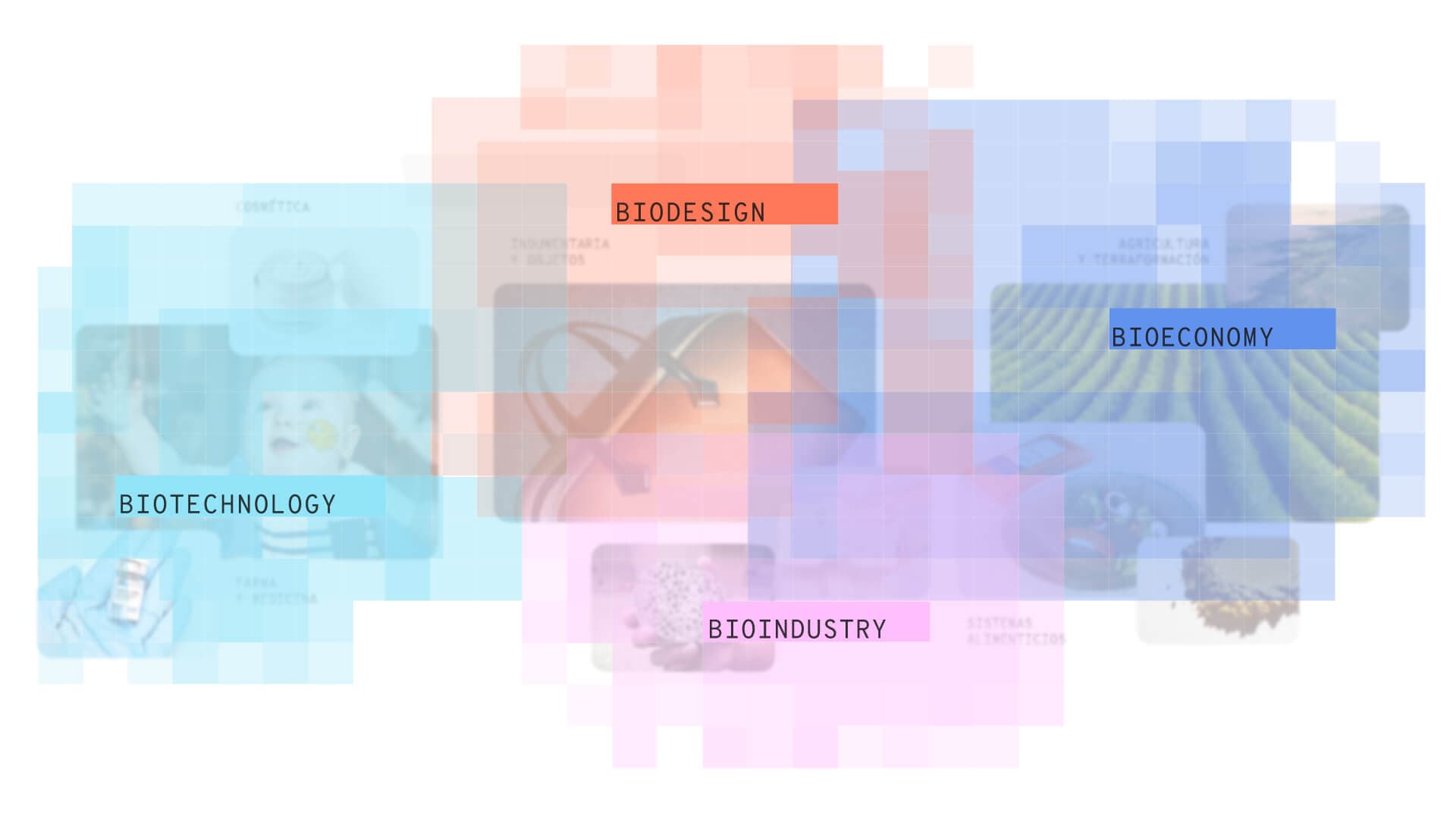
The first word was “biotechnology.” Károly Ereky used it in the title of a book published in Berlin in 1919: Biotechnology of Meat, Fat and Milk Production in an Agricultural Large-Scale Farm. It's a term that wasn't born inside a laboratory, but in a factory, and it wears that history.
Ereky was already thinking of organisms as agents capable of transforming simple raw materials into more complex products. For much of the 20th century, that breadth proved useful for grouping very different processes together. But with the advent of molecular biology, the pharmaceutical industry, and venture capital, it became specialized around interventions on living systems, patents, pipelines, and business models capable of financing long cycles and massive risks.
None of that is written inside a bacterium or a gene-editing technique. It's an institutional architecture. It was a concrete way to organize capital, knowledge, and ownership around certain technologies.
“Bioeconomy” evolved in another environment: public policy. That is why it developed a particularly good eye for markets, value chains, biomass, territory, regulation, and circularity. Under its umbrella, a wheat field, organic waste management, a forestry plantation, and a bioreactor producing cow-free milk protein can all coexist. For the question that “bioeconomy” came to answer, that breadth makes sense. For ours, it sometimes loses resolution: it lumps together activities that do not share the same technology, scale, cost curve, or horizon of disruption.
.In 2026, a report by ICC Brasil, Systemiq, and Emerge proposed talking about the “knowledge bioeconomy” because the Brazilian debate had become too closely associated with agricultural commodities and biofuels. The move is interesting: keeping the category but broadening it to foreground science, technology, traditional knowledge, innovation, and higher-value industrialization. In its map, new chains based on biological assets, the transformation of existing chains through biotechnology, and frontier products appear.
“Bioindustry” grew under a much less glamorous pressure: scale. Every original molecule, every innovative bioprocess, sooner or later has to leave the prototype stage and move into production. That's when the vats, pilot plants, bioreactors, cold chains, suppliers, certifications, and batch yields come into play. It’s an environment that selects for repeatability, cost, robustness, and the ability to produce a lot without everything breaking down. Turning a technology into the foundation of a techno-productive paradigm is not just about innovating. It’s about making it manufacturable, scaling it, and materializing it. Cultivating instead of extracting doesn't eliminate biophysical limits either: reducing the use of fossil fuels can increase the demand for land, water, or nutrients. The balance requires looking at the entire process.
“Biodesign” looks at it from the perspective of the object and its use. It asks what it's like to wear a cultivated material, to inhabit a house whose walls breathe, or to incorporate a living product into daily life. But it also carries with it, in part of its genealogy, another productive imagination: distributed manufacturing, grow-it-yourself, material experimentation, communities of practice, open tools. It’s best not to turn that tradition into an essence. “Biodesign” can also be a closed, proprietary, and concentrated term. The important thing is that here, one of BIO's institutional possibilities emerges more forcefully: making some capabilities circulate, mix, and adapt outside of large laboratories.
These words are not rival definitions of an inexistent thing. They are partial views over a common substrate and, at the same time, genealogies that carry different answers about how to organize it. They are the condition of possibility for imagining something else, much larger than the map, much vaster than the territory.
Part III | The political shape of BIO
Soft power
Let's imagine exactly the same country we already have: fertile lands, water, biodiversity, scientists, startups, pharmaceutical and agricultural companies, laboratories, industrial plants, and capital.
If we look at it through the lens of the bioeconomy, its (our) main assets might be biomass, territory, water, and agro-industrial chains.
If we look at it from the perspective of biotechnology, what emerge are scientific capabilities, patents, intellectual property, startups, and venture capital.
If we talk about bioindustry, the advantage starts living in fermenters, pilot plants, scaling, and manufacturing capabilities.
If we talk about biodesign, we go back to life sciences: universities, institutes, and professionals appear.
Same country, same companies, same professionals. The strategies are different. And what BIO does is shed light on what capabilities we have to turn all that into material capacity.
That's why the name is not a mere semantic operation. Saying “BIO” makes visible a complex, emerging phenomenon, the intelligent articulation of categories that the other words tend to separate. And words are powerful: they organize ministries, funds, regulations, calls for proposals, university degrees, statistics, infrastructure, and investments. What appears as a collection of scattered anomalies usually receives equally scattered policies. But what a society manages to see as part of the same phenomenon has a high probability of being coordinated.
Saying “BIO” is more than the gesture of naming. It is soft power.
Hard power
There is something we cannot afford to lose sight of: we are not working with inert matter. A living technology can evolve, escape, mix with environments we poorly understand, and multiply both its effects and our mistakes. The same infrastructure that makes a vaccine cheaper can also lower the cost of harmful capabilities. And when the organism is an animal, calling it a “platform” doesn't cancel out the fact that it's still a living subject. The pig can be medical infrastructure and, at the same time, a moral boundary we still don't know how to name.
The new BIO technologies and capabilities are as powerful as they are dangerous. For some people, that is a reason to step away from them. In a world increasingly guided by force and less by rules, we believe we must double down on these technologies and capabilities, not despite their danger, but precisely because of it. Mastering a technology is not the same as deploying all its uses. It is also the prerequisite for detecting it, regulating it, and responding when others use it. You cannot seriously contest the rules of a dangerous technology without having capabilities of your own.
A clear example? The pandemic showed that access to vaccines, reagents, equipment, pharmaceutical ingredients, and productive capacity doesn't depend solely on money. It matters who knows how to make them, who has the plants, who controls the inputs, and who can scale. The World Health Organization documented both the geographic concentration of vaccine manufacturing during the pandemic and the limits imposed by supply, raw materials, and technology transfer. And countries learned to ask themselves a key question: what happens when you desperately need something and you can't rely on someone else to provide it?
The United States is reading biotechnology in exactly those terms. As we saw in the previous essay, in 2025, the National Security Commission on Emerging Biotechnology delivered a report to Congress titled Charting the Future of Biotechnology: An Action Plan for American Security and Prosperity. Its starting point is explicit: the combination of biotechnology and artificial intelligence could drive a new industrial revolution, and leading it impacts national security, economic resilience, domestic manufacturing, supply chains, and defense. It is probably relevant to pay closer attention to the latter.
The Defense section on said report proposes to stop looking at these tools as isolated applications and treat them as a framework capable of transforming logistics, surveillance, and operations. It talks about producing fuels, food, and medicines on demand, about biological sensors, stable synthetic blood, materials, and distributed manufacturing not just to build, heal, or feed, but also to attack and defend. Can an agricultural nation afford not to have an early warning system for bio-threats? If one country attacks another's gas infrastructure, how can we expect for it not to attack its food infrastructure?
China looks at the same board from the perspective of its industrial strategy. The official recommendations for its 15th Five-Year Plan positioned biomanufacturing among the industries of the future, paying special attention to the resilience of supply chains. The 2026-2030 plan was approved by the National People's Congress in March 2026.
There is no need to imagine a war of laboratories to understand the consequences. Vaccines, medicines, seeds, enzymes, food, biomaterials, biological sensors, and manufacturing capacity might be markets, but in reality, they are, more than anything, strategic infrastructure.
Understanding that shifts the discussion from competitiveness to sovereignty, even to survival. The question is no longer whether we can buy certain technology. In this new world that has already arrived, what must we know how to do to survive, remain free, and develop our own abundance and complexity?
It is possible to import an enzyme without knowing how to discover it. To import a seed without controlling its genetics. To import a medicine without being able to produce its active ingredient. To import a diagnostic platform without having sequencing capabilities. To import a model without having the data to train it. But... which of those dependencies can we afford?
Open / Closed
Of course, recognizing a shared technological base immediately opens another question: who can use it?
The first generation of modern biotechnology grew around an institutional architecture that was particularly jealous of its intellectual property. There are good reasons for this. Developing a drug can take years, burn a huge amount of capital, and fail near the finish line. In that context, a patent can make it possible to finance risks that nobody would otherwise take.
But there is also a deeper tension. A living system has a rather unique property as a means of production: it reproduces. A strain can be copied. A seed can multiply. A sequence can be transmitted at practically zero cost. A protocol can circulate. A computational model can be downloaded. Can this biological potential for abundance coexist with institutions designed to manage scarcity?
Perhaps the best way to ease that tension is to ask ourselves which parts of the new BIO stack need to be closed to incentivize investment, and which need to be open to accelerate diffusion, learning, and distributed capability.
The history of monoclonal antibodies offers a pretty good miniature of the problem: in 1975, Georges Köhler and César Milstein published the hybridoma technique that allowed the reproducible production of monoclonal antibodies. The technique was not patented. The real story is less heroic and more institutional than the usual version of “Milstein decided to give it away”: what happened was that the British body in charge of evaluating its protection didn't see an immediate commercial application. Milstein, who wasn't generally opposed to protecting intellectual property, later maintained that the absence of a patent probably helped the technology to be exploited quickly and broadly. But despite the admiration Milstein deserves, the moral to be learned here is different: an extraordinarily proprietary industry can later be born out of an open technology.
Brought to our context, history forces us to ask ourselves: which layers of BIO do we want to function as common infrastructure? Biodiversity data? Standards? Protocols? Computational tools? Biological collections? Chassis? Shared equipment? Biofoundries? Editing techniques? Foundation models? Where does exclusivity make sense? For how long?
For countries that came late to many previous revolutions, the question takes on a different texture. For example, in Argentina, we have never been particularly good at winning races by running them faster. But we do have a rather fertile history of finding side paths: hacking things together, open source, doing a lot with a little, copying, mixing, adapting, liberating. Side paths are useful when they accumulate capabilities, and they cease to be useful when they turn precariousness into a model. What is the open source of biological peptides? Is there a freemium to cure diabetes using stem cells, or do I have to subscribe?
We have no idea. But the question matters.
We have, at least, the intuition that the diagonal we must find is not about romanticizing open source nor about turning piracy into industrial policy. Building BIO capabilities requires capital, property, companies, and returns. In Argentina, this building process can be thought of as part of a reindustrialization strategy based on strategic technological cores. But we must acknowledge that the institutional architecture is still up for grabs and that mindlessly copying the model inherited from early biotech would mean squandering the opportunity to do something different, something alive and ours, before everything is set in stone.
The way of seeing
“BIO” is probably not the definitive word. A better category might appear tomorrow. Getting the name right matters less than having a way of looking ready when the phenomenon forces everyone to look at it.
But for now, it works. It works to look at a plant and a pharmaceutical company within the same system. Soil and a bioreactor. A biodiversity database and a bioindustrial plant. A pig and a kidney.
It works to recognize capabilities that can connect across industries that still go by the names they always had.
And above all, it works to ask early on the questions that usually arrive too late.
Who develops the capabilities.
Who scales them.
Who gets to use them.
Who controls them.
Where complexity accumulates.
What stays open.
What we need to be able to do even if no one wants to sell us the answer.
For decades, the Internet was an orphan phenomenon, growing namelessly here and there like a weed, until it consolidated into the greatest disruption of its century.
For centuries, the whale was a fish because the available categories made it perfectly reasonable to see it that way.
Then the way of seeing changed.
Further reading
- Pérez, Carlota (2010). “Technological Revolutions and Techno-economic Paradigms”. Cambridge Journal of Economics, 34(1), 185–202.
- ICC Brasil, Systemiq y Emerge (2025). The Potential of the Knowledge-Based Bioeconomy in Brazil.
- Lavarello, Pablo; Robert, Verónica; Sztulwark, Sebastián; y Marco del Pont, Mercedes (2026). Estrategia para la reindustrialización sustentable de Argentina. FIDE.
- McKinsey Global Institute (2020). The Bio Revolution: Innovations Transforming Economies, Societies, and Our Lives.
- World Economic Forum (2024). Accelerating the Tech-Driven Bioeconomy.
- National Academies of Sciences, Engineering, and Medicine (2025). The Age of AI in the Life Sciences: Benefits and Biosecurity Considerations.
- National Security Commission on Emerging Biotechnology (2025). Charting the Future of Biotechnology: An Action Plan for American Security and Prosperity.
- Sztulwark, Sebastián, & Lavarello, Pablo (2025). “La biotecnología como base para el establecimiento de un núcleo endógeno en la Argentina”. CEPAL Magazine, 146, 141–156.
