This content was translated using artificial intelligence and may therefore contain errors.
It would go something like this:
You break up for the third time and decide this is going to be the last. You don't make any grand gesture. You put your clothes away without checking the drawers, change the sheets, throw out half of what's in the fridge. You feel relieved, but all your friends are going to start insisting you download dating apps, and you don't know if you can take it. You don't have the energy to take pictures of yourself. They have to be recent, your waist has to look good, and you have to give off an air of extroversion. They have to be varied: with a dog, full body, close-up. And you can't take it anymore.
“I can't take it anymore,” you tell your friends, “I'm done.” There's no point, it never works out. You keep ranting. It could be a funny monologue if it weren't your own life. You didn't have children because it never happened, it was never discussed, it was left for later, and now it seems too late. You don't want to admit it, but it worries you a lot. Who's going to take care of you when everyone else is with their partner or their teenage kids? Because even they won't be able to be fully there if they have families of their own. “And my parents are getting old,” you tell them, without needing to explain much more.
Lucía, your friend who's best at being an audience, says maybe the only sensible thing would be to move in together. She says it laughing, like a joke they repeat every so often, a way of not naming the fear underneath. The two of you start sketching out a shared house in the conversation: order, companionship, a simpler life. The conversation doesn't last long, but you keep thinking about how practical it would be, all the things another person by your side would take care of: putting up the bookcase, changing a lightbulb, debating with someone whether to quit or wait for another contract, complaining away from social media, eating more than a cookie when you're tired of cooking.
You spend the week missing your ex and wanting to give it all up. You spend a lot of time online. Especially in bed before going to sleep; it's your way of connecting with yourself. Between searches for “pottery classes near me,” lingerie far too expensive for how often you're going to wear it, gossip you think you consume to understand the complexity of relationships, your ex's profile once again, and “jewelry-making classes near me,” articles about women living in communities start showing up. You don't remember searching for them, but there they are: communal houses, cooperative projects, names that keep coming up. You read some, skim past others. The photos are similar: older women in courtyards, cooking, laughing. You count the glasses on the table. You share one of the articles with Lucía, who replies with an emoji and “we have to do this,” and the conversation ends there.
The possibility of never having another love story hits you first as an emptiness. Then, as a relief. After all, you have a resource in your memory, your personal archive of love affairs. When the yearning for romantic intensity presses in on you, you'll turn to recollection, replaying the whole archive of a kiss: its texture, its temperature, the vertigo. You're capable of summoning in the present the adrenaline of a gaze that lasted one second too long and pierced you years ago. Your romantic history is such a vivid and accessible asset that, for now, it makes you self-sufficient. Giving up on anything new means choosing to sail through the hyperreal richness of your own past.
At night, you start opening the links that keep appearing. Forums, blogs, interviews. Women who organized themselves in small towns, who built identical houses, who divided up the chores, who say they sleep better now. Most of them talk about “peace of mind,” not “happiness.” You read it all without any real interest, but you read.
After a few weeks, you don't need to search anymore. The algorithm offers you an endless stream of examples: in England, in Spain, in southern Chile. Some call it “cohousing,” others say “community.” The terms change, the structure is the same: separate homes, shared spaces, decisions by majority vote. You start paying attention to the material details. How much it costs to build, the floor area of each unit, how they manage the electricity, the water, the gas. The stories that seemed far away at first become more concrete, less heroic.
One night you realize you're opening those articles with the same gesture you used to open rental listings or job ads. You're not looking for inspiration; you're looking for feasibility. You calculate what you could sell, what you could invest, what you would save. Lucía gets excited over text, says she has some savings, that the two of you could start something with just you girls, that maybe you'd have to look for like-minded people.
On Sunday you get together for a meal and talk about it. Neither of you presents it as a decision, but you both take it as a possibility. You go over names, think about who might join, who you couldn't stand. What's beginning to take shape isn't a dream, but a spreadsheet. You laugh, joke about the house rules, the chores, how you'd organize the expenses. Without making any promises to each other, you keep talking.
As the days go by, the idea settles in as a background conversation. When you wake up, when you work, when you clean, you think about what it would be like. What time you'd get up, whether you could stand other people's noise, whether you'd share meals or only cats. Everything that was a problem in a relationship (routines, habits, space) seems manageable here with planning. That reassures you.
A video of a group in the south of the country appears on your phone. Women who've started a vegetable garden, who live off what they produce, who organize fairs. You watch without paying attention, the volume low, just to see how the houses are laid out, the roofs, the materials. You imagine Lucía there, calculate how many people could keep something like that going. You don't know if you could live with dirt under your fingernails, but the prospect feels less strange than staying alone in the city.
You're confused by the back-and-forth of thinking about it as a hypothetical project, a distraction. But every time your body gets tired or you have to take care of something two people used to handle, the idea comes back. You don't know whether to call it enthusiasm; it's a kind of clearer-eyed fatigue.
On your screen, the testimonials repeat: women who've sold their homes, started communities, say they've found their peace again. On the forums, they discuss the rules, the boundaries, the guests. There are photos of gatherings, birthdays, small buildings. It all seems within reach. You start saving addresses, phone numbers, estimates. The plan has already begun, without you announcing it.
One night, while sorting papers on the table, you have a tab open on your laptop to a community forum. With one hand you leaf through old receipts and bills; with the other, you move the cursor over photos of shared houses, community gardens. There, among the overdue bills and estimates, are the floor plans of your apartment, that precise drawing of the scenery of your solitude. You look at them for just a second: the lines marking the walls, the numbers measuring square footage. You close the folder and, almost at the same time, click on an enlarged photo of a big kitchen, with several pots on the stove. Home-cooked food you wouldn't have to make yourself.
The next day, when Lucía sends you the link to the community near Luján, you're already in search mode. You don't answer right away, but you can't stop comparing: the windows in that house seem wider, the walls thicker. Everything looks very functional, unpretentious, like a mold waiting to be filled with another life. You ask for information almost without thinking. They get back to you quickly.
A week later, you make the trip. You take a bus to the station, another to the highway, and a remis from there. The trip is short, but the distance feels real. You arrive at noon. A woman greets you with a notebook in her hand. She shows you around the place, the houses, the shared space. There's nothing special about it. It's a cluster of simple buildings, a dining room, a small vegetable garden. It could work.
You return to the Capital tired. You don't say much. You say you went to look at a plot of land. Lucía asks if you liked it. You say yes, that you'll go back.
You spend the next few days getting things in order. You throw out papers, sell furniture, file documents. There's no excitement, and no doubt either. Your body moves without instructions. Lucía says she'll wait, that she's not ready. You don't insist. It starts to become clear that you don't need someone to go with you.
You move with only the essentials. A mattress, the books you couldn't leave behind, a few pots. You give away the rest. You don't rent out the apartment, so you won't feel trapped, so that if you stay there, it's something you choose.
You arrive at the community on a cloudy day. The other women help you unload your things. They show you the kitchen, bathroom, and bedroom again. It smells of paint and damp. The place isn't pretty, but it's clean. You settle in. That night, several of them cook together and eat in silence. No one asks too much. Someone says the water pressure is low; another says a hinge has broken. Everything seems orderly.
At first, time passes quickly. The tasks are divided up without discussion. There's a schedule for everything. You don't think about how you got there. All that matters is that things work. The city starts to fade away. The first weeks are a learning experience. There are no written rules, but everyone seems to know the routine. Each woman cleans her own space, but the dining room, kitchen, and vegetable garden are shared. The days start early. By eight, you can already hear activity, doors closing, pots. You get used to it. As if someone had designed the exact routine you needed.
In the morning, the air smells of wood and damp earth. One of the women makes coffee for everyone. Comments about the weather, the food, the internet connection. The silence isn't uncomfortable. It's a useful silence, a form of respect. It had been years since you'd been somewhere no one expected anything of you.
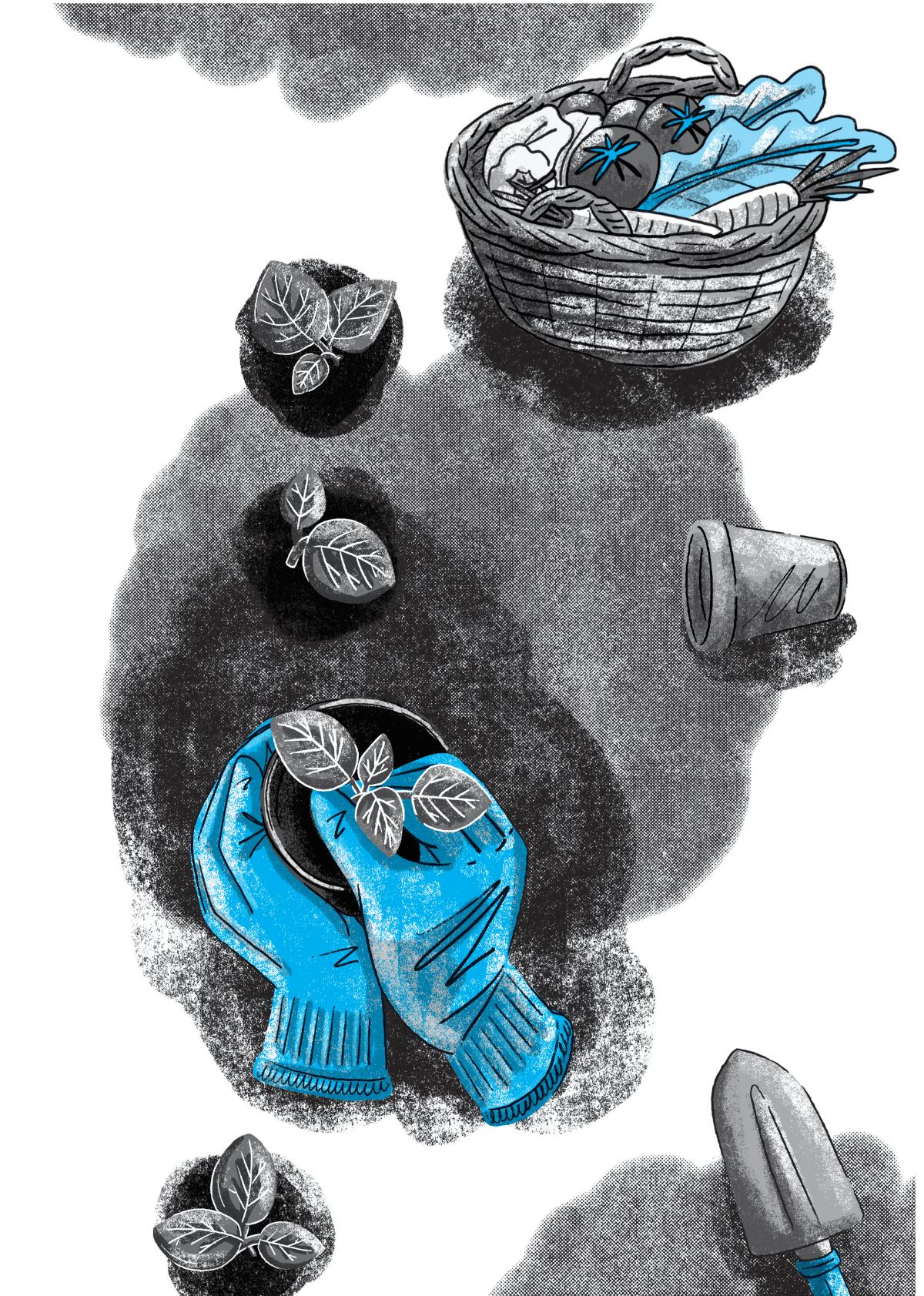
You spend your afternoons in the vegetable garden. You don't know anything about plants, but one of the women, Alba, teaches you. She's one of the founders and has the prettiest house, with stained-glass windows. She's handy at almost everything, and you feel it's a privilege to have her as your guide. With her, you learn to recognize the plants, measure the soil's moisture, cut off the dry leaves. It's simple, repetitive work. Afterward, you help cook, wash the dishes, check the expenses. The community is sustained by that repetition. No one talks about what they left behind. In the first few months, you don't hear any personal stories. It's as if everyone had agreed to live without a past.
Winter comes quickly and is harsher than in the city. The nights are cold and the water takes a while to heat up. Some complain; others don't, because complaining too much is frowned upon. In the kitchen, they gather around the heater, drink cheap wine, and eat homemade bread. There's something about the scene that feels both foreign and familiar to you. It's not friendship, nor affection. It's a practical way of living together, a closeness that doesn't need affection.
Sometimes there are minor conflicts: cleaning the bathroom, using the fridge, the laundry schedule. But the idea that things have to work matters more than the differences. The meetings are short, a list of items read aloud and resolved by consensus. At first it seems ridiculous to you; then you realize that this method prevents the worst: emotions.
There are women of different ages and backgrounds in the community. Some still work remotely, others are already retired. One sells bread in town, another teaches yoga. There are no hierarchies. The only distinction is how much energy each person has. Everything is organized around that. The younger women carry the water jugs; the older ones cook or sew. No one questions it.
On weekends, they screen movies on a nearby plot of land. Out of habit, they call it a drive-in even though no one arrives by car. They bring folding chairs, thermoses, flashlights. They share out the food. Sometimes they show new movies, sometimes old ones. There's almost always an intermission before the end because the generator runs out ofgas. No one complains. It's part of the plan. During those pauses, the countryside fills with sounds. Crickets, wind, laughter. There's a faint but sufficient sense of belonging.
Over time, your body gets used to the rhythm of the place. You wake up early without an alarm, sleep better, eat less. The days follow a clear sequence. There's a kind of relief in that, a kind of rest you hadn't known before. What used to be loneliness is now routine. There are no big conversations or intimacy. No one offers to listen to the others' problems, but if someone gets sick, medicine, soup, and help appear. No one has to ask.
Sometimes you miss the Capital. The noise, the lights, the cafés. But when you go to Buenos Aires to visit your sister, all the activity makes you uncomfortable. People talk fast, the sidewalks are crowded. The traffic noise drives you crazy. After a few hours, you want to go back. Returning to the community always gives you a strange feeling, something between relief and loss. On the highway, the landscape opens up and you can breathe again. After a year of living there, the community changes. One woman moves away, another arrives. The rules are adjusted. They start talking about building a library. They ask you to take charge. You look for shelves, sort donated books. You realize that this small gesture gives you a kind of purpose again. This really is stable, this really seems like forever, in sickness and in health.
On hot days, they gather under the trees, have an asado, read. Their bodies move slowly, the air has a different density. Every so often, visitors arrive: children, grandchildren, friends. They stay a little while, then leave again. You watch from a distance. The distance feels right.
Over the following months, the group grows stronger. They organizeshopping, fix the roof, plan to plant trees. Decisions become easier. There are arguments, but they don't matter as much anymore. What matters is that nothing falls apart completely.
The seasons pass, the rhythm holds. One of the women loses her father, and the others take turns keeping her company. No one says the word care, but everyone knows what it means. They do it naturally, without speeches.
You start thinking about what you could cook: vegetable lasagna, zucchini tart made with zucchini they grew themselves, corn in its husks, pizza on the grill that always gets a little burnt but no one says so. You start thinking you could stay there forever. There's bread, wine, a couple of candles. They eat, laugh, talk about little things. The wind moves the tree leaves and the sounds of the countryside mingle with their voices, without any intensity.
One afternoon, after working in the vegetable garden, you hear the others talking inside, laughing. You don't pay attention to the words, only the sound. You think this is the closest thing to peace you'll have. Or is it not complete peace, but a pause? There are things that bother you: how slowly decisions get made, the little arguments, the sound of water in the pipes. But all of that is also part of the life you chose. You have doubts. You feel lonely sometimes, too. Maybe it was you, then. And if it was you… why not go back to a place where you can get pizza at two in the morning if you want to?
Doubt, fear, anguish come over you.
You decide to put your apartment in the Capital up for sale.
Crónicas, ensayos, perfiles y análisis para explorar la epidemia de soledad del siglo XXI. Más que un libro, la radiografía de una sociedad que ha logrado optimizarlo todo, excepto los vínculos.
152 páginas. Papel bookcel 80 gramos. Impreso a dos tintas. 14,5 x 20 cm. Ilustraciones de Paula Maneyro.
Biografía de la autora:
Victoria O’Donnell es socióloga (UBA) y magíster en Métodos Cuantitativos en Ciencias Sociales (QMSS) por Columbia University (Nueva York, Estados Unidos), con financiamiento Bec.ar–Fulbright. Consultora, docente e investigadora especializada en tecnología y salud mental. Dictó clases en la UBA, la UNSAM, FLACSO y CEPAL. Se desempeñó en análisis y estrategia en la función pública, en el sector privado local, organismos internacionales, empresas globales de tecnología y clínicas de salud, con foco en enfermedades crónicas no transmisibles, salud mental y consumos problemáticos.
Crónicas, ensayos, perfiles y análisis para explorar la epidemia de soledad del siglo XXI. Más que un libro, la radiografía de una sociedad que ha logrado optimizarlo todo, excepto los vínculos.
Formatos .epub y .mobi.
Biografía de la autora:
Victoria O’Donnell es socióloga (UBA) y magíster en Métodos Cuantitativos en Ciencias Sociales (QMSS) por Columbia University (Nueva York, Estados Unidos), con financiamiento Bec.ar–Fulbright. Consultora, docente e investigadora especializada en tecnología y salud mental. Dictó clases en la UBA, la UNSAM, FLACSO y CEPAL. Se desempeñó en análisis y estrategia en la función pública, en el sector privado local, organismos internacionales, empresas globales de tecnología y clínicas de salud, con foco en enfermedades crónicas no transmisibles, salud mental y consumos problemáticos.